
What Flickering Lights Could Be Telling You
Flickering lights are one of the most common electrical complaints homeowners report, and they are easy to ignore. A quick flicker when the air conditioner kicks on might seem harmless, but repeated flickering often points to a real problem inside your electrical system. Summer in the Central Valley puts serious strain on home wiring; air conditioners, pool pumps, and fans all pull heavy loads at the same time. That extra demand exposes weak connections, overloaded circuits, and aging panels that stayed hidden during cooler months. Some causes are simple, like a loose bulb. Others involve loose wiring or failing breakers that can lead to overheating and fire. Knowing the difference protects your family and your property. This guide explains what your flickering lights could be telling you and when it is time to call a professional.
Common Causes of Flickering Lights in Your Home
Most flickering starts with a handful of common causes, and some of them are minor. A loose bulb, a cheap dimmer switch, or a large appliance starting up can all make lights blink for a moment. The pattern matters more than the flicker itself. One light flickering in one room is a different situation than every light in the house dimming at once. Frequency matters too; occasional flickering is less concerning than flickering that happens daily or gets worse over time. Summer heat also plays a role because hot weather makes wiring expand and increases electrical demand across your whole neighborhood. Start with the simple checks below before assuming the worst. If the basics do not solve it, the cause sits deeper in your electrical system.
Loose Bulbs and Fixtures Cause Flickering Lights
The simplest cause of flickering lights is a bulb that is not seated properly in its socket. A loose bulb makes intermittent contact with the socket tab, and that broken connection creates a visible flicker. Turn the light off, let the bulb cool, and tighten it by hand. If the flickering stops, you found your answer without spending a dime. This fix works for lamps, ceiling fixtures, and recessed cans alike. Check every bulb in a multi bulb fixture, since one loose bulb can affect how the whole fixture behaves. Homeowners in Patterson and across the Central Valley solve a surprising number of flickering complaints this way.
Bulb type also matters more than most people realize. LED bulbs flicker when paired with older dimmer switches that were designed for incandescent loads. Incandescent dimmers regulate power in a way that cheap or incompatible LEDs cannot handle smoothly, so the light strobes or blinks at low settings. Swapping in an LED rated dimmer usually fixes the issue for good. Low quality bulbs from bargain bins are another frequent offender, because their internal drivers fail early and flicker before they die. Buying reputable bulbs rated for your fixture prevents most of these headaches. Match the bulb wattage to the fixture rating as well, since overlamping causes heat damage inside the socket.
The fixture itself can also be the problem. Sockets wear out over decades of use, and the small brass tab at the bottom loses tension and stops making solid contact. Corrosion builds up in fixtures exposed to moisture, especially in bathrooms, outdoor areas, and garages. A worn fixture will flicker no matter how many new bulbs you install. Wiring connections inside the fixture canopy can also loosen from years of heat cycling. Replacing a failing fixture is a quick job for a licensed electrician and removes a genuine fire risk from your ceiling. If tightening bulbs and swapping dimmers did not stop the flickering, have the fixture inspected. Need help with a stubborn fixture? Click here for our electrical repair service.
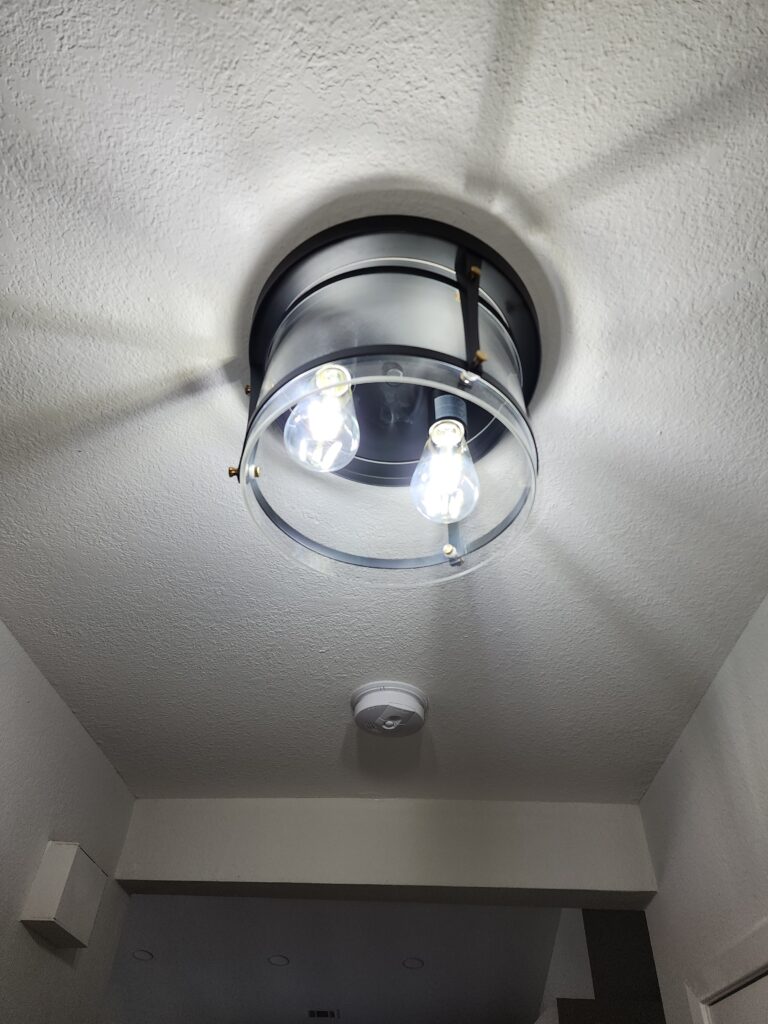
Overloaded Circuits Make Flickering Lights Worse in Summer
Flickering that happens when a big appliance turns on usually points to circuit loading. Air conditioners, refrigerators, and pool pumps draw a large surge of current at startup, and that surge briefly drops the voltage available to everything else on the circuit. Lights respond to that voltage dip by dimming or flickering for a second. A brief flicker when your AC compressor kicks on is common and often harmless. The concern grows when the dimming is dramatic, lasts several seconds, or happens with smaller appliances like a microwave or hair dryer. That pattern tells you the circuit is carrying more load than it should. Central Valley summers make this worse because cooling equipment runs almost constantly from June through September.
Many homes in Modesto, Turlock, and surrounding communities were wired decades ago for a much smaller electrical demand. Those homes often have lights and outlets sharing the same circuits, so every appliance startup drags the lights down with it. Modern living adds EV chargers, home offices, larger refrigerators, and multiple window AC units to systems never designed for them. Overloaded circuits do more than flicker lights; they trip breakers, overheat wiring, and shorten the life of your appliances. Warm outlet covers and buzzing sounds from the panel are warning signs that loading has crossed into dangerous territory. Ignoring these symptoms invites bigger failures during the hottest weeks of the year. An electrician can measure your actual loads and tell you exactly where you stand.
The fix depends on how severe the overload is. Sometimes the solution is as simple as moving a heavy appliance to a different circuit or adding a dedicated circuit for the AC unit or garage equipment. Dedicated circuits give high draw appliances their own path to the panel, so startup surges stop affecting your lights. Other homes need additional circuits run to spread the load across the panel properly. In older houses, the panel itself may not have room for new breakers, which points to a larger capacity problem. A licensed electrician can calculate your home’s demand and recommend the right solution instead of guessing. Solving circuit overload now prevents tripped breakers and dead outlets during the next heat wave.
Voltage Fluctuations Behind Flickering Lights
Your home is designed to receive steady voltage, typically around 120 volts on standard circuits. Lights flicker when that voltage rises or falls outside its normal range. Small fluctuations happen all the time and go unnoticed, but larger swings become visible in your lighting. Voltage problems can originate inside your home or outside it on the utility lines. Inside sources include loose connections, undersized wiring, and overloaded circuits fighting for limited capacity. Outside sources include transformer problems, damaged service lines, and heavy neighborhood demand during summer heat waves. Figuring out which side of the meter the problem lives on is a key diagnostic step.
Summer is the peak season for voltage fluctuations in the Central Valley. Thousands of air conditioners running at once strain the local grid, and voltage sags ripple through entire neighborhoods during triple digit afternoons. If your neighbors notice the same flickering at the same times, the utility grid is likely involved. Brownouts, which are sustained periods of low voltage, make lights dim noticeably and can damage motors in your AC unit and refrigerator. Voltage that swings high is even more destructive, burning out electronics and LED drivers. Whole house surge protection guards your appliances against these spikes. Homeowners who track when the flickering happens give electricians valuable clues for diagnosis.
Persistent voltage problems deserve professional measurement, not guesswork. An electrician uses a multimeter and monitoring equipment to record voltage at your panel over time and catch fluctuations in the act. If readings show the problem originates on the utility side, your electrician can document it so you have evidence for the power company. If the problem is internal, testing narrows it down to a specific circuit, connection, or panel fault. Loose service connections at the meter or panel are a common culprit and a serious hazard, because they arc and generate intense heat. These connections sit behind equipment that homeowners should never open. Professional diagnosis turns a mystery flicker into a specific, fixable problem.
When Flickering Lights Signal a Serious Electrical Problem
Some flickering patterns should never be ignored. Lights that flicker constantly, flicker across multiple rooms, or flicker alongside burning smells and buzzing sounds are warning you about a genuine hazard. Loose wiring connections are a leading cause of house fires in the United States, and flickering is often the first visible symptom. Arcing happens when electricity jumps across a gap in a loose connection, and each arc generates heat hot enough to ignite surrounding material. Older homes in Patterson, Tracy, and Merced carry higher risk because connections loosen over decades of thermal cycling. Aluminum wiring from the 1960s and 1970s adds another layer of danger. Treat the warning signs below as reasons to act quickly. A same day inspection is a small price compared to a fire.
Flickering Lights and Loose Wiring Connections
Every electrical connection in your home is a potential failure point. Wires connect at outlets, switches, fixtures, junction boxes, and inside your panel, and each connection depends on tight metal to metal contact. Over the years, heating and cooling cycles make those connections expand and contract until they loosen. A loose connection creates resistance, and resistance creates heat. It also creates arcing, which is electricity jumping across the small gap in the connection. Arcing produces the intermittent contact that shows up as flickering lights. Unlike a loose bulb, a loose wiring connection hides inside walls and boxes where you cannot see it. That invisibility is exactly what makes it dangerous.
Certain signs point strongly toward loose wiring rather than a harmless cause. Flickering that affects a group of lights on the same circuit suggests a loose connection upstream, often at an outlet or junction box feeding that circuit. Flickering that changes when you press on a switch plate or plug something into a nearby outlet is another strong indicator. Buzzing or sizzling sounds from switches and outlets mean active arcing is happening right now. Warm or discolored wall plates confirm heat is building where it should not be. A faint burning smell, sometimes described as fish or burning plastic, means insulation is already cooking. Any of these signs alongside flickering lights calls for immediate professional attention. Do not wait for the problem to announce itself more dramatically.
Homes built before the 1980s deserve extra caution. Backstabbed outlets, where wires push into spring clips instead of wrapping around screws, loosen far more often than screw terminals. Aluminum branch wiring, common in that era, expands and contracts more than copper and loosens at connection points designed for copper. Old wire nuts degrade, and DIY work from previous owners often hides splices made outside proper junction boxes. A licensed electrician can open suspect devices, inspect connections, and repair them to current code. Arc fault circuit interrupter breakers add another layer of protection by detecting arcing and shutting the circuit down before a fire starts. If your flickering comes with any burning smell or buzzing, treat it as an emergency. Click here for our 24/7 emergency electrician service.
Flickering Lights Caused by an Outdated Electrical Panel
Your electrical panel is the heart of your home’s electrical system, and flickering lights are often its cry for help. Panels distribute power from the utility to every circuit in the house, and every bit of electricity you use passes through it. Panels from the 1960s through the 1980s were commonly rated for 60 or 100 amps, which handled the demands of that era just fine. Modern homes routinely need 200 amps to run central air, electric appliances, EV chargers, and dozens of devices. When demand approaches panel capacity, voltage becomes unstable and lights flicker throughout the house. Breakers that trip repeatedly, hum, or feel warm confirm the panel is struggling. An undersized panel does not fix itself; the symptoms only grow as your household adds more load.
Age brings problems beyond capacity. Breakers wear out mechanically and lose their ability to trip when they should, which removes the protection they exist to provide. Bus bars corrode, connections loosen, and heat damage accumulates inside the panel enclosure. Certain brands, including Federal Pacific and Zinsco, are documented fire hazards because their breakers frequently fail to trip during overloads and faults. These panels still sit in thousands of Central Valley homes. Flickering lights combined with one of these panel brands is a clear signal to schedule a replacement. Insurance companies increasingly refuse coverage or charge higher premiums for homes with these panels. A panel evaluation takes little time and answers the question definitively.
Upgrading a panel delivers benefits well beyond stopping the flicker. A modern 200 amp panel provides stable voltage, room for new circuits, and current safety technology like arc fault and ground fault protection built into the breakers. It supports future additions such as an EV charger, a hot tub, or a home addition without another major project. Panel upgrades also raise home value and simplify insurance and resale inspections. This is not DIY territory; panel work involves live service conductors and utility coordination, and it requires permits and inspection. A licensed electrician handles the entire process safely and to code. Think your panel is behind the flickering? Click here for our electrical panel upgrade service.
Whole House Flickering Lights and Utility Service Issues
Flickering that hits every light in your home at once points to a problem with your main electrical service. Your home receives power through service conductors, a meter, and a main breaker before electricity ever reaches individual circuits. A fault at any of these points affects the entire house simultaneously. One of the most serious causes is a loose or corroded service neutral, which destabilizes voltage across both legs of your electrical service. A failing neutral makes some lights dim while others suddenly brighten, and it can push damaging overvoltage into your appliances and electronics. This condition can destroy TVs, computers, and HVAC boards in a single event. Whole house flickering is never a wait and see situation.
Outdoor factors cause whole house flickering too, especially in the Central Valley. Tree branches rubbing against overhead service lines create intermittent contact during windy days. Squirrels and birds damage lines and transformer connections. Summer heat pushes neighborhood transformers to their limits, and an overloaded or failing transformer makes lights flicker up and down the street. Underground service lateral damage from digging or ground shifting produces similar symptoms. Take note of when the flickering happens and check with neighbors; shared symptoms point toward utility equipment. Your utility is responsible for equipment up to the service point, but you need documentation to get them to act.
The line between utility responsibility and homeowner responsibility runs through your service equipment, and a licensed electrician helps you sort out which side the problem is on. An electrician tests voltage at your main panel, inspects the meter base and service entrance, and identifies problems on your side of the connection. If testing shows the fault is on the utility side, that documentation gets the power company to respond faster. If the problem is a corroded meter base or failing main breaker, your electrician can repair it with the proper permits and utility disconnect. Never attempt to inspect or touch service equipment yourself, because these components stay energized even when the main breaker is off. Whole house flickering combined with unusually bright lights is an emergency that warrants a same day call.
Why You Need a Professional Electrician for Flickering Lights
Flickering lights sit at the intersection of harmless annoyance and hidden fire hazard, and only proper diagnosis tells you which one you have. A licensed electrician has the training, testing equipment, and code knowledge to trace the flicker to its true source. Guessing wastes money on parts that do not fix the problem, and DIY electrical work risks shock, fire, and failed insurance claims. Professional repair also comes with accountability; the work is permitted where required, inspected, and done to current code. Central Valley homeowners deal with aging housing stock and brutal summer electrical demand, a combination that punishes neglected wiring. Calling a professional early costs far less than repairing fire damage later.
Professional Diagnosis of Flickering Lights Protects Your Home
Accurate diagnosis is the difference between fixing the problem and masking the symptom. An electrician starts by mapping the pattern: which lights flicker, when it happens, and what else is running at the time. Voltage testing at the panel and affected circuits reveals sags, swells, and imbalances invisible to the eye. Thermal imaging spots hot connections behind cover plates before they become fires. This systematic approach finds the actual cause instead of the most convenient guess.
Homeowners who attempt their own diagnosis face real limits. Most dangerous causes hide inside walls, boxes, and panels where visual inspection tells you nothing. Testing live circuits without proper equipment and training risks serious injury. Misdiagnosing a loose service neutral as a bad bulb leaves a genuine hazard in place. Even experienced DIYers lack the instruments that make hidden faults visible. The stakes with electricity are simply too high for guesswork.
A professional inspection often catches problems beyond the original complaint. Electricians routinely find double tapped breakers, missing GFCI protection, and deteriorated wiring while chasing a flicker. Addressing those issues in one visit saves money and prevents future service calls. You also receive a clear written picture of your system’s condition. That knowledge helps you plan upgrades on your schedule instead of during an emergency.

Fast Repairs for Flickering Lights Prevent Bigger Costs
Electrical problems never improve on their own; they escalate. A loose connection arcs a little more each month until insulation fails or a fire starts. An overloaded circuit stresses wiring and appliances every single day it stays overloaded. Small repairs handled promptly cost a fraction of the damage they prevent. Waiting converts a service call into a restoration project.
Consider the real numbers behind procrastination. Tightening a connection or replacing a worn outlet is a quick, affordable visit. An electrical fire averages tens of thousands of dollars in damage, and that assumes everyone gets out safely. Voltage problems left unresolved quietly destroy AC compressors, refrigerators, and electronics worth thousands. Insurance may deny claims when unpermitted or neglected electrical work contributed to the loss. Prompt professional repair is the cheapest option on the table.
Fast action matters even more during Central Valley summers. Electrical failures spike during heat waves when systems run at maximum load. Losing power or air conditioning during triple digit heat is more than an inconvenience; it is a health risk for seniors, children, and pets. Scheduling repairs at the first flicker keeps your home reliable through the hottest months. It also means you choose the appointment time instead of waiting in line behind every other emergency call.
Why Choose Frayer Electric for Flickering Lights
Frayer Electric is locally owned and operated with integrity, serving Patterson and surrounding Central Valley areas. Our licensed and insured electricians diagnose flickering lights in homes from Tracy to Merced and everywhere between. We know the housing stock in this region, from older Patterson farmhouses to new construction in Mountain House. That local experience means faster diagnosis and repairs that fit your home. We are committed to getting it done right every time.
Honesty drives everything we do at Frayer Electric. You get straightforward quotes with no hidden fees before any work begins. We explain what we found, what it means, and what your options are in plain language. We offer veteran, senior, and first responder discounts because we value the people who serve our communities. Our reputation across the Central Valley is built on treating customers the way we would want to be treated.
Flickering lights do not follow business hours, and neither do we. Frayer Electric offers 24/7 emergency service for urgent problems like burning smells, buzzing panels, and whole house flickering. Call us at (209) 961-3867 or email info@frayerelectricinc.com to schedule a diagnosis. We serve Patterson, Modesto, Turlock, Tracy, Manteca, and the entire Central Valley. Let us find out what your flickering lights are telling you before the message gets worse.