Signs Your Subpanel Is Overdue for an Upgrade
Your subpanel works hard all year, but summer in the Central Valley pushes it to the limit. Air conditioners, pool pumps, and garage workshops all pull power through that gray box, and an aging subpanel can only handle so much. Many homeowners in Patterson, Modesto, and Turlock have subpanels that were installed decades ago for much smaller electrical loads. When a subpanel falls behind your home’s demands, it gives off warning signs long before it fails completely. Tripping breakers, warm panel covers, and flickering lights are your home’s way of asking for help. Ignoring those signs can lead to damaged appliances, dead circuits, or even an electrical fire. The good news is that a subpanel upgrade is a straightforward project for a licensed electrician. This guide covers the most common signs your subpanel is overdue for an upgrade and what to do about each one.
Common Warning Signs Your Subpanel Needs an Upgrade
A subpanel rarely fails without warning. Most of the time, it sends signals for months or years before something goes seriously wrong. The problem is that many homeowners do not know what those signals look like, so they get dismissed as quirks of an older home. Breakers that trip every time the AC kicks on are not a quirk; they are a symptom. The same goes for buzzing sounds, scorch marks, and outlets that stop working in one section of the house. Learning to spot these warning signs early gives you time to schedule an upgrade on your terms instead of during an emergency. Here are the three biggest red flags to watch for.
Frequent Breaker Trips Are a Sign Your Subpanel Needs an Upgrade
A breaker that trips once in a while is doing its job. A breaker that trips every week is telling you the circuit or the subpanel behind it is overloaded. Summer makes this worse because air conditioning adds a heavy, constant load on top of everything else running in your home. If your garage subpanel trips when you run a shop vac and the freezer at the same time, the panel does not have the capacity your lifestyle requires. Resetting the breaker over and over is not a fix; it is a countdown. Each trip puts wear on the breaker mechanism, and worn breakers can eventually fail to trip when you actually need them to. That failure is how overheated wires start fires inside walls. Frequent trips are the single most common sign that a subpanel upgrade is overdue.
Pay attention to which breakers trip and when. If one specific circuit trips constantly, you may be able to solve it by moving loads or adding a dedicated circuit. If multiple breakers trip at different times, the subpanel itself is likely undersized for the total demand. Many older Central Valley homes have 60 amp or 100 amp subpanels feeding garages, additions, or workshops. Those panels were fine for a light bulb and a garage door opener. They are not fine for an EV charger, a mini split, and a chest freezer running together. Modern households simply use more electricity than homes did thirty years ago. When demand outgrows capacity, trips become a daily annoyance instead of a rare event.
There is also a safety angle that homeowners often overlook. Breakers are mechanical devices, and they degrade with heat and use. A subpanel that runs at or near capacity all summer bakes its own components. Over time, the breakers become less reliable, and connections inside the panel loosen. Loose connections create resistance, resistance creates heat, and heat creates fire risk. A licensed electrician can measure your actual loads and tell you exactly how far past capacity your panel is running. That data makes the upgrade decision easy. Constantly tripping breakers? Click here for our electrical subpanel repair service.
Buzzing, Heat, and Burning Smells Mean Your Subpanel Is Overdue for an Upgrade
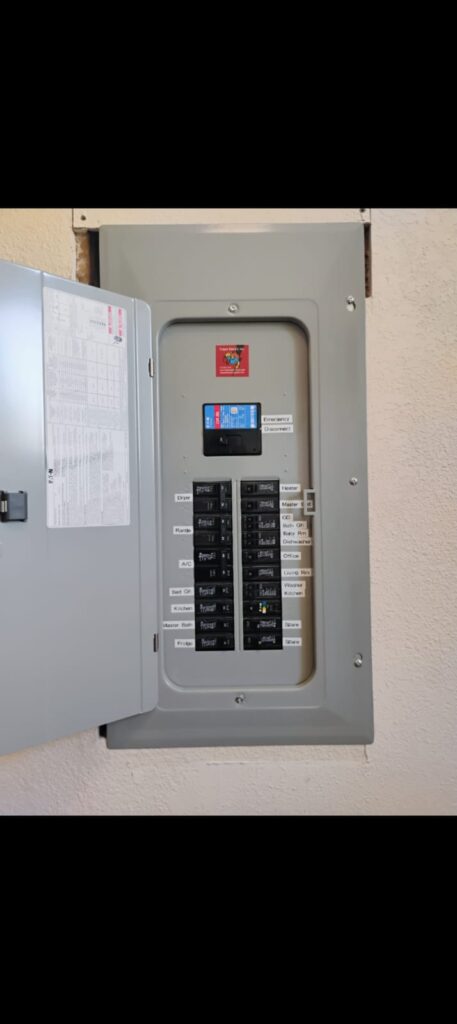
A healthy subpanel is silent and cool to the touch. If yours hums, buzzes, or crackles, electricity is arcing or vibrating across a loose connection inside. Arcing produces intense heat in a very small area, and that heat chews through insulation and bus bars over time. A faint buzz today can become a scorched panel next month. Warmth on the panel cover is another serious signal. Panels handle real current, but a properly sized and properly connected panel should never feel hot. Heat you can feel through the metal cover means components inside are overloaded or failing. Do not open the panel yourself to investigate; call a professional instead.
Burning smells deserve immediate attention. That sharp plastic odor near a subpanel usually means wire insulation or a breaker housing is melting. Melting insulation exposes live conductors, and exposed conductors can arc to the metal enclosure. At that point you are one bad moment away from a panel fire. Discoloration around breakers, scorch marks near the panel, or a fishy chemical smell all point to the same conclusion. The panel has active heat damage and needs professional attention right away. Turn off what you safely can and get an electrician on site. Frayer Electric offers 24/7 emergency service for exactly these situations.
Heat problems in subpanels often trace back to age and outdated equipment. Certain older panel brands, including Zinsco and Federal Pacific, are known for breakers that fail to trip under fault conditions. Homes across Stanislaus and San Joaquin counties still have these panels in garages and additions. Aluminum branch wiring from the 1960s and 1970s compounds the risk because aluminum connections loosen as they heat and cool. If your subpanel is from one of these problem brands, an upgrade is not optional; it is urgent. Replacing the panel with modern equipment eliminates the fire risk in one visit. It also gives you breakers you can trust for decades. Smell something burning near your panel right now? Click here for our 24/7 emergency electrician service.
Flickering Lights and Dead Circuits Show Your Subpanel Needs an Upgrade
Lights that dim when the AC starts are a classic sign of an overloaded subpanel. The compressor draws a surge of current at startup, and an undersized panel cannot deliver that surge without voltage sagging everywhere else. You see the sag as a flicker or a brief dim across the room. Occasional dimming during a big appliance startup is common in older homes, but constant flickering is not. Persistent flicker means the panel, the feeder, or the connections inside are struggling. Voltage drops also stress your electronics. Computers, TVs, and smart home devices are sensitive to unstable power, and repeated sags shorten their lifespan. Your lights are the visible symptom of a problem affecting everything plugged in.
Dead circuits are an even stronger signal. If outlets in the garage or a back bedroom stop working and the breaker looks fine, the failure may be inside the subpanel itself. Corroded bus bars, failed breakers, and burned connections all kill circuits without any visible trip. Homeowners often live with a dead outlet for months, running extension cords around the problem. Extension cords are a fire hazard when used as permanent wiring, so this workaround creates a new danger. A dead circuit is a diagnostic clue, not an inconvenience to route around. An electrician can trace the fault quickly and tell you if the panel is the cause. In older panels, one dead circuit is usually the first of several.
Intermittent problems are the hardest for homeowners to take seriously, but they matter most. A connection that works sometimes and fails sometimes is a loose connection, and loose connections arc. Arcing is the leading cause of electrical fires in residential panels. If your lights flicker on windy days, or a circuit dies and comes back on its own, do not wait for the pattern to get worse. These symptoms tend to accelerate during summer heat because expansion loosens connections further. A professional inspection can catch the failing component before it fails for good. Want a full picture of your panel’s condition? Click here for our electrical inspection service.
When an Aging or Undersized Subpanel Requires a Full Upgrade
Some subpanel problems can be repaired, but others call for full replacement. The deciding factors are age, capacity, brand, and how your electrical needs have changed. A panel from the 1970s with a rusted enclosure and obsolete breakers is not worth patching. A panel that is ten years old with one bad breaker probably is. Capacity matters just as much as condition. If you have added an EV charger, a hot tub, or a home office since the panel was installed, the math may no longer work. This section covers the three situations where replacement clearly beats repair.
An Old Subpanel Past Its Lifespan Requires an Upgrade
Electrical panels are built to last, but they are not built to last forever. Most subpanels have a service life of 25 to 40 years under normal conditions. Central Valley heat shortens that lifespan because high garage temperatures accelerate the aging of breakers and insulation. A subpanel installed when your home was built in the 1980s is now past its expected life. Age shows up as brittle wire insulation, corroded terminals, and breakers that feel loose in their slots. Rust inside the enclosure is another common finding in older panels, especially those mounted outdoors or in damp garages. Once corrosion reaches the bus bar, the panel is done. Replacement is the only safe option at that point.
Obsolete equipment is another age related problem. Breakers for discontinued panel brands are hard to find, expensive, and sometimes only available as used parts. Installing a used breaker in a failing panel is throwing good money after bad. Panels from Zinsco, Federal Pacific, and some early Challenger lines have documented failure histories that insurance companies know about. Some insurers now charge higher premiums or deny coverage for homes with these panels. That means your old subpanel could be costing you money every month even while it still works. A modern panel with readily available breakers solves the parts problem permanently. It also brings your installation up to current code.
Code compliance is the final piece of the age puzzle. Electrical code has changed significantly over the past few decades, and old subpanels rarely meet current requirements. Modern code requires proper grounding, separated neutral and ground bars in subpanels, and adequate working clearance around the panel. Many older installations have bonded neutrals, missing grounds, or panels buried behind shelving. These violations are not just paperwork issues; they create real shock and fire hazards. An upgrade brings everything current in one project. It also makes future home sales smoother, since inspectors flag outdated panels during real estate transactions. Buyers in Patterson, Tracy, and Manteca increasingly expect updated electrical systems.

An Undersized Subpanel for Modern Loads Requires an Upgrade
Homes use far more electricity today than they did when most subpanels were installed. An EV charger alone can demand 40 to 60 amps on its own circuit. Add a hot tub, a mini split for the garage, or a serious workshop, and a 60 amp subpanel is hopelessly outmatched. Undersizing is the most common reason Central Valley homeowners call about subpanel upgrades. The panel is not broken; it is simply too small for the life being lived around it. You cannot safely add circuits to a panel that has no spare capacity or open slots. Tandem breakers and creative workarounds only push the panel closer to its limit. The right fix is a larger panel with room to grow.
Capacity problems often show up when you plan a project. You want an EV charger, and the electrician tells you the garage subpanel cannot support it. You want to wire a new shop, and there are no open breaker slots. These moments are frustrating, but they are also the perfect time to upgrade. Replacing the subpanel during a project costs less than doing it separately later. A properly sized new panel can handle the current project plus the next two or three. Most electricians recommend sizing for future needs, not just present ones. A 125 amp or 200 amp subpanel gives a modern household real breathing room.
Load calculations take the guesswork out of sizing. A licensed electrician adds up your existing loads, factors in planned additions, and applies code required demand factors. The result tells you exactly what panel size your home needs. This calculation also checks your main panel and feeder wire, since a bigger subpanel needs adequate supply upstream. Sometimes the main panel needs attention too, and it is better to know that before work begins. Frayer Electric provides straightforward quotes with no hidden fees, so you know the full scope up front. Planning an EV charger, workshop, or hot tub? Click here for our electrical panel upgrade service.
A Damaged or Unsafe Subpanel Requires an Immediate Upgrade
Some subpanels are not aging or undersized; they are actively dangerous. Water damage tops the list in this category. A panel with rust streaks, mineral deposits, or corrosion on the breakers has had moisture inside, and moisture and electricity do not mix. Corroded connections increase resistance and heat, and corroded breakers may not trip during a fault. Pest damage is another common finding in Central Valley garages and outbuildings. Rodents chew wire insulation inside panels, leaving bare conductors inches apart. Any of these conditions makes the panel unsafe regardless of its age or size. Replacement should happen quickly, not eventually.
Improper past work also lands panels in the unsafe category. Double tapped breakers, where two wires share one breaker terminal, are a frequent DIY shortcut. Oversized breakers protecting undersized wire are worse, because the wire can overheat long before the breaker trips. Missing knockout covers leave openings where fingers or debris can reach live parts. Subpanels with bonded neutrals create shock hazards on every grounded appliance downstream. These problems hide behind the panel cover, invisible to homeowners. An electrician spots them in minutes during an inspection. If your panel has a history of amateur work, assume there are issues you cannot see.
Physical damage rounds out the list. A panel that took an impact, sat through a garage fire, or has a cracked enclosure has compromised protection. The enclosure exists to contain arcs and keep fires from spreading; a damaged enclosure cannot do that job. Melted breaker handles and heat discolored bus bars mean the panel has already experienced a serious overheating event. Panels do not recover from heat damage. The affected components are weakened permanently, even if everything appears to work. In these cases, replacement is a safety decision, not a convenience decision. A new panel restores the protection your home is supposed to have.
Why You Need a Professional Subpanel Upgrade From Frayer Electric
A subpanel upgrade is not a DIY project. It involves working near live equipment, calculating loads, pulling permits, and passing inspection. Mistakes inside a panel put your family and your home at risk. A licensed electrician handles the entire process safely and correctly, from the load calculation to the final inspection sticker. Professional work also protects your home insurance coverage and your resale value. Here is what professional service looks like and why Central Valley homeowners choose Frayer Electric for it.
The Benefits of a Professional Subpanel Upgrade
A professionally upgraded subpanel ends the daily frustrations of an overloaded system. Breakers stop tripping, lights stop flickering, and every circuit delivers stable power. Your appliances and electronics last longer on clean, consistent voltage. You also gain capacity for the future, with open slots ready for an EV charger, a hot tub, or a shop expansion. Modern panels accept AFCI and GFCI breakers, which add protection that old panels simply cannot provide. The upgrade pays for itself in reliability, safety, and options.
Professional installation also means the work is done to code and documented. Your electrician pulls the permit, coordinates the inspection, and leaves you with a compliant installation. That paperwork matters when you sell your home or file an insurance claim. Unpermitted electrical work can stall a sale or void coverage after a fire. Licensed work removes those risks completely. You get a panel that protects your home and a paper trail that protects your investment.
Safety is the benefit that matters most. A new subpanel has fresh breakers that trip reliably, tight connections that do not arc, and proper grounding throughout. Fire risk drops immediately. Shock risk drops too, especially with modern GFCI protection on garage and outdoor circuits. Your family lives behind equipment you can trust. That peace of mind is hard to price, but every homeowner who has smelled burning plastic near a panel understands its value.

What to Expect During a Subpanel Upgrade Appointment
The process starts with an assessment and a clear quote. Your electrician inspects the existing subpanel, performs a load calculation, and checks the feeder and main panel. You get a straightforward price with no hidden fees before any work begins. Frayer Electric explains exactly what will be replaced and why. You approve the scope, and the job gets scheduled at a time that works for you. Most subpanel upgrades are completed in a single day.
On installation day, power to the subpanel is shut off safely at the main panel. The old panel comes out, and the new panel goes in with fresh breakers, proper grounding, and clean, labeled wiring. Circuits are reconnected one at a time and tested individually. The electrician verifies correct voltage, tight torque on every connection, and proper separation of neutrals and grounds. Nothing gets energized until everything checks out. You end the day with a labeled, organized panel instead of a mystery box.
The final step is inspection and walkthrough. The permit inspection confirms the work meets current code, and you receive documentation for your records. Your electrician walks you through the new panel, showing you what each breaker controls. You learn how to reset a breaker properly and what the GFCI and AFCI test buttons do. Any questions get answered before the truck leaves your driveway. The job is not done until you understand your new system.
Why Choose Frayer Electric for Your Subpanel Upgrade
Frayer Electric is licensed, insured, and locally owned right here in Patterson. We serve homeowners across the Central Valley, including Modesto, Turlock, Tracy, Manteca, and the surrounding communities. Local ownership means we answer to our neighbors, not a corporate office. Our reputation is built one panel, one home, and one honest conversation at a time. We are committed to getting it done right every time. That is not a slogan; it is how we stay in business in a small community.
Our pricing is straightforward with no hidden fees. You get a clear quote before work begins, and the price does not change unless the scope does. We also offer discounts for veterans, seniors, and first responders. Electrical safety should be affordable for the people who have served our communities. We treat every home like it belongs to family. That approach shows in the quality of our panel work.
Electrical problems do not keep business hours, so neither do we. Frayer Electric offers 24/7 emergency service across our entire service area. A buzzing panel at midnight gets the same fast response as a scheduled daytime upgrade. Call us at (209) 961-3867 or email info@frayerelectricinc.com to schedule your subpanel assessment. We will inspect your panel, explain your options, and give you an honest recommendation. Your home deserves a subpanel you never have to think about.