Why Whole House Surge Protection Is Worth It
Your home runs on far more electronics than the homes of a generation ago. Smart thermostats, LED lighting, large televisions, gaming systems, and modern HVAC equipment all depend on sensitive circuit boards. A single voltage spike can ruin those boards in a fraction of a second, and most homeowners never see it coming. Whole house surge protection guards every circuit at the source, stopping excess voltage before it reaches the devices you rely on each day. Many people assume a power strip behind the entertainment center is enough; that single outlet covers only one corner of the house. Surges actually travel through every wire, outlet, and appliance connection in the building. Installing protection at the electrical panel shields the entire system at once. This guide explains how the technology works, why summer raises the risk, and what makes this upgrade pay for itself over the years.
What Whole House Surge Protection Does for Your Home
Whole house surge protection is a device installed directly at your electrical panel, the point where power enters the building. It watches for voltage that climbs above the safe range and redirects that extra energy harmlessly into your grounding system. The protection works in nanoseconds, far faster than any spike can travel to your outlets. Because it sits at the main panel, it covers every branch circuit instead of one plugged in gadget. This includes the hardwired equipment that power strips can never reach, like your air conditioner and well pump. Below we break down exactly how the device functions and what it defends.
How Whole House Surge Protection Stops Damaging Voltage Spikes
A power surge is a brief jump in voltage above the standard level your home is designed to handle. Most household circuits run at around 120 volts, and your appliances are built to tolerate that range with a small margin on either side. When voltage suddenly climbs to several hundred or even several thousand volts, that margin disappears in an instant. These spikes come from two main directions. External surges arrive from outside the home through lightning strikes near power lines and from utility company switching on the grid. Internal surges start inside your own walls when large motors cycle on and off, such as the compressor in your central air system. Industry estimates show that the majority of surges are actually internal, which surprises most homeowners.
A whole house surge protective device, often called an SPD, connects to your main panel and constantly monitors the incoming voltage. When it senses a spike, it opens a path that channels the excess energy down to the ground wire and away from your circuits. The clamping voltage rating tells you the level at which the device begins diverting that energy, and a lower number means tighter protection. Residential installations typically use a Type 2 device wired on the load side of the main breaker, while a Type 1 device can be installed on the line side before the breaker. Both follow the same principle of capturing dangerous voltage and grounding it safely. The response happens so quickly that connected electronics never feel the hit. A licensed electrician selects the correct type and rating for your specific panel and load.
Whole house protection is best understood as the first and strongest layer in a complete defense system. The device carries a joule rating, which measures how much energy it can absorb before its internal components wear out. Larger surges and repeated smaller ones gradually use up that capacity over the years. Many quality units include a status light or audible alert that signals when the device has reached the end of its useful life and needs replacement. This monitoring gives you a clear sign rather than leaving you guessing. A well chosen device can protect a home for many years under normal conditions. Pairing it with point of use protection at sensitive electronics creates redundancy that catches anything the panel device lets through.

What Whole House Surge Protection Protects Inside Your Home
The list of vulnerable equipment in a modern home grows longer every year. Your refrigerator, dishwasher, washer, dryer, and oven all contain electronic control boards that cost hundreds of dollars to replace. Your HVAC system relies on a circuit board to manage temperature, fan speed, and safety functions, and a surge can take that board out in a single event. Smart home gear like video doorbells, security cameras, thermostats, and hubs are especially sensitive to voltage changes. Televisions, computers, routers, and gaming consoles round out the collection of devices that a surge can damage or destroy. Even LED light fixtures and dimmer switches contain small drivers that spikes can degrade. Whole house protection shields all of these at once from a single point.
Surge damage does not always announce itself with a loud pop and a dead appliance. Small spikes that fall below the threshold of immediate destruction still stress electronic components over time. Each minor surge chips away at the lifespan of a circuit board, much like repeated small impacts weakening a part. An appliance that fails years earlier than expected may have been quietly degraded by surges you never noticed. This slow damage is harder to trace and often gets blamed on a faulty product instead of the real cause. Whole house protection reduces this hidden wear and helps your electronics reach their full expected lifespan. The benefit shows up as fewer surprise failures and replacements over the years.
The financial case becomes clear once you add up what a single bad surge can cost. Replacing a damaged HVAC control board, a refrigerator, and a few pieces of electronics can easily climb into the thousands of dollars. A whole house surge protective device and its professional installation cost a small fraction of that total. Beyond the dollars, there is a safety angle that matters just as much. Severe surges can damage wiring insulation and create conditions that, in rare cases, contribute to electrical fires. Protecting the system at the panel reduces that stress on your home wiring. The peace of mind that comes with full coverage is difficult to put a price on.
Why Whole House Surge Protection Beats Plug In Power Strips
A surge protector power strip only defends the few items plugged directly into it. Everything else in your home remains completely exposed to the same spike. The most expensive equipment in the house often falls into that unprotected group. Your air conditioner, furnace, water heater, well pump, garage door opener, and built in appliances are all hardwired and cannot be plugged into a strip. A surge that reaches those systems can cause damage that dwarfs the value of anything sitting on a power strip. This gap is the single biggest weakness of relying on strips alone. Whole house protection closes that gap by covering the entire panel.
Power strips also wear out quietly and without warning. The protective components inside a typical strip absorb energy until they can no longer function, and many strips give no indication once that point arrives. A unit that looks fine and still powers your devices may have stopped protecting them long ago. Bargain strips often carry such low joule ratings that they offer little real defense against a meaningful spike. People keep using old strips for years, assuming the protection lasts as long as the plastic housing. That false sense of security leaves valuable electronics exposed every day. A panel mounted device with a status indicator removes that uncertainty.
The smartest approach uses both levels working together rather than choosing one over the other. Whole house protection acts as the heavy duty first line, absorbing the large external surges and the powerful internal ones from your motors and compressors. Quality point of use protectors then handle any small residual energy at your most sensitive electronics, like a home office setup or a media center. This layered design follows the same logic professionals use to protect commercial buildings. Together the two levels deliver coverage that neither can provide alone. Ready to protect every circuit at once? Click here to learn about our whole house surge protection service. It is the foundation that makes every other layer more effective.
Why Whole House Surge Protection Is Worth the Investment in Summer
Summer brings a unique mix of conditions that raise the odds of a damaging surge. Afternoon thunderstorms roll through the Central Valley and surrounding areas, carrying lightning that can spike the grid even without a direct hit. At the same time, air conditioners run for hours, drawing heavy current and creating internal surges every time they cycle. The local utility also manages peak demand during heat waves, and that switching activity can send voltage fluctuations down the line. All of these factors land in the same few months, making summer the season when protection earns its keep. The next sections explain each risk and the long term savings.
How Summer Storms Make Whole House Surge Protection Worth It
Thunderstorms are a regular feature of the warm season across our service area. Lightning does not need to strike your house directly to cause harm. A bolt that hits a power line a mile away can send a massive voltage surge racing through the grid and into connected homes. Even a strike to the ground nearby can induce a spike in your wiring through electromagnetic effects. These storm related surges are among the most powerful that a home will ever face. A direct lightning hit is rarely survivable for electronics, but the far more common nearby strike is exactly the kind of event a whole house device is built to handle. Protection at the panel gives your home a fighting chance during storm season.
The trouble with storms is that they arrive without much warning and pass quickly. By the time you notice the flash and hear the thunder, any surge has already traveled through your system in a fraction of a second. There is no time to unplug devices once a storm is overhead, and unplugging everything in a modern home is impractical anyway. Hardwired equipment cannot be unplugged at all, so it stays exposed no matter what you do. A permanently installed device works automatically, with no action required from you. It stands guard every minute of every storm throughout the season. That constant readiness is the entire point of a panel mounted solution.
The Central Valley climate adds its own pattern to the risk. Long stretches of dry heat are broken by sudden storms, and the grid feels the strain of both extremes. Power lines stressed by heat and storm activity create more opportunities for voltage irregularities to reach your home. Homeowners often blame a dead television or a failed appliance on bad luck after a storm, when the real culprit was an unprotected surge path. One protected summer can spare you the frustration and expense of replacing damaged equipment. The seasonal timing makes late spring an ideal moment to install protection before the worst storms arrive. Getting ahead of the season is far easier than dealing with the aftermath.
Why Air Conditioning Demand Makes Whole House Surge Protection Worth It
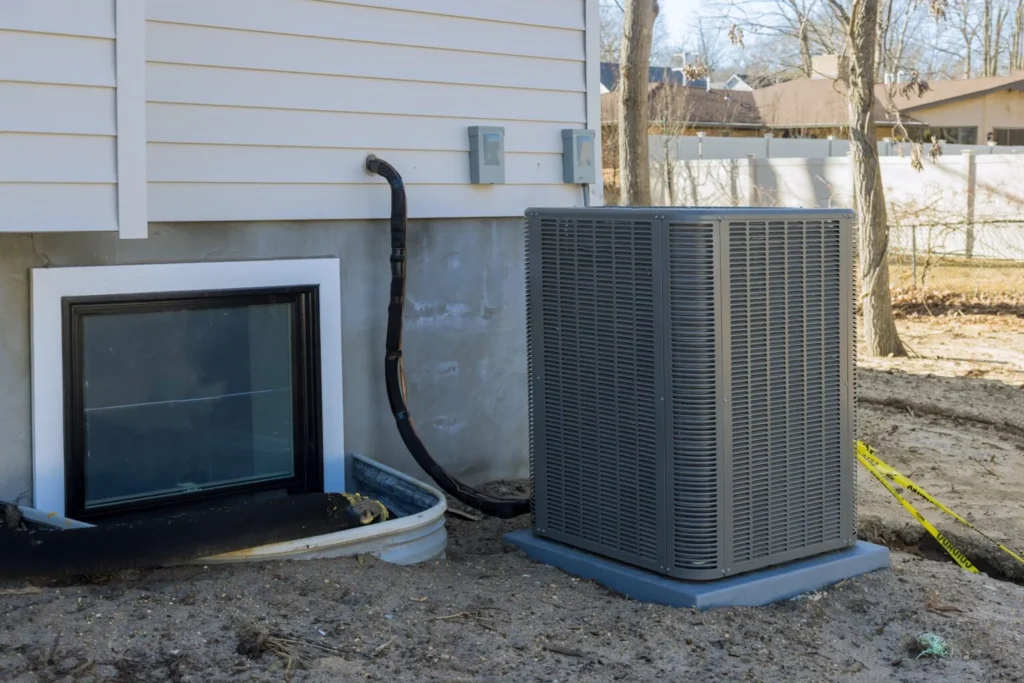
The largest source of surges in most homes is not the weather but the equipment inside the walls. Your central air conditioner contains a compressor and fan motors that draw a heavy burst of current every time they start. When those motors switch off, the collapsing electrical field can send a spike back through your circuits. During a hot summer the system cycles many times each day, repeating that small surge over and over. Other large appliances like the refrigerator, dryer, and pool pump add their own internal surges to the mix. This steady drumbeat of internal spikes is what slowly degrades electronics throughout the house. A whole house device absorbs these everyday surges that point of use strips never see.
Peak summer demand also affects the wider electrical grid serving your neighborhood. When thousands of air conditioners run at once during a heat wave, the utility manages the heavy load through switching operations. Each of those operations can introduce voltage fluctuations that travel into homes along the line. Brownouts, where voltage dips below normal, can be just as harmful to electronics as spikes above normal. Some quality protective devices help your system ride out these abnormal conditions more safely. The summer grid is simply a more volatile environment for your sensitive equipment. Protection at the panel buffers your home from that instability.
The connection between your air conditioner and surge protection runs in both directions. A surge can destroy the expensive control board inside your HVAC unit, and the HVAC unit itself generates surges that threaten the rest of the home. Protecting the panel safeguards your cooling investment and the electronics it puts at risk. With summer comfort depending so heavily on a functioning air conditioner, the last thing any homeowner wants is a surge that knocks the system offline during a heat wave. A repair call in peak season can mean days of waiting in an uncomfortable home. Whole house protection lowers the chance of that scenario. It keeps both your cooling system and your electronics on more stable footing all season long.
How Whole House Surge Protection Saves You Money Over Time
The math behind surge protection favors the homeowner in nearly every case. A single significant surge event can cause damage that runs into the thousands once you total up appliances and electronics. The cost of a quality device with professional installation is modest by comparison. One prevented event can pay for the entire system several times over. When you factor in the slow degradation that surges cause to electronics, the savings extend across many years of avoided early replacements. The device works quietly in the background, returning value every storm and every cooling cycle.
There are practical financial benefits beyond avoided repairs as well. Many homeowner insurance policies treat surge damage in ways that may leave you covering deductibles or facing higher premiums after a claim. Avoiding the damage in the first place sidesteps that whole process. Some utility and equipment warranties also look more favorably on homes with proper protection in place. Reducing the strain on your panel and wiring can support the longevity of your entire electrical system. Often the right time to add surge protection is during a panel upgrade, when an electrician is already working at the service equipment. Is your panel due for an update? Click here for our electrical panel upgrade service.
The value of surge protection also includes things that do not show up on a receipt. Knowing your home is guarded during a storm lets you sleep through the night without worrying about your equipment. You avoid the hassle of shopping for replacement appliances and reprogramming smart devices after a loss. Family photos, work files, and saved data on computers stay safe from a surge that could wipe them out. The convenience of uninterrupted technology has real worth in a connected household. When you weigh the small upfront cost against years of protection and peace of mind, the investment clearly comes out ahead. That is why so many homeowners consider it one of the best electrical upgrades available.
Why You Need a Professional for Whole House Surge Protection
Whole house surge protection delivers its full value only when it is installed correctly at the electrical panel. This is work that involves your home main service equipment and the grounding system, where mistakes carry real consequences. A licensed electrician sizes the device to your panel, wires it for the shortest possible path, and confirms the grounding is sound. Proper installation also keeps your home in line with current electrical code requirements. The sections below cover why professional work matters, when to schedule it, and what sets our team apart.
Why Professional Installation Matters for Whole House Surge Protection
Installing a surge protective device means opening the electrical panel and working alongside live service conductors. This is not a safe place for a do it yourself attempt, and the risk of shock or arc flash is serious. A licensed electrician has the training, tools, and experience to perform the work safely and correctly. The device must be connected with short, direct leads, because long or looped wiring reduces how well it can clamp a surge. Small details like lead length and connection quality have a direct effect on real world performance. A professional gets those details right the first time.
Code compliance is another reason to leave this work to a qualified electrician. Modern electrical codes call for surge protection on new and replacement dwelling unit services, and meeting that requirement matters for safety and for any future home sale. An electrician knows which type of device suits your panel and how to integrate it properly. Correct grounding is essential, since the device relies on a solid ground path to divert energy away from your circuits. A poor ground can leave the protection unable to do its job when it counts. Professional installation ensures the whole system functions as designed.
A trained electrician also evaluates the overall health of your panel during the visit. An older or overloaded panel may need attention before a surge device is added. The electrician can spot worn breakers, loose connections, or capacity issues that affect both safety and protection. This broader inspection often catches problems a homeowner would never notice. Addressing them keeps your electrical system reliable for years to come. The result is protection that is built on a sound foundation rather than installed over hidden problems.

When to Schedule Your Whole House Surge Protection Service
The best time to install surge protection is before you need it rather than after a loss. Late spring and early summer make an ideal window, since storm season and heavy air conditioning use are just ahead. Getting the device in place now means your home is guarded for the months of highest risk. Scheduling ahead also lets you book a convenient appointment instead of scrambling after a damaging event. A planned installation is calmer and easier than an emergency repair. A short visit today prevents a stressful situation later.
Certain situations make surge protection especially urgent. A home with an aging panel, a recent history of flickering lights, or frequent electronics failures should move it up the priority list. If you are already planning a panel upgrade or a major electrical project, adding protection at the same time saves on labor and disruption. New construction and home additions are also natural points to build protection in from the start. Already dealing with surge damage or a related electrical emergency? Click here for our emergency electrician service. Acting promptly limits further harm to your system.
For most homeowners, the decision comes down to timing the install before the next stretch of storms and heat. Our team can assess your panel, recommend the right device, and complete the installation in a single visit. We explain your options in plain language so you understand exactly what you are getting. There is no pressure and no confusing jargon, just a clear path to a protected home. Booking early in the season puts you ahead of the rush and ahead of the weather. The sooner protection is in place, the sooner the worrying stops.
Why Choose Frayer Electric for Whole House Surge Protection
Frayer Electric is a locally owned and operated company serving Patterson and the surrounding Central Valley. We are fully licensed and insured, and we approach every job with the integrity that has earned our neighbors trust. Our team takes the time to do the work right the first time, because we stand behind the results. We believe in straightforward quotes with no hidden fees, so you know the cost before we begin. That honest approach is at the core of how we operate. When you call us, you reach a company that treats your home with respect.
We make quality electrical work accessible to the people who keep our community strong. Frayer Electric offers discounts for veterans, seniors, and first responders as a way of saying thank you for their service. Our technicians bring real expertise to surge protection, panel work, and the full range of residential electrical needs. We explain our recommendations clearly and let you make the call that fits your home and budget. There is never any pressure, only honest guidance from a team that cares. That combination of skill and fairness keeps our customers coming back.
When summer storms and heavy cooling demand put your home at risk, Frayer Electric is ready to help. We offer 24/7 emergency service, so you are never left waiting when something goes wrong. You can reach us at (209) 961-3867 or by email at info@frayerelectricinc.com to schedule your whole house surge protection installation. Our address is 432 Peregrine Dr, Patterson, CA 95363, and we proudly serve the surrounding area. We are committed to getting it done right every time, on your home and your timeline. Protect your electronics, your appliances, and your peace of mind with a team you can trust.