How to Know if Your Panel Can Handle New Appliances
Adding new, modern appliances is an exciting upgrade for any home in Patterson. You may be planning a kitchen remodel with a new induction cooktop, or perhaps installing an electric vehicle charger in your garage. Maybe you are finally adding a hot tub or a powerful new air conditioning unit to handle the summer heat. These devices promise convenience and efficiency, yet they all share one critical requirement: electrical power. Before you complete that purchase, there is a vital component of your home you must consider: the electrical panel. This component, often called a breaker box, is the heart of your home’s electrical system. Its job is to safely distribute electricity to every circuit in your house. If you add a major new appliance without confirming your panel’s capacity, you risk creating a serious safety hazard.
The primary danger of overloading an electrical panel is an electrical fire. Modern panels are equipped with circuit breakers, which are safety devices designed to “trip” and cut off power when they detect too much current. This prevents the wiring in your walls from overheating. If you add a new appliance that draws too much power, you might experience frequent, annoying trips. In a worse case, if the panel is old or faulty, the breaker may fail to trip. This failure allows massive amounts of current to flow through wires not designed to handle it, causing them to heat up, melt their protective insulation, and potentially ignite surrounding wood framing. Beyond the fire risk, an overloaded system can damage the new, expensive appliance you just bought, as well as other sensitive electronics in your home. Understanding your panel’s limits is not just a suggestion; it is a critical step in maintaining a safe home.
What is an Electrical Panel?
Your home’s electrical panel is the central hub for your entire electrical system. Utility power enters your home and flows first to this panel. Inside, a large main breaker controls the total amount of power available to the entire house. From there, power is divided and sent to smaller, individual circuit breakers. Each of these breakers protects a specific circuit, such as the outlets in your bedroom, the lights in your kitchen, or a dedicated circuit for a major appliance like your furnace. When you turn on a light, you are drawing power from one of these circuits. The panel acts as both a distribution center and a safety checkpoint, ensuring that no part of your system is drawing more electricity than its wiring can safely handle.
The capacity of your panel is measured in amperes, or amps. If you look at your panel, you should see one large breaker, usually at the very top or bottom. This is the main breaker, and it will have a number on it, such as 60, 100, 150, or 200. This number represents the total amperage your home can use simultaneously before the main breaker trips and shuts everything down. An older home might have a 60 amp or 100 amp panel. A 100 amp service was the standard for many years, but modern homes, with their extensive electronics, central air, and powerful kitchen appliances, often struggle to manage on this amount. The current standard for most new construction, especially in California, is 200 amps.

It is crucial to understand that the panel is not just a box; it is a complete system. The amperage rating on your main breaker dictates the maximum load. The individual breakers protect the individual circuits, which are connected to wiring of a specific size, or gauge. A 15 amp breaker, for example, is typically connected to 14 gauge wire for lights and standard outlets. A 20 amp breaker is connected to thicker 12 gauge wire for kitchen and bathroom outlets. A high power appliance like an electric range might have a 50 amp breaker connected to very thick 6 gauge wire. You cannot simply swap a 15 amp breaker for a 30 amp breaker to stop it from tripping. Doing so would create a massive fire risk, as it would allow 30 amps of power to flow through a wire rated for only 15 amps, guaranteeing it will overheat.
Understanding Appliance Power Demands
Every electrical device in your home has a power rating. This is often listed on a sticker or metal plate on the appliance itself, usually near the power cord. This rating is typically shown in watts or amps. Watts are a measure of total power consumption, while amps measure the electrical current. The relationship is simple: Watts equal Volts multiplied by Amps. In the United States, standard outlets provide 120 volts, while large appliances like dryers and ovens use 240 volt circuits. The amperage draw is the most important number for your panel. Your panel’s capacity is rated in amps, and each circuit breaker is rated in amps.
Appliances fall into two broad categories: 120 volt and 240 volt. Most of your everyday items, like lamps, televisions, computers, and your refrigerator, run on 120 volts. They typically plug into standard wall outlets. While some of these can draw significant power, like a microwave or a high end toaster, they are usually used intermittently. The real concern for panel capacity comes from 240 volt appliances. These include central air conditioners, electric water heaters, electric clothes dryers, electric ranges and cooktops, hot tubs, saunas, and Level 2 EV chargers. These devices require a special, high amperage circuit and draw a substantial amount of your panel’s total capacity when they are running.
Does your panel need an upgrade? Click here to see if it’s the right option for you.
When an electrician evaluates your panel, they look at these high draw appliances first. They are considered “fixed” loads and form the baseline of your home’s power consumption. Adding another 240 volt appliance, like an EV charger, is a significant event for your electrical system. A new EV charger might require a 40, 50, or even 60 amp, 240 volt circuit. If you have a 100 amp panel that is already supporting an electric range, an electric dryer, and a central AC unit, adding that EV charger is almost certainly not possible without a major upgrade. The new load would push the panel’s total calculated demand far beyond its 100 amp safety limit.
Signs Your Current Panel is Already Stressed
Your electrical system will often provide warning signs that it is operating at or near its maximum capacity. Ignoring these signs is dangerous. One of the most common and obvious signals is frequently tripping circuit breakers. A breaker is designed to trip when its circuit is overloaded. If you plug in a space heater and the lights in that room go out, you have likely overloaded that circuit. If this happens rarely, it is usually just an inconvenience. If it happens regularly, it indicates that your circuits are consistently pushed to their limit. This might happen if you try to use a microwave and a coffee maker on the same kitchen circuit at the same time. This signals that the circuit is overloaded, but it may also be a symptom of a larger problem: a panel that has no room to spare.
Another subtle but serious sign is flickering or dimming lights. You might notice this when a large appliance kicks on. For example, the lights in your living room might dim noticeably for a second when your air conditioner’s compressor starts. This is a sign that the appliance is drawing such a large amount of current that it is causing a temporary voltage drop across your entire system. While some minor dimming can be normal, significant or frequent flickering indicates your system is straining to meet the demand. Your electrical service is struggling to supply the sudden rush of power needed, and the lights dim as a result.
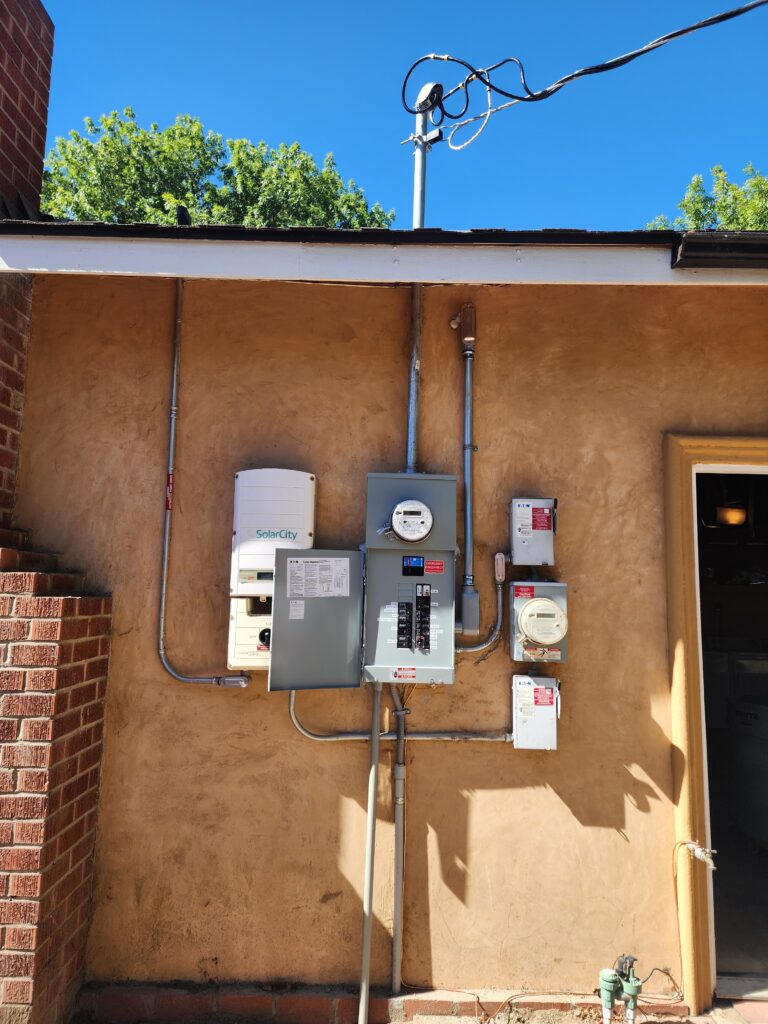
The most dangerous signs are physical. Go to your electrical panel and look at it, without opening the cover. Do you see any black, sooty marks or scorching around any of the breakers? Do you smell a faint burning odor, often described as burnt plastic or fishy? Do you hear any persistent buzzing or crackling sounds coming from the panel? If you experience any of these, you have an emergency. These are not warning signs of a future problem; they are signs of an active, dangerous fault. This could be a loose connection, a failing breaker, or severely overloaded wiring that is already overheating. You should call a licensed electrician, like Frayer Electric, immediately.
Finally, a visual inspection of your panel’s interior, performed by a professional, can reveal other issues. An electrician might find a panel full of “tandem” breakers. These are special, thin breakers that allow two circuits to fit into a single slot. While sometimes used appropriately, they are often a sign that a previous installer ran out of space and forced more circuits into the panel than it was designed for. An electrician may also find wiring that is disorganized, incorrectly sized for the breakers, or from different manufacturers, all of which are red flags that the panel is overworked and potentially unsafe.
How to Inspect Your Panel for Clues
There are a few simple, safe observations you can make as a homeowner. First, locate your electrical panel. It is usually in a garage, utility closet, or basement. Open the small metal door on the front. You should see a directory, or schedule, taped to the inside of the door. This directory lists what each breaker controls. You should also see the handles of all the individual breakers and the main breaker. Again, the main breaker is the largest one, usually at the top or bottom and set apart from the others. Read the number on this main breaker’s handle. This is your total service capacity. If this number is 100, you have a 100 amp service. If it is 200, you have a 200 amp service. If your home still has a 60 amp service, it is severely outdated and will almost certainly need to be upgraded before adding any new major appliances.
Next, look at the physical space inside the panel. Do you see any empty slots? These look like blank, rectangular cutouts where a new breaker could be installed. If your panel is completely full, with a breaker in every single slot, you have a very clear answer. You cannot add a new appliance that requires a new circuit without first addressing the lack of space. That new EV charger or hot tub needs its own dedicated breaker, and if there is no slot for one, you cannot install it.
However, this is the most critical point for homeowners to understand: empty slots do not equal available capacity. This is a common and dangerous misconception. Your panel might have five empty slots, leading you to believe you can add five new circuits. This is incorrect. The limiting factor is not the physical space; it is the total amperage rating on your main breaker. The 100 amp or 200 amp main breaker represents the total load your panel can handle at one time. Even if you have space, adding a 50 amp circuit for a hot tub to a 100 amp panel that is already serving an air conditioner and an electric range may overload the entire service. The main breaker is protecting the wires coming from the utility, and those wires have a finite capacity. An electrician does not just look for space; they perform a “load calculation” to see if your service can handle the additional electrical demand.
The Role of a Professional Load Calculation
A load calculation is the only reliable way to determine if your panel can handle a new appliance. This is not a guess; it is a complex calculation defined by the National Electrical Code (NEC). A licensed electrician must perform this calculation to ensure your home remains safe and code compliant. You cannot determine this just by adding up the amp ratings of your existing breakers. That method is incorrect, as your breakers will always add up to a number much larger than your main breaker. A load calculation is much more detailed.
An electrician performing an NEC load calculation starts with the general lighting and outlet load, which is based on your home’s square footage. They then add all the “fixed” appliances in your home. This includes the garbage disposal, dishwasher, furnace, and any other permanent fixtures. After that, they add the major loads, such as your air conditioning system, electric range, electric dryer, and electric water heater. The NEC provides “demand factors” for some of these loads. This means the code assumes you will not be running every single appliance at its maximum capacity all at the same time. For example, it applies a percentage to the total kitchen appliance load rather than using the full 100 percent value. This calculation is precise and results in a number that represents your home’s realistic electrical demand.
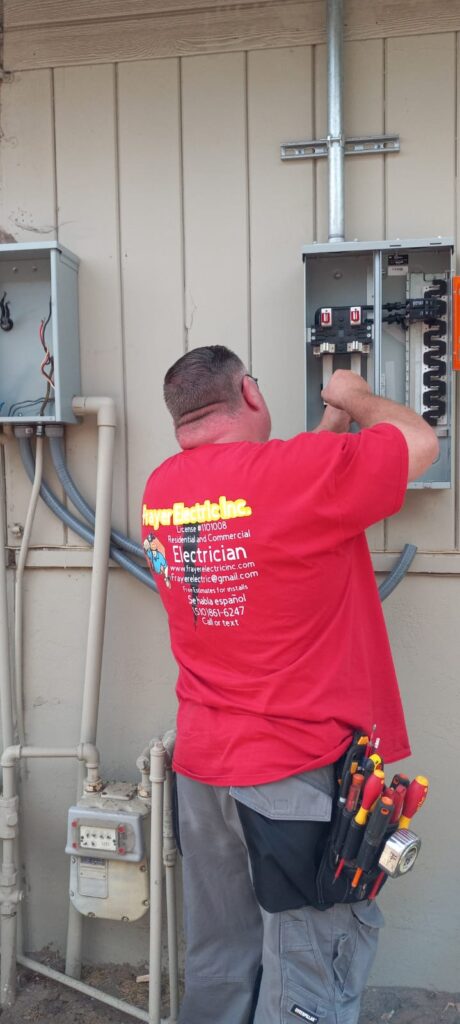
Once the electrician has this baseline number, they can accurately answer your question. They compare your home’s calculated load to your panel’s total capacity, which is the number on your main breaker. This reveals exactly how much “room” you have left. For example, your 200 amp panel might have a calculated existing load of 130 amps. This leaves you 70 amps of available capacity. If your new appliance, like a tankless electric water heater, requires 60 amps, you know that you can add it safely. However, if your 100 amp panel has a calculated load of 90 amps, you cannot add a 30 amp EV charger. The calculation proves you do not have the capacity.
This professional calculation is the definitive step. It removes all guesswork and protects your home, your family, and your property. It is a non negotiable part of any major appliance installation. Only after this calculation can you know for sure what your options are.
What Appliances Require the Most Power?
It is helpful to understand which appliances are the most power hungry. These are the items that almost always require a professional consultation. At the top of the list are systems that heat or cool. Your central air conditioner is one of the largest electrical loads in your home. Electric furnaces and heat pumps are also very high draw appliances. In the kitchen, the electric range or a separate electric cooktop is a major load. Induction cooktops, while efficient, also require a very high amperage circuit.
The next category includes appliances that heat water. Traditional electric water heaters draw a large, continuous load. Modern tankless electric water heaters are even more demanding. Because they must heat water instantly, they require massive amounts of power, sometimes needing two or three separate 40 amp circuits. Electric clothes dryers are another common 240 volt appliance that draws a significant load.
Finally, there are the newer and luxury items. A Level 2 EV charger is a very large, sustained load. It will be drawing 30, 40, or 50 amps continuously for several hours, which puts a significant, long term demand on your panel. Hot tubs and saunas also require their own high amperage, 240 volt circuits, often with special safety disconnects. When planning for any of these items, you should assume you will need an electrician to assess your panel.
Need an EV charger install? Click here to see the importance of hiring a professional.
Solutions When Your Panel Is Not Enough
If the load calculation confirms that your panel cannot handle the new appliance, you have several options. The most common and comprehensive solution is a panel upgrade, often called a “heavy up.” This involves replacing your existing 100 amp or 150 amp panel with a new 200 amp panel. This is a major project that often requires replacing the main service wires coming into your home and upgrading the grounding system. It provides a long term solution, giving you ample power for all your modern needs and future upgrades. A 200 amp service is the modern standard and adds significant value and safety to your home.
In some situations, a panel upgrade may not be necessary. If your main service has enough amperage capacity, but your panel box is physically full of breakers, you may be able to add a subpanel. A subpanel is a smaller, secondary panel that is fed from a single large breaker in your main panel. This provides new slots for new circuits. This is a common solution for a new addition, a garage workshop, or when adding multiple new loads like a pool and hot tub. The load calculation is still essential to ensure the main service can handle the subpanel’s new demand.
In rare cases, an electrician might be able to implement an energy management system or a special transfer switch. These devices can manage power, for instance, by not allowing your EV charger to run at the same time as your electric dryer. These are specialized solutions for specific circumstances. A qualified electrician can explain all your options, their costs, and the benefits of each.
Your electrical panel is the foundation of your home’s electrical safety. Adding a new, high power appliance is a significant change to that system, and it must be done correctly. Relying on guesswork, or simply hoping a new breaker will solve the problem, is a risk not worth taking. The only way to know for sure if your panel can handle the new load is to have a professional, licensed electrician perform a detailed load calculation based on the National Electrical Code. This assessment will protect your new appliance from damage, prevent chronic electrical problems, and, most importantly, protect your home and family from the serious risk of an electrical fire. Before you make your next big purchase, contact Frayer Electric in Patterson for a professional panel inspection.