Common Signs Your AC Wiring Is Failing
In Patterson, a reliable air conditioner is not a luxury; it is an essential part of home comfort and safety during our hot Central Valley summers. When your AC unit fails, the first instinct is often to blame the unit itself. You might suspect low refrigerant, a mechanical failure, or a dirty filter. These are certainly common issues. There is, however, a critical and often overlooked component that is fundamental to your system’s operation: the electrical wiring. Your air conditioner is a high powered appliance that places a significant demand on your home’s electrical system. The wiring that delivers this power, from the main panel to the outdoor condenser, is the lifeline of the entire system. When this wiring begins to fail, it can cause a wide range of problems, from simple performance issues to catastrophic fire hazards.
The electrical system for an AC unit is complex. It involves a dedicated high voltage circuit, typically 240 volts, a special breaker in your panel, and a disconnect box located near the outdoor unit. It also includes low voltage wiring for the thermostat controls. A fault in any part of this electrical chain can stop your AC from working correctly. Unfortunately, the signs of failing wiring are often mistaken for other problems. Homeowners may spend money on unnecessary HVAC maintenance when the root cause is electrical. Recognizing the specific warning signs of a wiring problem is crucial. It allows you to call the right professional, a licensed electrician, to address the issue safely. Ignoring these signs does not just risk damage to your expensive AC unit; it risks the safety of your entire home.
The Circuit Breaker Constantly Trips
Your home’s circuit breakers are safety devices. They are designed to do one job: cut off the electrical current when they detect a dangerous condition. This condition is usually an overload, where a circuit tries to draw more power than its wiring can handle, or a short circuit, where electricity finds an unintended, low resistance path. Your air conditioner is on its own dedicated circuit, usually a large “double pole” breaker in your panel. It is normal for this breaker to trip on a rare occasion, perhaps during a power surge or if the unit is struggling excessively. If your AC breaker trips repeatedly, it is a serious warning sign that something is wrong. You should not simply reset it and hope for the best.

When the breaker trips immediately every time the AC tries to start, it often signals a dead short in the wiring or the unit itself. This means a “hot” wire may have lost its insulation and is touching a ground wire or a metal component. This creates a massive, instant surge of electricity that the breaker correctly stops. If the breaker trips intermittently, perhaps after the AC has been running for a while, it could signal an overload condition. This might be a failing compressor, but it is often caused by damaged or high resistance wiring. The wire itself may be heating up, increasing resistance, and drawing more and more amps until the breaker finally trips.
Need an upgrade on your panel? Click here to see our electrical panel upgrade page.
A breaker that feels warm to the touch is another critical red flag. Breakers are not supposed to be hot. Heat indicates that a large amount of current is flowing through it, or that the connection between the breaker and the panel’s bus bar is loose. A loose connection creates high resistance, which in turn generates intense heat. This heat can melt the breaker, damage the panel, and start a fire. Do not ignore a tripping breaker. It is your panel’s way of screaming for help.
Strange Odors or Visible Scorch Marks
Your senses are powerful tools for detecting electrical danger. An electrical fault often produces a very distinct smell, one that is different from dust burning off a furnace. If you notice a sharp, acrid smell of burning plastic or Bakelite, often described as a “fishy” odor, coming from your main panel, your AC unit, or the disconnect box, you likely have a component overheating. This smell is the sound of insulation melting off wires or components. It is an urgent sign of an active electrical fault that requires immediate attention. You should turn off the AC at the breaker immediately and call an electrician.
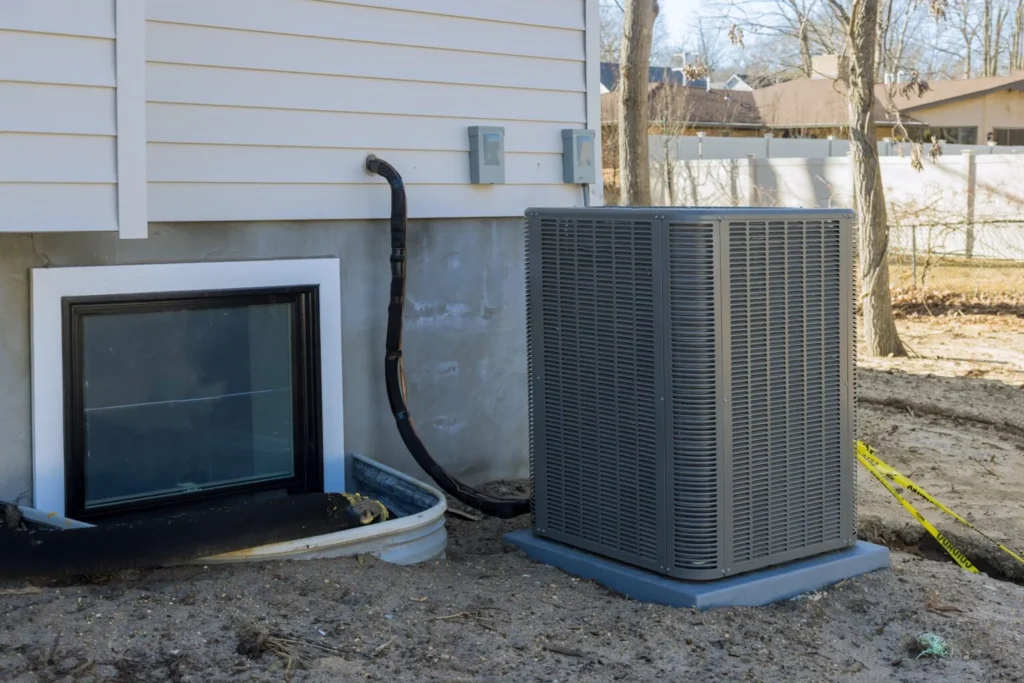
Visual inspection can also provide clear evidence. Go to your outdoor AC unit, called the condenser. Nearby, there should be a small gray box, which is the electrical disconnect. Open the cover, standing to the side as you do. Do you see any black soot, scorch marks, or melted plastic inside? These are signs of arcing or overheating. You should also check the breaker in your main electrical panel. Look for any discoloration or charring on the breaker itself or the panel cover near it.
These marks are proof that the system has already experienced a dangerous failure. A loose wire, a corroded terminal, or a damaged component has generated enough heat to physically char the equipment. This is not a future problem; it is an active hazard. Continuing to run the system in this condition is gambling with a house fire.
AC Performance Is Weak or Inconsistent
Many homeowners are surprised to learn that poor cooling performance is often an electrical problem, not a mechanical one. Your air conditioner’s components, especially the compressor and fan motors, require a precise and stable voltage to operate efficiently. Failing wiring can “starve” these components of the power they need, leading to a variety of performance issues. If your wiring is old, damaged, or was improperly sized to begin with, it can create high resistance. This resistance causes a “voltage drop” between the panel and the unit. While your panel may be providing 240 volts, the unit itself might only be receiving 220 volts or less.
This low voltage condition forces the motors to work harder and draw more amps to compensate. This excess strain generates heat, which leads to premature failure of the most expensive parts of your AC. A common symptom is an AC that hums or buzzes but struggles to start. The compressor is trying to engage but does not have enough power to overcome the initial inertia. This is sometimes a bad capacitor, which is an electrical component, but it is often a sign of the underlying wiring problem that caused the capacitor to fail.
Another symptom is an AC that runs, but the air coming from your vents is only cool, not cold. The fans might be spinning, but the compressor, which does the actual cooling, may be cycling on and off intermittently because its electrical supply is unstable. The system never gets to run long enough to properly cool your home. It seems like a mechanical issue, but the root cause is an electrical fault that an HVAC technician may not be trained to diagnose.
The Dangers of Damaged AC Wiring
It is important to understand exactly why failing AC wiring is so much more serious than a faulty extension cord. The primary danger is, without question, electrical fire. The wiring for an air conditioner carries a massive electrical load, often 30 amps or more, continuously for hours at a time. If this wire is damaged, corroded, or undersized, it generates immense heat. This heat does not just stay in the wire; it conducts to the surrounding materials, such as your home’s wooden framing, insulation, and drywall. Over time, this constant heating can dry out the wood, lowering its ignition temperature until it spontaneously combusts. This is how many electrical fires start, hidden inside a wall, long before any smoke is visible.
A short circuit is an even more immediate fire hazard. When a hot wire loses its insulation and touches another wire or a grounded surface, it creates an electrical arc. This arc is like a continuous lightning bolt, with temperatures hot enough to vaporize copper and ignite any nearby combustible material instantly. This is what the circuit breaker is designed to prevent, but if the breaker itself is old or faulty, it may not trip in time.
Beyond the fire risk, bad wiring will destroy your air conditioning unit. The compressor is the heart of your AC, and it is the most expensive component to replace. Running a compressor on low or fluctuating voltage is the fastest way to kill it. The motor windings overheat, the insulation inside melts, and the component seizes up. What could have been a wiring repair, handled by an electrician, becomes a multi thousand dollar system replacement. Failing wires provide “dirty” power that also stresses and destroys sensitive electronic control boards, fan motors, and capacitors.
What Causes AC Wiring to Fail?
AC wiring does not last forever, but several common factors can accelerate its failure. One of the most frequent culprits in the Central Valley is pest damage. Rodents, such as mice and rats, are notorious for chewing on electrical wires. They find the wires in attics, crawlspaces, and inside the condenser unit itself to be ideal for gnawing. Their chewing strips the protective insulation from the copper, leaving it bare. This directly causes short circuits, ground faults, and dangerous arcing. Even a small nick in the insulation can lead to a major fault.
Simple age and environmental exposure are also factors. The outdoor wiring that runs to your condenser is exposed to extreme elements. Patterson’s intense sun and heat can, over decades, make the wire’s outer sheath brittle and cracked. Moisture can then infiltrate the conduit, corroding the copper wire and the terminal connections. Corrosion creates resistance, and resistance creates heat, beginning a slow cycle of failure that ends with a hot, melted connection. Inside the unit, constant vibration from the compressor and fan can gradually loosen the terminal screws that hold the wires in place. A loose connection is one of the most common sources of electrical overheating.

Finally, improper installation is a significant cause of wiring failure. An air conditioner must be installed on a circuit with wiring of the correct size, or “gauge.” A unit requiring a 30 amp circuit needs 10 gauge copper wire. If an installer cut corners and used a smaller 12 gauge wire, which is only rated for 20 amps, that wire will be dangerously overloaded every time the AC runs. It will constantly overheat, slowly degrading until it fails completely. This is a severe code violation and a fire hazard created the day the unit was installed. This is why all electrical work must be performed by a qualified, licensed electrician who understands the National Electrical Code.
Want to know the signs you need a panel upgrade? Click here for more information.
Why You Must Hire a Licensed Electrician
When you suspect an AC wiring problem, it is critical to call the right professional. While an HVAC technician is an expert at the refrigeration and mechanical side of the system, diagnosing and repairing the electrical supply circuit is the specialty of a licensed electrician. Frayer Electric has the tools and training to safely work with high voltage 240 volt circuits. An electrician can perform diagnostic tests that go far beyond a simple visual inspection. They can use a multimeter to check for voltage drop at the unit, confirming if the wiring is delivering adequate power. They can also use a megohmmeter, or “megger,” to test the integrity of the wire’s insulation, finding hidden damage that is not visible to the naked eye.
An electrician will inspect the entire circuit, not just the unit. The problem may not be at the AC at all; it could be a failing breaker in the main panel or a corroded connection at the disconnect box. A qualified electrician knows the National Electrical Code requirements for your specific installation. They can determine if the wire gauge is correct for the load, if the breaker is the proper size, and if the system is safely grounded.
This is not a do it yourself project. Attempting to repair 240 volt wiring without proper training is extremely dangerous and potentially lethal. A mistake can lead to severe electric shock, electrocution, or an electrical fire. By hiring a professional electrician, you are ensuring the problem is diagnosed correctly and repaired in a way that is safe and compliant with all electrical codes.
Your air conditioner is a powerful and essential system, but it is entirely dependent on a safe and stable electrical circuit. The warning signs of failing wiring, such as tripping breakers, burning odors, scorch marks, and poor cooling performance, should never be ignored. These are not minor inconveniences; they are urgent signals that your system is compromised and potentially dangerous. Attempting to reset a breaker repeatedly or mask the problem only increases the risk of catastrophic component failure or a devastating house fire. If your Patterson home’s air conditioner is showing any of these electrical symptoms, protect your investment and your family by contacting a professional. Call Frayer Electric for a thorough and expert inspection of your AC’s electrical system.