
How to Wire a Backyard Gazebo the Right Way
Spring is the perfect time to get your backyard ready for warm evenings, and a well-lit gazebo turns any yard into a true outdoor living space. Wiring a gazebo the right way takes more than running an extension cord from the garage. It involves proper planning, code-compliant materials, and a safe connection to your home’s electrical system. Done correctly, gazebo wiring adds ambiance, functionality, and property value for years to come. Done wrong, it creates shock hazards, fire risks, and costly repairs. This guide walks through the correct steps for wiring a backyard gazebo so your outdoor space is safe, functional, and ready for the season.
What You Need to Know Before Wiring a Backyard Gazebo
Before any wires are pulled, a little planning goes a long way. Outdoor wiring must meet the National Electrical Code (NEC), use weather-rated materials, and connect safely to a properly sized circuit. The gazebo’s purpose also matters because lighting alone needs less power than a setup with fans, outlets, and entertainment gear. Permits are often required in California, and inspections help confirm the work is safe. Skipping these steps leads to failed inspections and insurance headaches down the line.
Planning Your Backyard Gazebo Wiring Project
Start by mapping out what you want your gazebo to do. A simple lighting setup might only need a single circuit, while a full outdoor living area with ceiling fans, speakers, and outlets requires much more. List every device you plan to install, along with its wattage, so the total load can be calculated. This tells you how many circuits the gazebo needs and what size wire to run. A licensed electrician can review your plan and confirm the main panel has enough capacity.
Next, think about the path from your home to the gazebo. Underground runs are cleaner and safer than overhead wires, but they require trenching and conduit rated for burial. The distance also affects wire size because longer runs need thicker wire to prevent voltage drop. Measure from your main panel or subpanel to the gazebo location, and add extra length for bends and terminations. This is also the time to decide if you want a switch at the house, inside the gazebo, or both.
Finally, consider future needs. Many homeowners regret running only one circuit when they later want to add a hot tub, string lights, or a small refrigerator. Installing a subpanel at the gazebo gives you room to grow without tearing up the yard again. It also makes troubleshooting easier since circuits can be shut off locally. Need help planning a safe, code-compliant layout? Click here for our gazebo lighting service.
Choosing the Right Materials for Backyard Gazebo Wiring
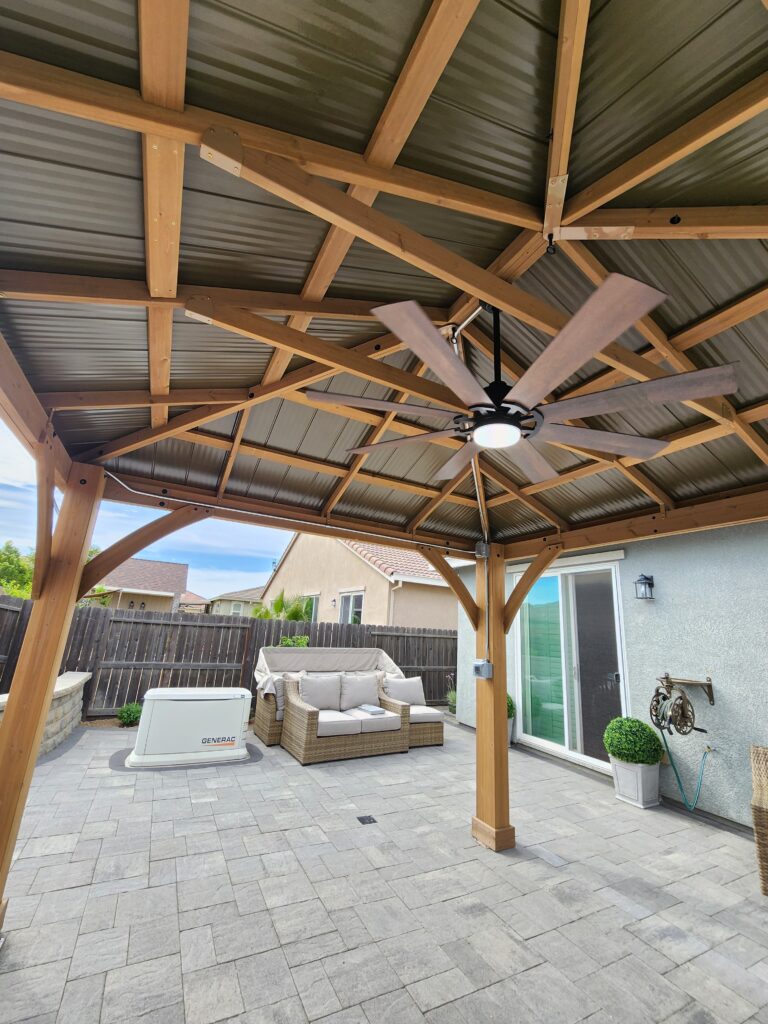
Outdoor wiring uses different materials than indoor wiring because it faces rain, sun, soil, and temperature swings. Direct burial cable like UF-B is common for underground runs, while THHN or THWN wire inside PVC or metal conduit offers added protection. All outlets must be GFCI protected, and outdoor boxes need weatherproof “in-use” covers that stay sealed even when something is plugged in. Light fixtures and fans must carry a wet or damp location rating based on where they are installed. Using the wrong materials is one of the top reasons outdoor wiring fails inspection.
Conduit choice matters just as much as wire choice. PVC conduit is affordable and resists corrosion, which makes it a strong option for buried runs. Rigid metal conduit holds up better where the wire exits the ground or runs along posts where it could be hit. Burial depth is set by code, and most residential circuits must be buried at least 18 inches deep, or 24 inches without conduit. Warning tape buried above the run helps protect the wires from future digging.
Don’t overlook the small parts like connectors, straps, and weatherproof wire nuts. These pieces are what keep moisture out of your connections, and a single loose fitting can let water ruin an entire run. Use listed outdoor-rated components at every junction, and avoid mixing aluminum and copper wire without the correct connectors. For switches and outlets, tamper-resistant and weather-resistant models are required for outdoor installs. If any of this sounds overwhelming, click here for our outdoor lighting installation service to have it done right.
Safety Codes for Backyard Gazebo Wiring
The NEC sets clear rules for outdoor wiring, and California adds its own amendments on top. Every 120-volt outlet in a gazebo must be GFCI protected to prevent shocks if water gets in. Any lights or fans installed where rain can reach them need a wet location rating, while covered areas that only see splashes can use damp-rated fixtures. Ceiling fans mounted in gazebos must be rated for outdoor use, since indoor fans rust and fail quickly when exposed to moisture. Bonding and grounding are also required to protect against faults.
Permits are another key piece of staying compliant. Most cities in the Central Valley require a permit for new outdoor circuits, subpanels, and underground runs. The permit process includes a rough inspection before the trench is covered and a final inspection once everything is connected. Skipping permits can cause problems when you sell your home or file an insurance claim after a storm. Licensed electricians pull permits as part of the job and handle the inspections for you.
Grounding deserves special attention in outdoor builds. A gazebo with metal posts, metal roofing, or a subpanel needs proper bonding so stray current has a safe path back to the panel. Ground rods may be required at the gazebo if a subpanel is installed, depending on the setup. Poor grounding is a silent hazard because everything can look fine until a fault occurs. An electrical inspection before and after the work gives you peace of mind that the system is safe.
How to Install Wiring for a Backyard Gazebo Step by Step
With planning done and materials gathered, the physical work can begin. Gazebo wiring typically follows a clear sequence: shut off power, trench the path, run conduit and wire, install boxes and fixtures, and make final connections. Each step builds on the last, and skipping one creates problems that are hard to fix later. Weather also plays a role because wet trenches and muddy conduit cause headaches during installation. Working with a licensed electrician keeps the project on schedule and up to code.
Running Power Safely for Backyard Gazebo Wiring
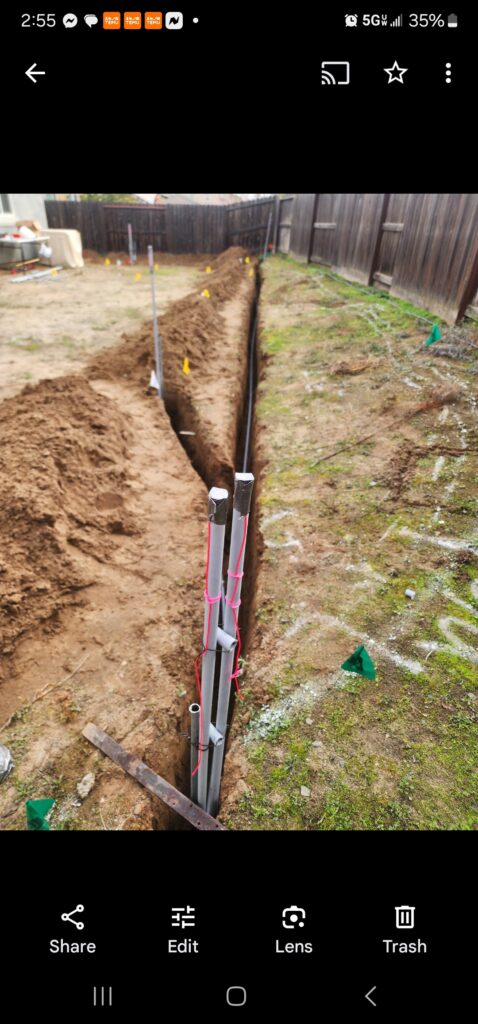
The first step is shutting off power at the main panel and verifying it with a tester. Next, the trench is dug from the home to the gazebo along the planned path, avoiding tree roots, sprinkler lines, and other utilities. Calling 811 before digging is free and required, since it marks buried gas, water, and electric lines. The trench depth must match what the wire and conduit require, and the bottom should be smooth to prevent damage. Sand or fine soil is often added as a cushion before the conduit is laid.
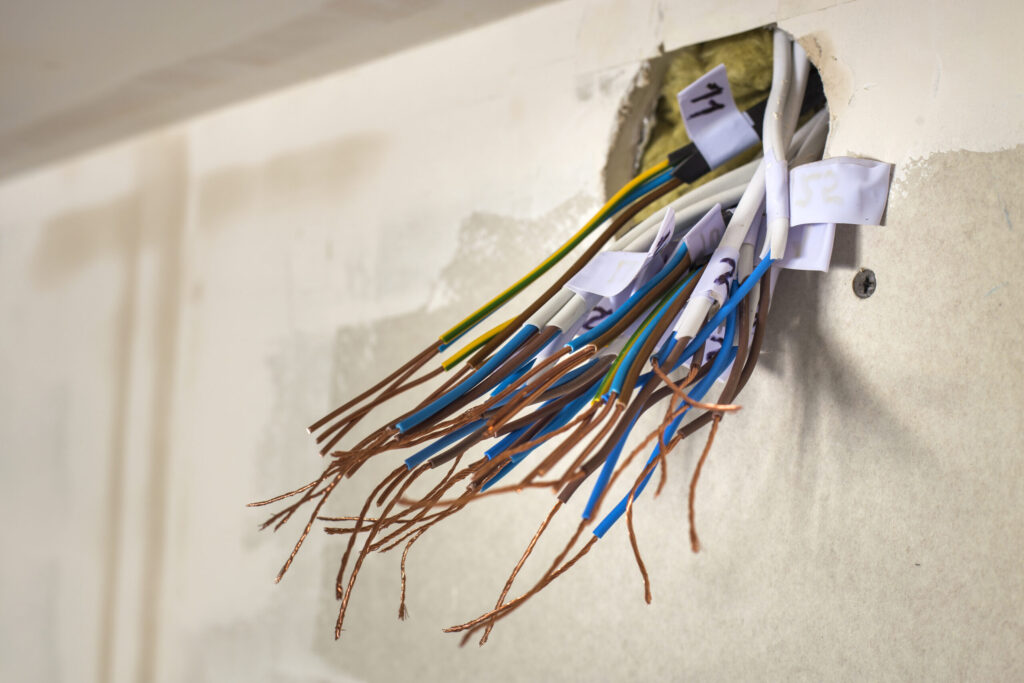
Once the trench is ready, conduit is assembled and glued or threaded together along the run. Pulling wire through conduit is easier with lubricant and a fish tape, especially for longer runs with bends. At the home end, the circuit ties into the main panel or an existing subpanel, using a breaker sized for the load. At the gazebo end, the wire enters a weatherproof box or subpanel where it branches out to lights, fans, and outlets. Every connection must be tight, properly stripped, and protected from moisture.
After the wire is run and connected, the trench is backfilled in layers so the conduit does not shift. Warning tape is placed partway up the trench as a future safety marker. The circuit stays off until inspection, since energizing unfinished work is a serious hazard. A rough inspection is scheduled before the trench is fully closed, giving the inspector a chance to verify depth and materials. This is the stage where cutting corners usually gets caught.
Installing Lights and Fans for Backyard Gazebo Wiring
Lighting is what makes a gazebo feel finished, and there are many options to choose from. Recessed lights in the ceiling give a clean look, while pendant fixtures add character over a dining area. Wall sconces on the posts provide soft light for seating areas, and string lights wrapped around the rafters create a warm glow for evenings. Every fixture must be rated for outdoor use and installed in a box designed to support its weight. Mixing fixture types often gives the best balance of task and ambient light.
Ceiling fans are a popular upgrade because they move air and keep bugs away during summer. Outdoor-rated fans are built with sealed motors, rust-resistant blades, and weatherproof housings. The ceiling box must be fan-rated, which is stronger than a standard light box, to support the weight and vibration. Wiring for a fan usually includes a separate switch leg for the light kit so each can be controlled on its own. A remote or wall control makes daily use easier.
Controls and dimmers bring everything together. A single switch at the gazebo entrance keeps things simple, while three-way switches at the house and gazebo give more flexibility. Dimmers let you set the mood for dinner, parties, or a quiet night outside. Smart switches add app control and scheduling, which is handy for security lighting. Want a professional install from start to finish? Click here for our interior lighting installation service for indoor and covered gazebo spaces.
Adding Outlets and Switches for Backyard Gazebo Wiring
Outlets make a gazebo far more useful, and placement matters as much as the count. A couple of outlets near seating areas cover phone charging and small appliances, while an outlet near the dining table handles slow cookers or blenders. All outdoor outlets must be GFCI protected and installed in weatherproof boxes with in-use covers. Tamper-resistant receptacles are also required by code to keep children safer. Spacing outlets evenly around the gazebo prevents the need for extension cords later.
Switches should be easy to reach from the main entry point of the gazebo. Grouping light, fan, and outlet switches in one location keeps things intuitive. Weather-resistant switches hold up better than standard indoor models, even under a covered roof. Labeling each switch during install saves time for anyone using the space later. A small subpanel with labeled breakers also makes it easy to shut off specific circuits for maintenance.
Dedicated circuits are worth considering for higher-draw items. A hot tub, outdoor kitchen, or large entertainment setup should not share a circuit with basic lighting. Separating loads prevents nuisance tripping and protects the rest of the system. If you plan to add a hot tub nearby, click here for our hot tub wiring service to keep everything safe and code-compliant. Planning these circuits during the gazebo build is cheaper than adding them later.
Why You Need a Licensed Electrician for Backyard Gazebo Wiring
Gazebo wiring looks simple on YouTube, but the details are where safety and code compliance live. A licensed electrician knows how to size circuits, pull permits, and build a system that passes inspection the first time. They also carry insurance, which protects your home and family if something goes wrong. Hiring a pro saves time, prevents costly rework, and gives you a clean install you can enjoy for decades. Frayer Electric is ready to handle every part of your gazebo wiring project.
Expert Backyard Gazebo Wiring You Can Trust
Our team handles gazebo wiring projects across the Central Valley every spring and summer. We start with a clear plan, a straightforward quote, and an honest timeline so you know what to expect. Every job uses outdoor-rated materials, proper burial depths, and weatherproof connections from end to end. We also coordinate permits and inspections, which removes a major headache for homeowners. The result is a gazebo that looks great and works safely for years.
We take pride in clean workmanship, and it shows in the small details. Conduit runs are straight, box covers sit flush, and wire connections are tight and protected. Our electricians test every circuit, every outlet, and every switch before leaving the site. We also walk you through how the system works so you feel confident using it. This level of care is what keeps our customers coming back for future projects.
Beyond the install, we stand behind our work. If something ever needs attention, we are a quick phone call away at (209) 961-3867. We also offer emergency electrician service around the clock for urgent issues. Our goal is long-term trust, not a one-time job. That mindset shapes every project we take on.
Affordable Backyard Gazebo Wiring Done the Right Way
Cost is a fair question for any outdoor project, and we believe in clear pricing from the start. Our quotes spell out labor, materials, permits, and any extras so there are no surprises at the end. We also explain the choices behind the quote, like wire size or subpanel options, so you can make informed decisions. Cutting corners on outdoor wiring always costs more in the long run, and we help you avoid those pitfalls. Quality materials and code-compliant work are the baseline, not the upgrade.
We also offer discounts that make quality work more affordable. Veterans, seniors, and first responders receive special pricing as a thank-you for their service. We serve Patterson and the surrounding Central Valley, including Modesto, Tracy, Manteca, Turlock, and more. Local service means faster response times and lower trip costs. It also means we know the permit offices and inspectors in your area.
Financing a larger outdoor project is easier when the scope is broken into phases. We can wire the gazebo now and leave provisions for future additions like a hot tub or outdoor kitchen. This spreads the cost while keeping the system expandable. Our team will walk you through the smartest order of operations for your budget. Honest advice is part of what we bring to every job.
Why Choose Frayer Electric for Backyard Gazebo Wiring
Frayer Electric is locally owned and operated with a strong commitment to integrity. We are licensed, insured, and experienced in every type of residential electrical work. Our reputation is built on straightforward quotes, clean installs, and responsive service. Homeowners across Patterson and the Central Valley trust us for projects big and small. Gazebo wiring is one of our favorite jobs because the results are so rewarding.
Our electricians are trained in the latest code requirements and install best practices. We invest in proper tools, outdoor-rated materials, and ongoing education so every job meets a high standard. Safety is never an afterthought, and we treat your home like our own. From the first phone call to the final walkthrough, we focus on a smooth, respectful experience. That is the Frayer Electric difference.
Ready to light up your backyard the right way? Call us at (209) 961-3867 or email info@frayerelectricinc.com to schedule a quote. We serve Patterson, Modesto, Tracy, Turlock, Manteca, and the surrounding Central Valley communities. Ask about our veteran, senior, and first responder discounts when you call. Let us help you build an outdoor space you will love for years.