
What a Grounding Issue Looks Like in an Older Home
Older homes across Patterson and the surrounding Central Valley were wired to the rules of their era, and many of those rules did not require a ground wire at every outlet. A grounding issue rarely announces itself with sparks or smoke; it usually shows up as a mild shock from the refrigerator door, a hum in the stereo, a surge protector light that never turns green, or a two prong outlet that someone replaced with a three prong outlet without running new wire. Fall is when these problems get noticed, because cooler weather brings space heaters, holiday lighting, and more hours spent indoors with electronics plugged into every available receptacle. Grounding is the safety system that gives fault current a fast path back to the source so the breaker can trip, and without it, a loose hot wire can energize a metal appliance housing and simply sit there waiting. Homeowners often assume a working outlet is a safe outlet, but a circuit can power a lamp perfectly while offering no protection at all. The good news is that grounding problems are diagnosable, and the fixes range from a single receptacle upgrade to a panel and wiring project depending on what an electrician finds. This guide walks through the warning signs, the underlying causes, and the testing that separates a real ground from a fake one.
Signs of a Grounding Issue in an Older Home
Most grounding problems are discovered by accident, usually when a homeowner plugs in something new and it behaves strangely. The clues tend to cluster around outlets, appliances, and electronics, and they often get blamed on the device instead of the wiring. A three light outlet tester is the tool most people reach for first, and it does catch obvious faults like an open ground or reversed polarity. That tester also has a serious blind spot, because it cannot tell the difference between a real equipment ground and a neutral wire jumpered over to the ground screw. Knowing the symptoms helps you tell an electrician what to look for, and it helps you understand why a quick visual check at the outlet cover is never the whole story.
Outlet Signs of a Grounding Issue in an Older Home
The most direct clue is the outlet face itself. Two slot receptacles with no round hole underneath tell you the circuit was installed before equipment grounding was standard practice for general purpose branch circuits in dwellings, which points to wiring from roughly the 1950s or earlier in most Central Valley housing stock. Homes from that period often have knob and tube wiring or early cloth covered cable with only a hot and a neutral conductor inside. When you find a mix of two slot and three slot outlets in the same room, someone did partial work at some point, and the new three slot devices may or may not have anything connected to the ground screw. Cheater adapters, the little gray plugs that convert three prong cords to two slot outlets, are another strong signal; they were never intended as a permanent solution and they provide no ground unless the outlet box is metal and properly bonded. Loose outlets that shift when you pull a plug out are worth noting too, because movement over decades breaks connections inside the box.
Outlets that were swapped to three prong without new wiring create a false sense of safety that is worse than the original condition. A homeowner sees the familiar round hole, plugs in a surge protector or a computer, and assumes the equipment is protected. The National Electrical Code does allow a replacement path for these situations under section 406.4(D), where a GFCI device protects the circuit and the receptacles get labeled with “GFCI Protected” and “No Equipment Ground.” Those labels matter, and their absence on a three prong outlet in a house full of two wire circuits is a red flag an inspector will catch immediately. Missing labels usually mean the swap was done by a previous owner or a handyman rather than a licensed electrician. If your home has a mix of device styles and no labeling anywhere, the wiring behind the walls deserves a professional look before you add any more load to it.
Surge protectors and power strips give you a free diagnostic reading every time you plug one in. Most units have a small indicator light marked “grounded” or “protected,” and that light stays dark when the ground path is missing or broken. People often replace the power strip twice before realizing the strip was fine and the outlet was the problem. A surge protector without a ground reference has nowhere to send excess voltage, so it offers almost nothing during a spike from a utility switching event or a lightning storm rolling through the valley. That gap becomes expensive when a modern television, a smart thermostat, or a variable speed HVAC board takes the hit. If your protector lights are dark, treat that as a real finding and not a manufacturing defect. Need a licensed electrician to check and correct your home’s ground path? Click here for our electrical grounding service.
Shocks and Tingles That Point to a Grounding Issue in an Older Home
A faint buzz or tingle when you touch a metal appliance is never normal, and it is one of the clearest signs of a grounding issue in an older home. What you are feeling is leakage current traveling through your body to earth because the wiring did not give it a better path. Washing machines, dryers, refrigerators, dishwashers, and metal light fixtures are the usual sources, since they have metal housings and motors with insulation that degrades over decades. The sensation often gets stronger when your hands are wet or when you are standing on a damp garage or laundry room floor, which is exactly the situation where a shock stops being a nuisance and becomes a genuine hazard. Some people notice it only in certain weather, and that seasonal pattern makes sense because humidity and moisture change how easily current moves through skin and concrete. Do not dismiss it as static electricity; static is a quick snap that does not repeat every single time you touch the same spot.
Shocks in kitchens, bathrooms, laundry rooms, garages, and outdoor areas carry extra weight because those spaces combine water with electricity. Modern code requires GFCI protection in all of those locations, but a home wired in 1955 had none of that, and many partial remodels since then covered only the room being worked on. A GFCI device measures the difference between current going out on the hot and returning on the neutral, and it trips in a fraction of a second when that difference reaches about five milliamps. This protection works even on a two wire circuit with no equipment ground, which is why it is the accepted retrofit for older homes. What GFCI protection does not do is give your appliances or surge protectors a true ground reference, so it should be understood as a life safety layer rather than a complete solution. Any shock felt in one of these rooms should be treated as urgent rather than something to watch for a few weeks.
Metal parts of the home itself can also become energized when grounding and bonding are incomplete. Metal water pipes, gas piping, ductwork, and even a metal sink or bathtub are supposed to be bonded so they stay at the same electrical potential as the rest of the system. Bonding was handled loosely in older construction, and later plumbing repairs with plastic pipe frequently interrupted a metallic path that the original electrician relied on. A homeowner who feels a tingle while showering or while touching a faucet and an appliance at the same time is describing a bonding problem, and that situation calls for immediate attention. Turn off the circuit if you can identify it and stop using the affected fixture until an electrician evaluates the system. Shocks like these have caused injuries and fatalities, and they are not the kind of thing that resolves itself with time. If you are feeling shocks right now, we answer around the clock; click here for our emergency electrician service.
Electronics Problems Caused by a Grounding Issue in an Older Home
Sensitive electronics behave badly on ungrounded circuits, and the symptoms are easy to misread as equipment failure. Audio systems develop a persistent hum that changes pitch when other loads switch on. Televisions and monitors show faint rolling bands or flicker. Desktop computers lock up or reboot without warning, and network equipment drops connections at random intervals. Modern devices use the ground conductor as a reference point for their internal circuitry and as a drain for electrical noise, so removing that reference leaves them working with interference they were never designed to tolerate. Replacing the device rarely helps, because the new one plugs into the same compromised outlet.
Home offices and entertainment centers concentrate the problem in one place. Multiple pieces of equipment share a circuit, each one contributing a small amount of leakage, and the combined effect can produce ground loops that hum through every speaker in the room. People try isolation transformers, ferrite chokes, and cable swaps before anyone checks the outlet itself. An electrician can run a dedicated grounded circuit to that area, which usually resolves the noise completely and gives the equipment a clean supply. That single circuit is often far cheaper than rewiring a whole house and delivers an immediate improvement. It also gives you a properly grounded location for a quality surge protector.
Appliance electronics have joined the list of vulnerable equipment over the last twenty years. Induction cooktops, tankless water heaters, HVAC control boards, LED drivers, and smart panels all contain circuitry that depends on stable voltage and a solid ground reference. A grounding issue in an older home shortens the life of these components and can void manufacturer warranties, since many warranties require installation on a properly grounded circuit. Homeowners upgrading to modern appliances in a house with 1950s wiring often discover this only after a control board fails. Correcting the grounding before the upgrade protects the investment and avoids a frustrating warranty conversation later. It also sets the stage for whole house surge protection, which requires a proper grounding electrode system to function as designed.
What Causes a Grounding Issue in an Older Home
Understanding the cause helps you understand the fix, and grounding problems come from a handful of predictable sources. Some are original to the construction, some were created by well meaning improvements, and some developed slowly as the house aged and got remodeled. Grounding and bonding also get confused with each other, even by people in the trades, so it helps to separate the two ideas clearly. The grounding electrode system connects the electrical system to the earth to stabilize voltage and handle lightning and surges. The equipment grounding conductor is the wire that runs alongside the hot and neutral and gives fault current a low impedance path back to the source so the breaker opens fast. Earth itself is not a fault clearing path, and that single fact explains why a ground rod alone never makes an ungrounded circuit safe.
Two Wire Circuits Behind a Grounding Issue in an Older Home
The most common cause is simply the age of the wiring. Homes built before the late 1950s were typically wired with two conductors, a hot and a neutral, with no separate grounding conductor running to the receptacle. Knob and tube installations used individual conductors supported by ceramic knobs and tubes, and early nonmetallic sheathed cable often shipped without a ground wire. This wiring was legal, competently installed in most cases, and served homes with a fraction of today’s electrical demand. The problem is not that the original work was bad; the problem is that appliances, electronics, and household load have changed enormously while the wiring stayed the same. Cloth insulation also becomes brittle after seventy years, cracking near junction boxes and light fixtures where heat accumulates.
Partial rewiring creates a patchwork that is difficult to sort out from the outside. A kitchen remodel in 1988 might have brought new grounded circuits to that room while the bedrooms stayed on original two wire runs. A later owner added a bathroom, and a third owner finished the garage. Each project touched a different part of the system, and the panel now feeds a mix of grounded and ungrounded circuits with no map of which is which. Junction boxes get buried behind drywall during these projects, which the code prohibits because boxes must stay accessible. Tracing all of this takes methodical circuit by circuit testing rather than assumptions based on the age of the house. That is why a full assessment beats guessing when you are deciding how much work a home actually needs.
Metal conduit and armored cable add another wrinkle in homes from certain periods. In some installations, the metal raceway or the cable armor was intended to serve as the equipment grounding path, and that arrangement can still be acceptable when it remains continuous and tight from end to end. Decades of vibration, corrosion, added junction boxes, and loosened fittings frequently break that continuity somewhere in the middle of a run. The outlet may test as grounded at one location and fail completely at the next box downstream. Old armored cable in particular relied on a thin bonding strip that can corrode or break where the cable was cut and installed. Testing with a proper meter and ground impedance tester tells you what the metal path is actually doing today rather than what it was supposed to do when it was new.
Bootleg Grounds and the Grounding Issue Hiding in an Older Home
A bootleg ground is a short jumper installed between the neutral terminal and the ground terminal on a receptacle, and it is one of the most dangerous things an electrician finds in older homes. Someone wanted a three prong outlet, had only two wires available, and used that jumper to make an outlet tester show a correctly wired result. On the surface everything looks right, the tester lights match the legend, and the surge protector shows a green light. Underneath, the ground pin on every plug is now connected directly to the neutral conductor, which carries current during normal operation. This is not an approved method anywhere in the National Electrical Code, and it fails in ways that put people at risk.
The failure mode is what makes a bootleg ground so serious. If the neutral connection opens anywhere upstream, at a wire nut, at a backstabbed device, or at the panel, the ground pin and everything attached to it rise to full line voltage. That means the metal case of a computer, the chassis of a washing machine, or the frame of a metal desk lamp becomes energized while looking completely normal. If the hot and neutral were reversed somewhere in the run, the appliance case is energized continuously from the moment it is plugged in. Neither condition trips a standard breaker, because no fault current is flowing until a person completes the circuit. A three light tester cannot detect any of this, which is why professional testing uses a meter and a known separate reference point.
Bootleg grounds show up most often in homes that changed hands several times or had rental turnover. They are quick, they cost nothing, and they satisfy a home inspector using only a plug in tester. Finding them requires pulling devices out of boxes and inspecting the terminations, which is standard practice during a thorough evaluation. When an electrician finds one, the correct repair is to remove the jumper and either run a new grounded circuit, extend an equipment grounding conductor from an accessible point in the same circuit, or install GFCI protection with the required labeling. Leaving it in place is not an option once it is identified. Want a professional evaluation of the outlets and circuits in your home? Click here for our electrical inspection service.
Service Panel and Electrode Problems That Create a Grounding Issue in an Older Home
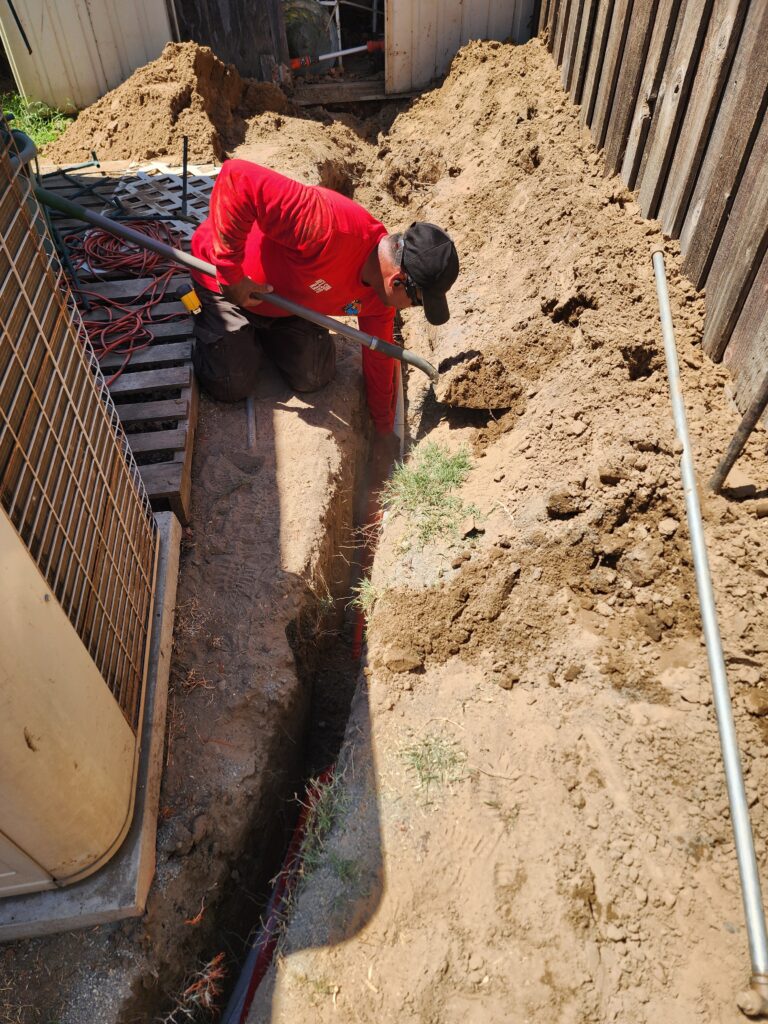
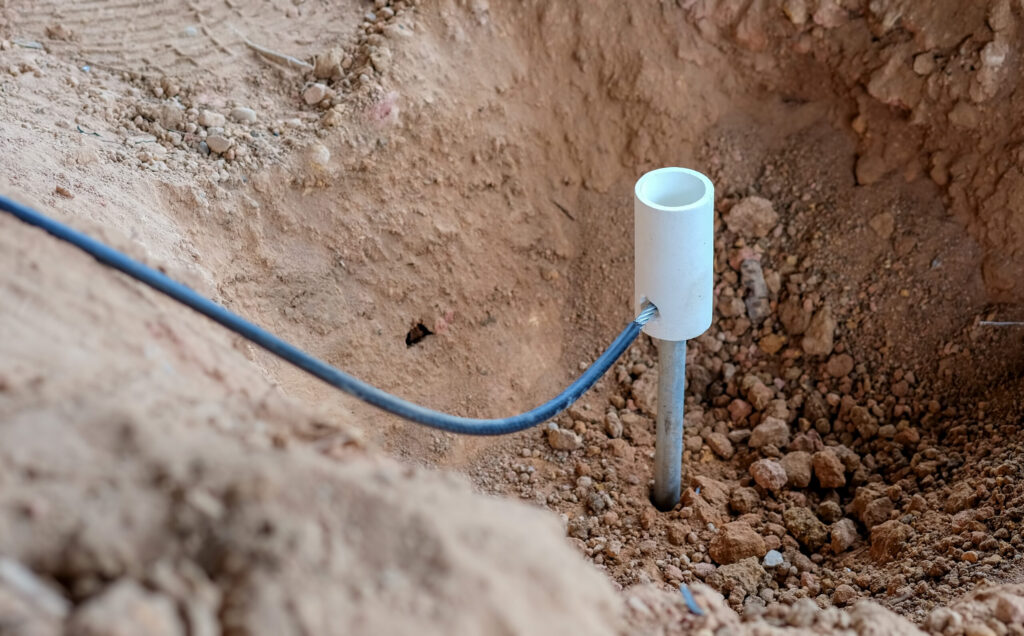
Grounding problems are not limited to receptacles, and some of the most consequential ones live at the service equipment. Older homes were often grounded to a metal underground water pipe, which was an acceptable electrode when the entire supply line was metallic. Repiping with plastic, a common repair in the Central Valley, cuts that path without anyone thinking about the electrical implications. Current code requires a supplemental electrode along with the water pipe connection, typically ground rods or a concrete encased electrode, and many older installations have only the single original connection. The ground clamp at the pipe is another weak point; it corrodes, it gets painted over, and it sometimes gets removed during plumbing work and never reattached. A visual check at the meter and panel often reveals the problem in under a minute.
Subpanel wiring is another frequent source of trouble in homes that added a garage, a shop, a pool, or an addition. Neutral and ground conductors are supposed to be bonded together at exactly one point, the service disconnect, and kept separate everywhere downstream. In a subpanel, that means neutrals land on an isolated bar, grounds land on a bonded bar, and the factory bonding screw or strap gets removed. When that separation is missing, normal neutral current flows on the grounding conductors and on any metal that happens to be connected to them, including conduit, water pipes, and appliance housings. The lights still work and nothing trips, so the condition can persist for decades unnoticed. Correcting it is straightforward for a licensed electrician and makes a measurable difference in system safety.
The panel itself may be the limiting factor in older properties. Homes with 60 amp or 100 amp services, fuse boxes, or panels from manufacturers with documented breaker failure histories create compounding risks when combined with grounding deficiencies. A breaker that does not open reliably defeats the entire purpose of the equipment grounding conductor, because the fault path only helps if the overcurrent device responds to it. Adding EV charging, a heat pump, or a modern kitchen to that kind of service pushes it past what it was designed to handle. Many homeowners in Patterson, Modesto, Turlock, and Tracy end up combining a panel upgrade with grounding corrections, since the work overlaps and the labor is more efficient when done together. That combined approach also brings the whole service up to current code in one project.
Why You Need a Licensed Electrician for a Grounding Issue in an Older Home
Grounding work sits at the intersection of code knowledge, testing skill, and hands on experience with wiring methods that are no longer installed today. A plug in tester tells you very little, and the most dangerous conditions are precisely the ones it cannot detect. Correcting a grounding issue in an older home also requires knowing which code compliant path fits the situation, since the National Electrical Code allows several approaches depending on what is accessible. Permits and inspections apply to much of this work in Stanislaus, San Joaquin, and Merced counties, and doing it properly protects your insurance coverage and your resale value. Frayer Electric works on Central Valley homes of every vintage, and we give you honest answers about what needs attention now and what can wait.
Testing That Confirms a Grounding Issue in an Older Home
Proper diagnosis starts with a walkthrough and a load of testing that goes well beyond a three light tester. We verify the grounding electrode system at the service, check the clamps and conductors, and confirm that supplemental electrodes are present and connected. We open representative devices to look for bootleg jumpers, backstabbed terminations, and reversed conductors, and we test ground continuity back to the panel rather than trusting what the outlet face suggests. Circuits get mapped so you know which rooms have real grounds and which do not. The result is a clear picture of your home instead of a guess based on the year it was built.
Documentation matters as much as the testing itself, especially for homeowners planning a sale, a remodel, or an insurance review. We record what we find, explain the code sections that apply, and give you a written scope so you can compare options without pressure. If we identify an immediate hazard, we tell you plainly and offer to address it on the spot. If the system is in reasonable shape, we tell you that too, because we would rather earn a long term customer than sell an unnecessary project. Straightforward quotes with no hidden fees is not a slogan for us; it is how we run every call.
Testing also catches problems that have nothing to do with grounding but share the same symptoms. Loose neutrals, failing breakers, damaged conductors from rodents or old repairs, and overloaded circuits can all produce flicker, heat, and odd appliance behavior. Sorting the actual cause from the assumed cause saves money and prevents repeat service calls. That diagnostic discipline is what separates a licensed electrician from a general repair approach. It is also why we bring meters and testers to every job rather than relying on one tool.
Repair Options for a Grounding Issue in an Older Home
There is rarely a single correct answer, and good options exist at several price points. Running new grounded circuits to the areas that need them most, such as a kitchen, a home office, or a laundry room, delivers real protection where the load and the risk are highest. Extending an equipment grounding conductor to specific outlets is sometimes possible when an accessible junction point exists on the same circuit. GFCI protection with proper labeling is the accepted retrofit for two wire circuits and provides genuine shock protection even without a ground. Full rewiring is the most complete solution and makes sense during a major remodel or when the existing insulation is failing.
Choosing among those options depends on your home, your plans, and your budget. A family staying twenty years in a 1948 house may want a phased rewire spread across a few projects. Someone preparing to sell may want targeted corrections and documentation that satisfies an inspector. A homeowner adding an EV charger or a heat pump usually needs the panel and grounding addressed first, since the new equipment depends on both. We walk through the tradeoffs with you rather than pushing the largest job on the menu. Ready to add GFCI protection to the rooms that need it most? Click here for our GFCI outlet installation service.
Timing the work with other projects saves money and disruption. Open walls during a remodel make new circuits dramatically cheaper to install. A planned panel upgrade is the natural moment to correct electrode and bonding deficiencies. Whole house surge protection installs cleanly once the grounding electrode system is verified and correct, and it protects the electronics that grounding problems tend to damage. Bundling these items into one visit reduces trip charges and gets your home fully current in a single effort. We help you sequence the work so each dollar does the most good.
Why Choose Frayer Electric for a Grounding Issue in an Older Home
Frayer Electric is locally owned and operated out of Patterson, and we serve homeowners throughout the Central Valley including Modesto, Turlock, Tracy, Manteca, Ripon, Oakdale, Ceres, Riverbank, Salida, Lathrop, Merced, Los Banos, Stockton, and Lodi. We are licensed and insured, and every job is performed to current National Electrical Code standards with permits pulled where required. Our team has worked on the full range of Central Valley housing, from farmhouses with knob and tube to tract homes from every decade since. That range of experience matters when the wiring in front of you is seventy years old and nothing is labeled. We show up on time, explain what we find in plain language, and leave your home clean.
Integrity drives how we quote and how we work. You get a straightforward price before we begin, with no hidden fees added at the end and no scare tactics about conditions that are not actually dangerous. We offer discounts for veterans, seniors, and first responders, because those neighbors have earned it. When something is safe to defer, we say so, and when something needs immediate correction, we explain exactly why. That honesty is the reason so much of our work comes from referrals.
Electrical problems do not keep business hours, and neither do we. Frayer Electric provides 24/7 emergency service for shocks, burning smells, dead circuits, and anything else that cannot wait until morning. Call us at (510) 861-6247 or email info@frayerelectricinc.com to schedule an evaluation of your home’s grounding. We are committed to getting it done right every time, on the first visit. Your family’s safety depends on wiring you cannot see, and we make sure it is doing its job.