How to Tell if Your Outlets Are Overloaded
Your outlets work hard every day, powering everything from phone chargers to window air conditioners. When you plug in more than a circuit can safely handle, those outlets become overloaded, and the warning signs are easy to miss until something goes wrong. An overloaded outlet builds up heat inside the wall, and that heat ranks among the leading causes of residential electrical fires. The good news is that your home gives you clear clues long before a serious problem develops. Learning to read those clues helps you protect your family, your appliances, and your house. As temperatures climb across the Central Valley, summer cooling pushes household circuits harder than almost any other season of the year. This guide walks you through the signs, the causes, and the smart fixes for overloaded outlets in your Patterson home.
Common Signs Your Outlets Are Overloaded
Overloaded outlets rarely fail silently; they send out signals you can see, hear, smell, and even feel. Some warnings are subtle, like a faceplate that feels slightly warm to the touch. Others are loud and obvious, like a breaker that snaps off in the middle of cooking dinner. Knowing what counts as normal and what counts as a red flag keeps you ahead of a costly repair. These signs show up in homes of every age, though older houses with fewer circuits tend to show them sooner. Pay close attention when several of these symptoms appear together, because that pattern points strongly toward a circuit carrying more load than it was built to handle.
Warm Outlets and Burning Smells Signal Overloaded Outlets
A properly working outlet should stay cool, no matter how many hours a device stays plugged in. When you press your hand against a faceplate and feel warmth, that heat is a warning that current is meeting resistance somewhere behind the wall. Heat builds when too much current flows through wiring that was never sized for that much load. The plastic on the outlet can soften, discolor, or develop a yellow or brown tint near the slots. In severe cases the outlet starts to melt, and the smell of hot plastic drifts into the room. That burning odor is a serious alarm, and it means you should stop using the outlet right away. Heat damage rarely repairs itself, and each cycle of overheating weakens the connection a little more.
The burning smell tied to an overloaded outlet has a sharp, acrid quality that stands apart from ordinary cooking or dust odors. It often comes with a faint sizzling or crackling sound as electricity arcs across loose or damaged connections. Arcing creates intense localized heat, sometimes hot enough to scorch the wood framing inside the wall. Many homeowners notice a small scorch mark or soot stain at the edge of the faceplate after the fact. By that point the wiring insulation may already be compromised, leaving bare conductors close together. Bare conductors raise the risk of a short circuit, and a short circuit near combustible material is how walls catch fire. This is the stage where waiting even a few days can turn a simple fix into a major rebuild.
If you smell burning or feel heat, unplug everything from that outlet and the ones near it on the same circuit. Avoid plugging anything back in until a licensed electrician inspects the wiring behind the wall. A professional can open the outlet box, check for charred insulation, and confirm if the connections are loose or the circuit is simply carrying too much. Loose connections are common, and they often hide behind outlets that have been pushed and pulled for years. An electrician can also test the actual load on the circuit with a clamp meter and compare it to the breaker rating. That measurement tells the real story about how close the circuit runs to its limit. Need a safe replacement or a protected outlet for a high moisture area? Click here for our GFCI outlet installation service.

Tripping Breakers Point to Overloaded Outlets
A circuit breaker is a safety device designed to cut power before wires overheat. When a breaker trips, it is doing exactly its job, sensing that the current has climbed past the safe threshold. A standard household circuit is rated for 15 amps or 20 amps, and the breaker shuts off when the draw exceeds that number. One trip now and then can happen when a motor starts up or a few large appliances run at once. Repeated trips on the same circuit tell a different story, because that pattern means the everyday load runs too close to the limit. Resetting the breaker again and again without reducing the load is not a fix; it simply postpones the next trip. Each trip also stresses the breaker mechanism, and a worn breaker can eventually fail to trip when it should.
Pay attention to which outlets share a circuit, since several rooms often run off a single breaker in many homes. You might plug a microwave into the kitchen and watch the bathroom lights die at the same moment, which reveals a shared circuit under strain. Mapping your panel helps you understand how much you are asking each breaker to carry. Modern building codes require more dedicated circuits than older codes did, so a house built decades ago usually has fewer of them. Fewer circuits means more outlets compete for the same limited supply of current. That competition is the root cause behind many nuisance trips. A licensed electrician can label your panel, test each circuit, and identify the ones running hot.
A breaker that trips constantly may also be the device itself wearing out rather than a pure overload. Breakers contain small springs and contacts that fatigue over years of heating and cooling cycles. A tired breaker can trip at a lower threshold than its rating, or worse, stick closed and fail to protect the circuit. Either outcome is dangerous, and neither is something to ignore. An electrician can test the breaker, compare its trip point to its rating, and replace it if it falls outside safe tolerance. They can also confirm the breaker matches the wire gauge, since a mismatched breaker is a hidden fire risk. Tripping often or breakers feel warm to the touch? Click here for our circuit breaker repair service.
Flickering Lights and Buzzing Reveal Overloaded Outlets
Lights that dim or flicker when an appliance kicks on are a classic symptom of a circuit pushed near its limit. When a large motor like a refrigerator compressor or window air conditioner starts, it pulls a brief surge of current. On a healthy circuit that surge barely registers, and the lights hold steady. On an overloaded circuit the surge drops the available voltage, and the lights visibly dip. A single quick flicker now and then is usually harmless and expected. A pattern of dimming every time the same appliance runs signals that the circuit has little headroom left. Tracking when the flicker happens often points you straight to the appliance causing the strain.
Buzzing or humming from an outlet or switch is another sound you should never tune out. A healthy electrical connection is silent, so any audible noise means current is jumping a gap or vibrating against a loose part. Loose wiring inside an outlet box can buzz as the current arcs across the gap. That arcing produces heat and slowly degrades the metal contacts. Over time the connection grows looser, the buzz grows louder, and the heat grows more intense. The same sound from inside the breaker panel is even more concerning, because it may mean a loose connection at a high current point. Sounds like these warrant a prompt inspection rather than a wait and see approach.
Flickering and buzzing both trace back to the same core problem of too much demand on too little supply. The fix is rarely as simple as moving one cord, though that can buy short term relief. The lasting solution usually involves spreading the load across more circuits or upgrading the panel to deliver more capacity. An electrician can calculate your home’s total demand and compare it to the panel’s rating. If the math shows your panel runs near its ceiling, an upgrade restores the headroom your home needs. Newer panels also support arc fault breakers that detect dangerous arcing before it starts a fire. A panel with proper capacity is the most reliable long term cure for chronic flickering.
What Causes Overloaded Outlets in Your Home
Understanding the cause behind overloaded outlets helps you prevent the problem instead of just reacting to it. Most overloads come down to one simple equation: the connected devices ask for more power than the circuit can safely deliver. That imbalance can build slowly as you add gadgets over the years, or it can spike suddenly when several heavy appliances run together. Home habits, the age of the wiring, and the season all play a part. The causes below are the ones electricians see most often in Central Valley homes. Spotting your own patterns in this list is the first step toward a safer, more reliable electrical system.
Too Many Devices Cause Overloaded Outlets
Modern homes run far more electronics than the homes these circuits were originally designed to serve. A single living room might host a television, a sound system, a gaming console, several chargers, and a lamp, all on one circuit. Each device alone draws a modest amount, but the total adds up faster than most people expect. A circuit rated for 15 amps safely handles roughly 1,440 watts under continuous use, following the standard eighty percent rule electricians apply. Stack enough devices and you cross that line without realizing it. The circuit does not care that each item is small; it only sees the combined draw. When the combined draw passes the rating, the outlet and wiring start to overheat.
High draw appliances are the biggest culprits, and many homeowners underestimate how hungry they are. A space heater, a hair dryer, a microwave, and a toaster each pull a large share of a circuit on their own. Run two of those at once on the same circuit and an overload is nearly guaranteed. Kitchens and bathrooms are hotspots because they pack high wattage appliances into small spaces. This is exactly why modern codes require dedicated circuits for kitchens, bathrooms, and laundry areas. Older homes built before those codes often force several heavy appliances onto a single shared line. That mismatch between old wiring and new demand drives a large share of the overloads we see.
The slow creep of added devices makes this cause easy to miss until trouble appears. You plug in one more charger, then a new lamp, then a small fridge in the garage, and nothing seems wrong at first. The circuit quietly carries a heavier and heavier load until a hot day or a new appliance tips it over the edge. By then the wiring may have endured months of running warm, which shortens its lifespan. A professional load calculation reveals how much each circuit truly carries against what it can handle. That data lets you redistribute devices or add circuits before damage sets in. Smart planning today prevents the melted outlet and emergency call tomorrow.
Power Strips and Extension Cords Lead to Overloaded Outlets
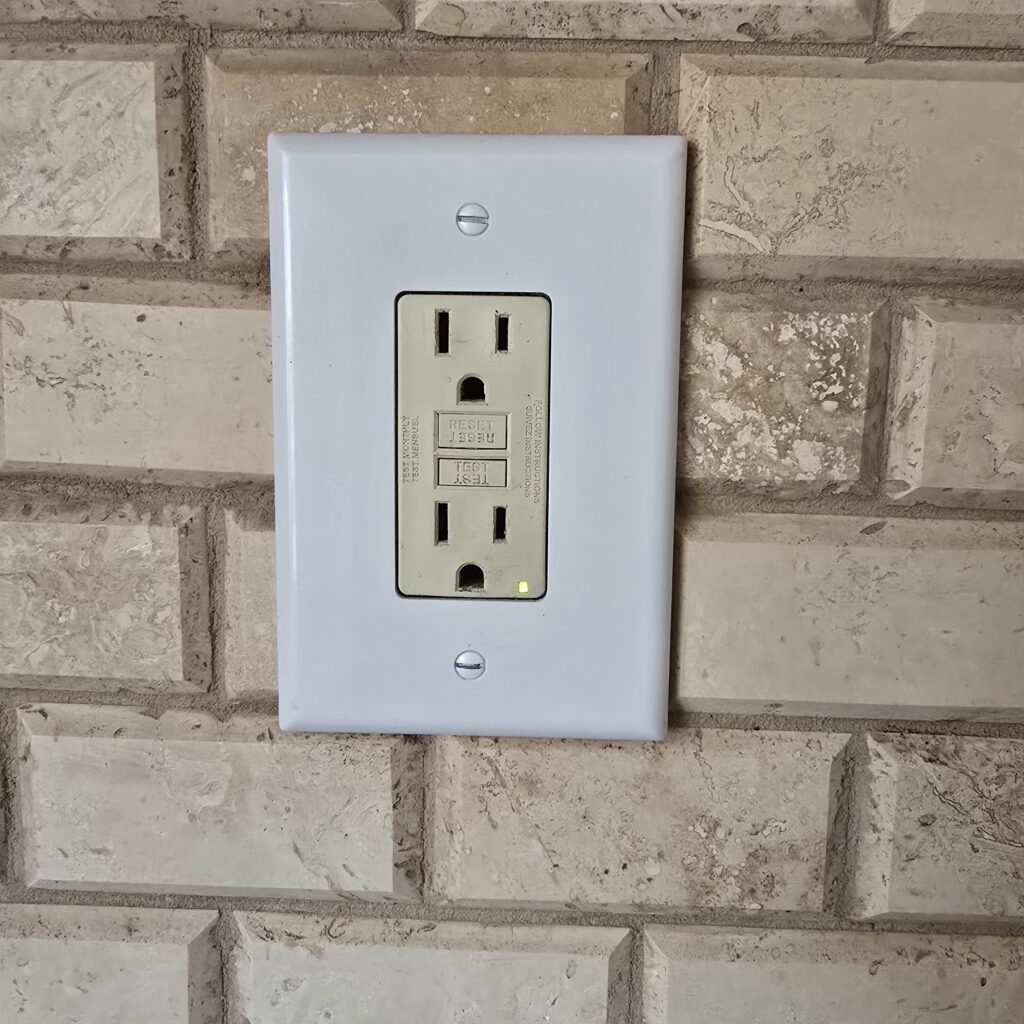
Power strips and extension cords solve a shortage of outlets, but they also make overloads dangerously easy. A power strip does not add capacity to a circuit; it simply splits the same single outlet among more devices. Plugging six items into a strip still draws from the one circuit feeding that wall outlet. Many people treat a strip as if it created new power, when in reality it just hides the growing load. The circuit behind the wall still has the same fixed limit it always did. Overload that limit and the outlet heats up regardless of how the devices are arranged. The strip can disguise the danger right up until the moment something fails.
Daisy chaining, the habit of plugging one power strip into another, multiplies the risk and violates electrical safety codes. Each added link concentrates more current through a single cord never rated for that much load. Inexpensive extension cords compound the danger because their thin wires heat up quickly under heavy draw. A cord run under a rug or behind furniture traps that heat with nowhere to escape. Trapped heat is one of the quiet ways household fires begin. Extension cords are built for temporary use, not as permanent wiring hidden inside a home. Using them long term signals that the room simply needs more permanent outlets.
The real solution to a power strip habit is adding properly installed outlets where you actually need them. New outlets tie into the circuit through wiring sized and protected for the job. An electrician can assess the room, determine if the existing circuit can support more outlets, or run a new circuit when needed. This approach removes the tangle of cords and the fire risk that comes with them. It also restores the clean, code compliant setup your home should have. Adding outlets is a modest investment compared to the cost of repairing fire or smoke damage. Properly placed outlets also raise the everyday convenience and resale value of your home.
Summer Appliances Create Overloaded Outlets
Summer in the Central Valley puts a heavy strain on home electrical systems that the cooler months never demand. Window air conditioners and portable units are some of the most power hungry appliances in any home. A single window unit can draw enough current to claim a large slice of a 15 amp circuit by itself. Add a box fan, a television, and a few chargers to the same circuit and the load climbs toward the danger zone fast. Air conditioners also cycle on with a startup surge that briefly spikes far above their running draw. That repeated surge stresses outlets and wiring that already sit near their limit. Long stretches of triple digit heat mean these units run for hours, keeping the circuit hot the entire time.
Outdoor entertaining and seasonal habits add their own quiet load during the warm months. Pool pumps, outdoor lighting, blenders, and patio coolers all pull from circuits that sit idle most of the year. A garage refrigerator works overtime in the heat, drawing more current than it does in winter. Families spend more time at home with more devices running at once during long summer afternoons. Each addition seems minor, but together they push circuits that were borderline straight into overload. The season simply concentrates demand into a smaller window of hours each day. Recognizing this seasonal spike helps you plan upgrades before the worst of the heat arrives.
The smartest move is to prepare your electrical system for summer before the temperature climbs. A dedicated circuit for a window air conditioner keeps the rest of the room free from its heavy draw. Spreading high wattage devices across separate circuits stops any single outlet from carrying the full burden. An electrician can review your cooling setup and identify which circuits face the greatest summer risk. They can recommend dedicated lines, added outlets, or a panel upgrade to handle the seasonal demand. These steps keep your home cool and safe through the hottest stretch of the year. A little planning in spring or early summer prevents a tripped breaker on the hottest day in July.
Why You Need a Professional to Fix Overloaded Outlets
Overloaded outlets are not a problem to patch with guesswork or a quick reset of the breaker. The wiring behind your walls carries enough current to cause serious injury or fire when handled wrong. A licensed electrician brings the testing tools, the code knowledge, and the trained eye to find the true cause. At Frayer Electric, we diagnose the root issue and fix it the right way the first time. The result is a safer home, fewer surprises, and electrical service that keeps up with how you actually live.
How Frayer Electric Diagnoses Overloaded Outlets
Our diagnosis starts with listening to what your home has been telling you. We ask which outlets feel warm, which breakers trip, and when the lights tend to flicker. Those details point us toward the circuits under the most strain. From there we measure the actual current on each suspect circuit with a clamp meter. That reading shows exactly how close the load runs to the breaker rating, with no guessing involved.
Next we open the outlet boxes and inspect the connections behind the faceplates. We look for scorched insulation, loose terminals, and signs of arcing that hide out of sight. We also check that each breaker matches the wire gauge it protects, since a mismatch is a common hidden hazard. Our team confirms grounding is intact, because a poor ground turns a small fault into a real danger. Every step follows current electrical code, so your repair holds up to inspection. We document what we find and explain it in plain language before any work begins.
Once we understand the full picture, we lay out your options clearly. Sometimes the fix is redistributing devices and adding an outlet or two; other times the right answer is a new dedicated circuit or a panel with more capacity. We explain the cost and benefit of each path so you can choose with confidence. You get a straightforward quote with no hidden fees, every time. Wondering exactly how loaded your circuits are? Click here for our electrical inspection service.

Upgrades That Prevent Overloaded Outlets
Preventing overloaded outlets often means giving your home more capacity to work with. A panel upgrade is the most common improvement we recommend for homes that have outgrown their original wiring. Many Central Valley houses were built with panels sized for a much lighter electrical lifestyle. Modern air conditioning, electric vehicle charging, and a house full of electronics ask far more of that old equipment. Upgrading the panel adds room for new circuits and modern safety breakers.
Dedicated circuits are another powerful fix for chronic overloads. A dedicated circuit serves one heavy appliance, like a window air conditioner or a microwave, so it never competes for power. This removes the most common cause of nuisance trips and warm outlets. We can also install arc fault and ground fault protection where code now requires it. These breakers sense dangerous conditions and cut power before a fire can start. Each upgrade brings your home closer to current safety standards while making daily life smoother.
Adding outlets where you actually use power ends the reliance on tangled extension cords. We place new outlets on circuits sized to carry the real load of the room. This is especially valuable in kitchens, home offices, and garages that have taken on new duties over the years. As summer heat drives up cooling demand, these upgrades keep your home running cool and safe. We size every improvement to your specific household, not a generic template. The goal is an electrical system that fits the way you live today and has room for tomorrow.
Why Choose Frayer Electric for Overloaded Outlets
Frayer Electric is locally owned and operated, serving Patterson and the surrounding Central Valley with integrity. We are licensed and insured, so every job meets professional standards and protects your property. Our team treats your home with respect and leaves the work area clean. We believe in straightforward quotes with no hidden fees, because trust matters more than any single job. You always know what you are paying for before we start.
We back our work with the kind of care that comes from being your neighbors. Our electricians stay current on the latest code requirements and safety practices. We offer discounts for veterans, seniors, and first responders as a thank you for their service. When an electrical problem cannot wait, our 24/7 emergency service is ready to respond. A warm outlet or a burning smell is never something to put off until morning.
Choosing Frayer Electric means choosing a team committed to getting it done right every time. We do not cut corners, and we do not leave you guessing about your home’s safety. From a single overloaded outlet to a full panel upgrade, we handle the job with skill and honesty. Our reputation across the Central Valley rests on doing careful work and standing behind it. Reach out today at (209) 961-3867 to schedule your service and put overloaded outlets behind you.