Why Older Homes Need Updated Electrical Wiring
Older homes in Patterson offer a unique charm and character that new construction often lacks. These properties have history, established landscaping, and solid craftsmanship. They also carry a hidden liability: an electrical system designed for a world that no longer exists. When many of these homes were built, electricity was used for basic lighting, a radio, and perhaps a refrigerator. The electrical demands of that time were incredibly small compared to the standards of today. Our modern lives run on a constant stream of high amperage power, from computers and entertainment systems to high efficiency air conditioners and electric vehicle chargers.
This enormous gap between what an old electrical system was designed to handle and what we demand of it creates a serious point of failure. The wiring, panels, and outlets in an older home are often overworked, outdated, and simply unsafe. They were not built to support our modern lifestyles. Continuing to use this original, degraded wiring is not just an inconvenience; it is one of the leading causes of residential fires. Updating your home’s electrical system is not a luxury upgrade. It is a fundamental investment in the safety of your family and the protection of your property.
The Electrical Demands of the Modern World
Consider the daily electrical load of a home in 1950. A family might have used a few lamps, a single television set, a refrigerator, and a toaster. The home’s entire electrical service might have been 60 amps, which was more than enough at the time. Now, consider the load of a home today. We have multiple high definition televisions, powerful computers for work and gaming, and charging stations for numerous smartphones and tablets. Our kitchens are filled with high wattage appliances like microwaves, air fryers, and induction cooktops. We rely on powerful central air conditioning systems to handle Central Valley heat, and many of us are adding Level 2 EV chargers, which draw a massive, continuous load.

The modern home requires a service of 200 amps to operate safely and efficiently. An older home with a 60 amp or even a 100 amp panel is constantly at its limit. This strains every single component of the system. Wires heat up, connections loosen, and breakers trip. You might experience this as flickering lights when your AC unit kicks on, or a breaker that trips every time you use the microwave and the coffee maker at the same time. These are not small quirks; they are warning signs that your system is overloaded. It is struggling to deliver the power you are demanding, and this constant strain leads to a much faster breakdown of components and a significantly higher risk of failure.
Dangers of Outdated Wiring Materials
The most significant hazard in older homes is the wiring material itself. The wiring hidden inside your walls is the highway for all your electricity, and if that highway is crumbling, you have a serious problem. Two types of wiring are particularly infamous: knob and tube wiring and aluminum wiring.
Knob and tube wiring was the standard from the 1880s until the 1940s. It consists of two separate wires, one hot and one neutral, that are run through the wall studs and floor joists. Ceramic knobs hold the wires secure, while ceramic tubes protect the wires as they pass through wood framing. The wires themselves were insulated with rubberized cloth. In its prime, it was a functional system, but it has three critical flaws. First, that cloth and rubber insulation is now decades old. It has become brittle, cracked, and has likely flaked off in many areas, leaving live, bare wires exposed in your walls. Second, this system has no ground wire. This is a major safety deficiency that we will discuss later. Third, knob and tube wiring was designed to be cooled by open air in the wall cavities. Modern insulation, such as blown in cellulose or spray foam, smothers these wires, causing them to overheat to dangerous temperatures, creating an extreme fire hazard.
Aluminum wiring became a popular, cheap substitute for copper in the mid 1960s through the mid 1970s. This material has a critical flaw: it expands and contracts at a much higher rate than copper when it heats up and cools down. This constant thermal cycling causes the electrical connections at your outlets, switches, and the breaker panel to loosen over time. A loose electrical connection creates high resistance. High resistance, in turn, generates intense heat. This heat can melt the outlet, the switch, or the wire insulation, leading directly to an electrical fire. Aluminum also oxidizes when it contacts other metals, further increasing resistance and heat.
The Problem of Ungrounded Outlets
One of the most visible signs of an outdated electrical system is the two prong outlet. Modern electrical systems are “grounded,” which is what that third, round prong on your plug is for. The ground wire provides a safe path for stray electricity to travel from an appliance directly into the earth. If a hot wire inside your metal toaster were to come loose and touch the metal casing, the ground wire would instantly channel that dangerous current away, likely tripping the circuit breaker and shutting off the power. This protects you from a severe shock.
In an ungrounded, two prong system, that safety path does not exist. If that same fault occurs in the toaster, the entire metal body of the appliance becomes energized and waits. When you touch it, you become the ground path. The electricity will travel through your body to find the ground, causing a painful electric shock, severe injury, or even electrocution. This lack of grounding also leaves your expensive, sensitive electronics vulnerable. Modern computers, televisions, and charging systems rely on the ground wire to dissipate static electricity and power surges. Without it, these devices can be easily destroyed during a minor electrical event.

Some homeowners use three-to-two prong adapters as a “solution.” This is a dangerous practice. These adapters do not create a ground connection. They simply allow a three prong plug to fit into a two prong outlet, giving a false sense of security while leaving the shock and fire hazard completely unresolved. The only correct solution is to run new, grounded wiring to the outlet.
Insufficient Panel Capacity and Overloaded Circuits
The electrical panel, or breaker box, is the heart of your electrical system. It is the central distribution point that separates your main service into individual circuits, each protected by a breaker or fuse. Older homes often have panels that are completely insufficient for modern needs. Many still rely on fuse boxes. Fuse boxes are archaic and pose a unique danger. When a fuse blows, it must be replaced. Frustrated homeowners would often replace a 15 amp fuse with a 20 amp or 30 amp fuse to stop it from blowing. This act, known as overfusing, is like disabling the safety valve on a pressure cooker. It allows a dangerous amount of current to flow through wiring that was only rated for 15 amps, all but guaranteeing the wires will overheat inside the walls and start a fire.
Want a panel upgrade? Click here to see when it may be time for new equipment.
Modern circuit breaker panels are much safer and more convenient. Even so, the panel’s total capacity is the limiting factor. A 100 amp panel was the standard for decades, but it is no longer enough for most homes. If you have a 100 amp panel and add an electric vehicle charger, you will almost certainly be overloading your main service. This will lead to frequent main breaker trips, flickering lights, and a system under constant, unsafe strain.
A modern electrical installation requires a 200 amp panel. This provides the capacity to safely run all of your appliances. It also allows for the proper number of dedicated circuits. Modern code requires dedicated circuits for refrigerators, microwaves, kitchen outlets, bathroom outlets, and laundry rooms. Older systems often put the entire kitchen on one or two circuits, which is why your breaker trips when you try to make toast and coffee at the same time.
The Benefits of a Complete Home Rewire
Facing the prospect of a whole home rewire can seem daunting. It is a significant project, but the benefits to your safety, finances, and lifestyle are immediate and substantial. The primary benefit is safety. By replacing old, degraded wiring with new, modern copper wiring (NM cable), you are effectively eliminating the single greatest fire risk in your home. You gain peace of mind knowing your family is not sleeping in a house with hidden electrical hazards.
The second benefit is capacity and functionality. After a rewire, your home will be able to handle modern life. You can install a new kitchen with all the appliances you want. You can add a hot tub or that EV charger in the garage. Your lights will stop flickering, and your breakers will stop tripping. Your home’s electrical system will finally support your lifestyle instead of limiting it.
A rewire is also a major financial investment. Many insurance companies will refuse to insure a home with knob and tube wiring, or they will charge exorbitant premiums. Updating your electrical system makes your home fully insurable and can lower your premiums. It also significantly increases your property value. A home with a new 200 amp panel and modern wiring is a huge selling point. Buyers know they are getting a safe, reliable home that is ready for the future, which makes it far more valuable than a comparable home that still needs a complete electrical overhaul.
What Does a Home Rewire Involve?
A whole home rewire is a systematic process performed by licensed electricians, like Frayer Electric. It is not a DIY project. The process involves pulling new, code compliant wiring to every switch, outlet, and light fixture in the home. This new wiring includes a dedicated ground wire for every circuit, ensuring your home is safe.
To do this, electricians will need to make strategic, small openings in your drywall or plaster. The goal is always to minimize the impact on your finished walls, often using attic and crawlspace access to fish wires to their new locations. The old, dangerous wiring is disconnected from the panel and left abandoned safely in the walls, or removed where accessible.
Need a home rewire? Click here to see our electrical wiring service.
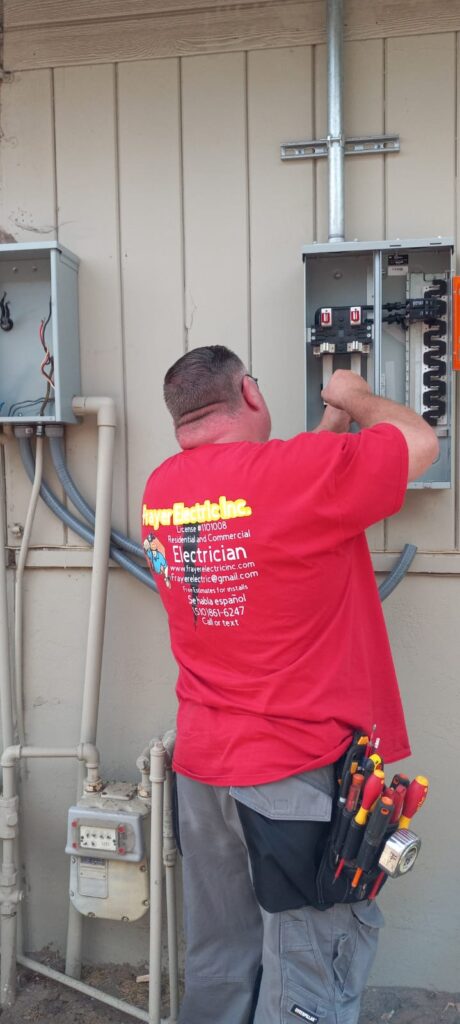
A critical part of the project is a main panel upgrade. The old fuse box or undersized breaker panel is removed completely. A new, 200 amp main service panel is installed, providing the capacity your home needs. All the new circuits are landed on new, modern circuit breakers. Depending on your needs, this may also include installing special breakers like GFCIs (Ground Fault Circuit Interrupters) for kitchens and bathrooms, and AFCIs (Arc Fault Circuit Interrupters) for living spaces, which provide an even higher level of fire prevention. The entire process is performed under a permit and inspected by the city or county to ensure everything is 100 percent code compliant.
The charm of an older home should not come with the constant, hidden risk of an outdated electrical system. That wiring, which has served the home for 50, 70, or even 100 years, has reached the end of its safe, functional life. The demands of our modern, power hungry world are too great for these old systems to bear. Continuing to rely on them is a gamble. A home rewire is a fundamental investment in your family’s safety, the functionality of your home, and the long term value of your property. If you live in an older Patterson home and experience flickering lights, tripping breakers, or have two prong outlets, it is time for a professional assessment. Contact Frayer Electric today for a complete electrical inspection to understand the true condition of your wiring.