
Why GFCI Outlets Are a Must for Outdoor Spaces
Spring weather in the Central Valley brings more time outside, which means more use of outdoor outlets for yard tools, string lights, pool pumps, and patio appliances. Water, dirt, and weather exposure turn a standard outlet into a shock hazard fast. A Ground Fault Circuit Interrupter, better known as a GFCI outlet, shuts off power within milliseconds when it detects a ground fault. That tiny delay is the difference between a mild tingle and a trip to the emergency room. For any outdoor space in Patterson, Modesto, Tracy, or anywhere across the Central Valley, GFCI protection is not optional; it is required by code and it saves lives.
How GFCI Outlets Protect Outdoor Spaces From Shock and Electrocution
Outdoor electrical work faces conditions that indoor wiring never sees. Sprinkler overspray, rain, humidity swings, insects, dust, and UV exposure all wear down standard outlets quickly. A GFCI outlet constantly compares the current flowing out on the hot wire with the current returning on the neutral wire. When those numbers do not match, even by a tiny fraction of an amp, the outlet assumes electricity is leaking somewhere it should not be and cuts power immediately. That leak could be through a frayed extension cord, a wet tool, or a person. Outdoor spaces are exactly where these leaks happen most often, which is why the National Electrical Code requires GFCI protection for every outdoor receptacle.
How GFCI Outlets Detect Ground Faults in Outdoor Spaces
A GFCI outlet works on a simple but powerful principle of current balance. Electricity flowing from the hot wire to a tool and back through the neutral wire should always be equal. If even four to six milliamps of current takes a different path, such as through water, metal, or a human body, the GFCI senses the imbalance. It then trips the internal breaker in about one-twentieth of a second. Standard breakers cannot detect this kind of leak because they only trip on overload or short circuit. That speed and sensitivity are what make GFCI outlets so effective at preventing electrocution outdoors.
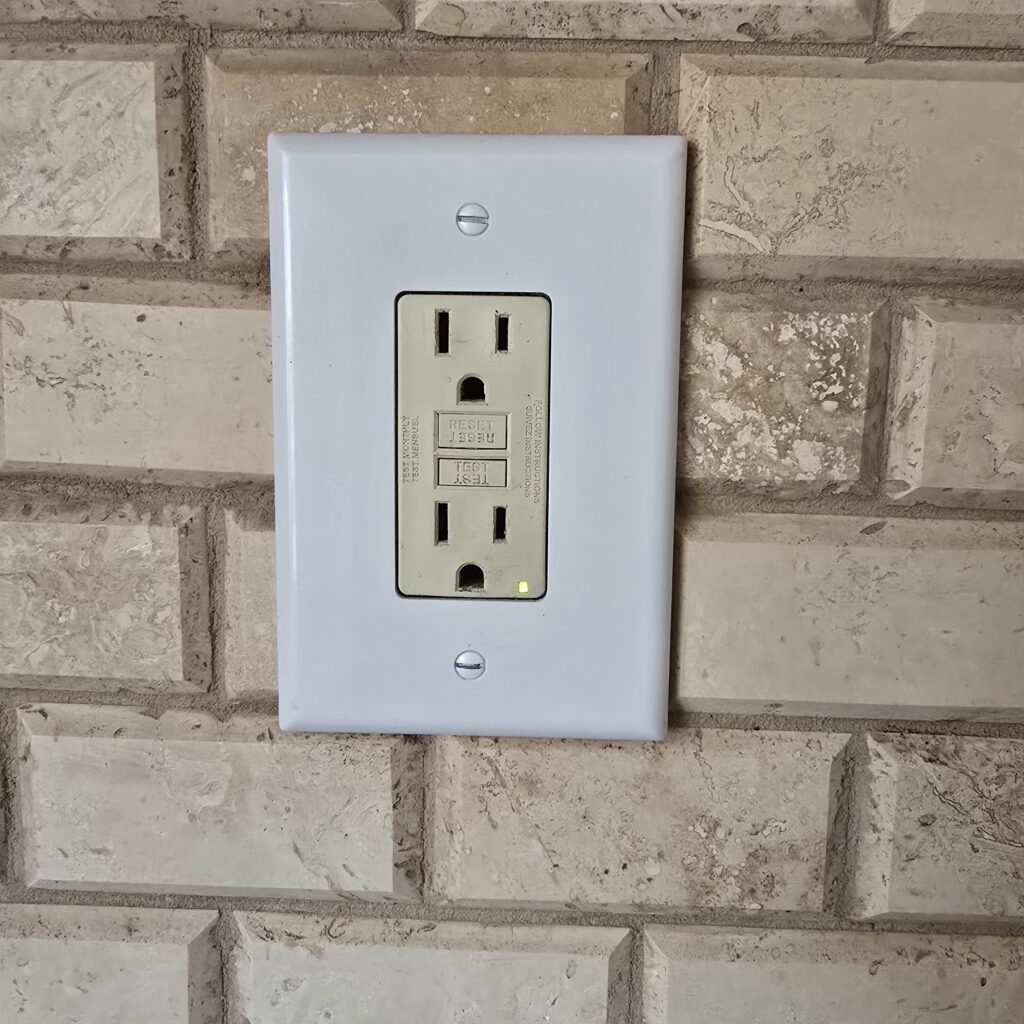
The sensing circuit inside a GFCI is always active, even when nothing is plugged in. A small transformer called a differential current sensor watches the two wires every moment power is flowing. When a ground fault begins, the sensor triggers a solenoid that physically opens the circuit. This happens faster than the human heart can enter fibrillation, which is the main cause of death in electrical accidents. The outlet then stays tripped until someone presses the reset button, giving you a clear signal that something went wrong. That reset button is also a safety feature; it forces you to check the problem before restoring power.
Outdoor conditions make ground faults much more likely than indoor conditions. Morning dew on a lawn mower cord, a sprinkler hitting an extension cord, or a cracked tool casing all create easy paths for current to leak. Without GFCI protection, that leaking current flows unnoticed until someone touches the tool or cord and becomes the new path to ground. With GFCI protection, the outlet trips before the person feels anything more than a mild shock. If you are unsure whether your outdoor outlets have this protection, you can schedule an electrical inspection with our team to find out.

How GFCI Outlets Save Lives in Outdoor Spaces
Electrocution is still one of the leading causes of accidental death at home, and most cases happen outdoors or in wet areas. Before GFCI requirements became widespread in the 1970s, hundreds of Americans died each year from preventable household shocks. After GFCI rules expanded to outdoor outlets, garages, pools, and bathrooms, that number dropped by more than eighty percent. The physics are simple; as little as 100 milliamps across the chest can stop a human heart. A GFCI trips long before current reaches dangerous levels, keeping you in the safe zone.
Children and pets face the highest risk in outdoor spaces because they are closer to the ground and more likely to come into contact with wet surfaces. A kid dragging a plugged-in radio near a pool, a dog chewing a landscape lighting cable, or a gardener using a pressure washer on a hot day are all real scenarios where GFCI outlets have saved lives. The outlet does not care what caused the fault; it only cares that current is going somewhere it should not. That impartial, automatic response is what makes GFCI protection so reliable outdoors.
Heat also plays a role in outdoor electrical safety, especially in Central Valley summers when temperatures push past 100 degrees. Hot weather makes insulation brittle, expands metal contacts, and speeds up the breakdown of older outlets. A GFCI keeps watch even as the hardware around it ages, flagging problems before they become fatal. Regular testing once a month, using the built-in test and reset buttons, confirms the outlet is still working. If an outlet fails the test, it needs immediate replacement by a licensed electrician.
How GFCI Outlets Meet Code Requirements for Outdoor Spaces
The National Electrical Code has required GFCI protection for outdoor receptacles since 1973, and the rules have expanded with every code update. Today, every 125-volt, 15- and 20-amp outlet installed outdoors must have GFCI protection, with no exceptions for location or use. This includes patio outlets, soffit outlets, deck outlets, outlets on detached garages, and any outlet accessible from outside. California has adopted these rules and often adds stricter local amendments, especially in areas with pools, spas, or irrigation systems. Skipping GFCI protection is a code violation that can fail a home inspection and void homeowner insurance claims.
Code also requires weather-resistant, or WR-rated, GFCI outlets for any outdoor location. These outlets use corrosion-resistant contacts, UV-stable plastics, and sealed internal components to handle sun, rain, and temperature swings. A standard indoor GFCI installed outside will fail much sooner and may not trip reliably when it matters most. Pairing a WR-rated GFCI with an in-use, or bubble-style, weatherproof cover gives you full protection even while a cord is plugged in. This combination is now the standard for all new outdoor installations.
New construction, remodels, and panel upgrades all trigger updated code compliance, which means older homes often need retrofits when work is done. If your home was built before 2000, there is a good chance some of your outdoor outlets do not meet current standards. We handle these upgrades every week and can bring your outdoor electrical system up to code efficiently. Ready to add safe, code-compliant outdoor outlets? Visit our GFCI outlet installation page to learn more.

Why GFCI Outlets Are Essential for Every Type of Outdoor Space
Different outdoor areas create different electrical risks, but GFCI outlets handle them all with the same reliable response. Patios, pool decks, garden beds, driveways, and detached workshops each have their own mix of water, foot traffic, and equipment demands. A properly installed GFCI outlet matches its protection to these conditions, giving you safe power exactly where you need it. Understanding how GFCI outlets work in each type of outdoor space helps you plan smarter installations and avoid common mistakes. It also helps you know which areas of your property need attention first.
Why GFCI Outlets Are Essential for Pool and Spa Outdoor Spaces
Pool and spa areas carry the highest electrical risk of any outdoor space, and GFCI protection is non-negotiable here. Water conducts electricity efficiently, and a person standing in or near a pool becomes a direct path to ground the moment a fault occurs. Code requires GFCI protection for every outlet within 20 feet of a pool or spa, along with all pump motors, underwater lights, and heating equipment. Many older pools were built before these rules existed, so retrofits are common and urgent. Upgrading protection in these areas is one of the most important safety steps a homeowner can take.
GFCI outlets for pool areas also need to be bonded and grounded correctly, which is different from a standard outlet installation. Bonding ties all metal parts of the pool structure together so they share the same electrical potential, preventing stray voltage from causing shocks in the water. Grounding gives fault current a safe path back to the service panel, where the GFCI and breaker can respond. When these systems work together, swimmers stay safe even if a pump motor develops a fault. When they are missing or damaged, the risk climbs dramatically.
We handle pool and spa wiring upgrades across the Central Valley, from Patterson to Tracy to Merced. Our electricians follow both National Electrical Code rules and California-specific amendments to make sure every installation is safe and inspection-ready. If you have an older pool or are planning a new one, getting the electrical system right matters more than almost any other detail. For pool-specific wiring help, check our pool wiring service page. We also offer hot tub wiring for spa and jacuzzi installations.
Why GFCI Outlets Are Essential for Patios and Deck Outdoor Spaces
Patios and decks see constant use for grilling, entertaining, charging devices, and powering outdoor appliances. Rain, sprinkler overspray, and spilled drinks are all daily realities, which is why GFCI protection is critical in these areas. A single uncovered outlet on a deck can become a serious hazard during a sudden spring thunderstorm or an evening pool party. Weather-resistant GFCI outlets paired with in-use covers handle these conditions without interrupting your plans. They also keep holiday lighting and outdoor speaker systems running safely for months at a time.
Patio and deck outlets often power devices that draw heavy current, such as outdoor refrigerators, pizza ovens, patio heaters, and sound systems. These loads stress the outlet and its wiring, especially during summer heat when internal temperatures can climb. A properly sized GFCI outlet on a dedicated circuit handles these demands without nuisance tripping. Undersized circuits or daisy-chained outlets, on the other hand, can overheat and create fire risks. Good outdoor electrical design starts with the right circuit and the right outlet for the job.
Placement matters as much as the outlet itself. Outlets should be mounted at least 12 inches above the finished surface, protected by a weatherproof cover, and located where extension cords will not create trip hazards. Our electricians plan outlet locations based on how you actually use your patio, not just where the wires are easiest to run. That attention to detail makes everyday life safer and more convenient. For outdoor lighting installed alongside new outlets, see our outdoor lighting installation page.
Why GFCI Outlets Are Essential for Garden and Landscape Outdoor Spaces
Gardens, flower beds, and landscape features rely on a mix of low-voltage lighting, irrigation timers, pond pumps, and seasonal decorations. Each of these devices plugs into an outlet somewhere, and every one of those outlets needs GFCI protection. Moist soil, morning dew, and buried cables all create ground fault risks that standard outlets cannot handle. A weather-resistant GFCI outlet installed on a dedicated landscape circuit keeps these systems running safely year-round. It also makes it easy to reset power after a storm without calling for service.
Underground circuits feeding garden outlets and lighting need extra care during installation. Conduit depth, cable type, and splice locations all affect long-term reliability and code compliance. A GFCI outlet at the end of a poorly installed underground run will trip constantly from moisture intrusion, which frustrates homeowners and often leads to someone bypassing the protection entirely. Doing the underground work right the first time avoids this cycle. Our team handles trenching, conduit, and outlet installation as one coordinated project.
Landscape lighting also benefits from GFCI protection, even when low-voltage fixtures are in use. The transformer that powers low-voltage lights plugs into a line-voltage outlet, and that outlet is what needs GFCI protection. Many homeowners miss this detail and end up with beautiful landscape lighting on an unprotected circuit. We catch these issues during installation and upgrades across the Central Valley. For underground wiring needs, visit our underground circuits page.
Why You Need Professional GFCI Outlet Installation From Frayer Electric
GFCI outlets look simple on the outside, but the wiring behind them has to be exactly right to work as designed. Reversed hot and neutral wires, shared neutrals, or miswired load and line terminals can all make a GFCI fail silently. That means the outlet looks normal, accepts plugs, and powers devices, but does not trip during a ground fault. Professional installation removes that risk by following code, testing every outlet, and documenting the work. For Central Valley homeowners who want real safety, hiring a licensed electrician is the only answer that makes sense.
Why You Need a Licensed Electrician for GFCI Outdoor Installations
A licensed electrician brings training, testing equipment, and code knowledge that no DIY guide can replace. California requires licensing for electrical work above a very small scope, and outdoor installations almost always exceed that limit. Licensed electricians carry liability insurance, follow permit requirements, and provide documentation that satisfies inspectors and insurance companies. That paper trail matters if you ever sell your home or file an insurance claim after a storm. It also gives you a clear point of contact if anything needs adjustment later.
Testing is another area where professionals stand apart. A licensed electrician uses a GFCI tester, a multimeter, and sometimes a clamp meter to confirm the outlet trips at the correct current, resets properly, and reads correct voltage under load. These tests catch miswiring that the built-in test button cannot detect. They also verify that upstream breakers, grounds, and neutrals are all healthy. Skipping these checks can leave a dangerous outlet in place for years.
Permits and inspections are part of most outdoor electrical work, especially for pool areas, new circuits, and panel-level changes. A licensed electrician handles permitting for you and meets the inspector on site to answer questions. That process protects your investment and confirms the work meets local code. Our team handles these steps for every job that requires them, without passing the hassle on to you.
Why You Need GFCI Protection for Long-Term Outdoor Safety
Outdoor electrical systems age faster than indoor systems because of sun, heat, and moisture exposure. Even a well-installed GFCI outlet will need testing, cleaning, and eventual replacement after 10 to 15 years of outdoor service. Homeowners who skip this maintenance often find out the hard way that their outlet stopped providing protection years ago. A simple monthly test and a professional inspection every few years keeps your system reliable. This is especially important in the Central Valley, where summer heat accelerates wear.
Long-term safety also depends on matching your outlet to your load. Adding a hot tub, EV charger, or outdoor kitchen changes the demands on your existing circuits, and what used to be safe may no longer be adequate. A professional load calculation confirms that your panel and circuits can handle the new equipment without overheating. That calculation often reveals the need for a subpanel or service upgrade, which we can handle as part of the same project. Getting this right protects both your family and your home.
Insurance companies are paying more attention to electrical safety with each passing year. Claims related to fires, shocks, or water damage often trigger a review of the home’s electrical system, and missing GFCI protection is an easy reason to deny coverage. Keeping your outdoor outlets up to code protects your claim history and your premiums. It is one of the simplest, highest-return safety investments you can make on a home.
Why Choose Frayer Electric for Your GFCI Outdoor Installation
Frayer Electric is a locally owned and operated company serving Patterson and the surrounding Central Valley with integrity and straightforward pricing. Our team is licensed, insured, and trained to handle every kind of outdoor electrical work, from a single GFCI outlet swap to a full outdoor electrical system for a new build. We give clear quotes with no hidden fees, so you know exactly what your project will cost before we start. That honest approach has built our reputation one customer at a time.
We also offer discounts for veterans, seniors, and first responders as our way of saying thanks for their service to the community. Our 24/7 emergency service means that if a GFCI trip turns into something bigger on a Saturday night, we are a phone call away. That kind of support is hard to find with larger, out-of-area contractors. Frayer Electric lives and works in the same communities we serve, which keeps our standards high.
Every job we complete is backed by our commitment to getting it done right the first time. From Patterson to Modesto to Tracy to Merced, our electricians follow the same careful process on every call. If you are ready to add or upgrade outdoor GFCI outlets, give us a call at (209) 961-3867 or visit our GFCI outlet installation page to get started. We will help you build a safer outdoor space that you can enjoy for years to come.