
Hot Tub Season is Coming: Get Your Wiring Ready
As the evenings in Patterson begin to cool down, many homeowners start dreaming of the ultimate backyard luxury. A hot tub offers a perfect retreat, a place to relax after a long week, and a way to enjoy your outdoor space year round. It transforms a patio into a private spa and adds significant value to your lifestyle. While picking out the perfect model with the right number of jets and ergonomic seating is the fun part, there is a critical logistical step that must happen before you can take that first soak. You must ensure your home is electrically prepared to power it. A hot tub is not a simple appliance that you can just plug into the nearest wall outlet. It is a powerful piece of machinery that mixes high voltage electricity with water. This combination demands the highest standards of electrical safety and installation expertise.
Preparing your home for a hot tub involves much more than just running a wire. It requires a dedicated electrical circuit, specific safety devices, and strict adherence to the National Electrical Code. The electrical demands of a hot tub are substantial, often rivaling or exceeding the power usage of your central air conditioning unit or electric range. If your wiring is not up to the task, the tub will not function correctly, and more importantly, it could become a severe safety hazard. Water is an excellent conductor of electricity. Any fault in the wiring, grounding, or bonding of a hot tub can lead to electric shock or electrocution. This is why professional installation is not just recommended; it is essential for the safety of your family and guests.
Understanding the Power Requirements
Hot tubs generally fall into two categories regarding their power needs. There are 120 volt “plug and play” models and 240 volt hardwired models. While the 120 volt models are easier to install, they are often underpowered. They struggle to maintain water temperature when the jets are running, especially on colder nights, and their pumps are typically weaker. Most homeowners in Patterson opt for the 240 volt models because of their superior performance, heating speed, and jet power. These units require a dedicated 50 amp or 60 amp circuit.
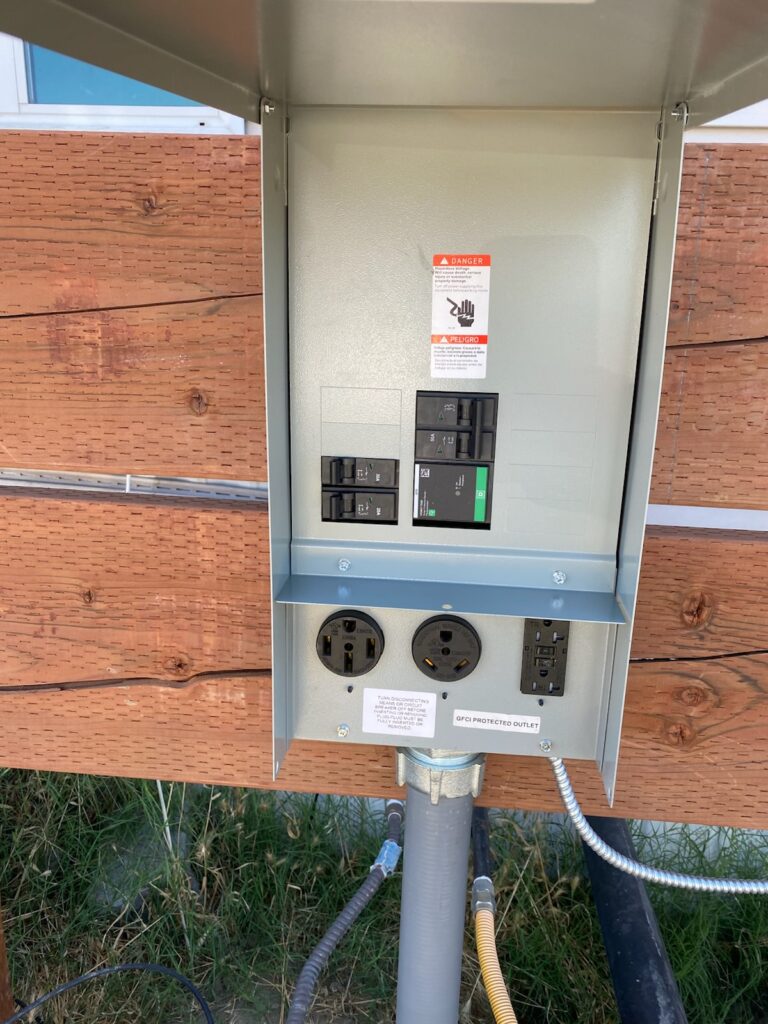
This requirement for a dedicated circuit means the hot tub cannot share power with any other device in your home. You cannot tap into an existing circuit for an outdoor outlet or a nearby air conditioner. The wire must run directly from your main electrical panel to the hot tub location without interruption. This wire must be sized correctly to handle the amperage. Using a wire that is too small for the distance or the load will cause voltage drop. Voltage drop means the hot tub receives less power than it needs, which can cause the motors to overheat and burn out prematurely. It also causes the wire itself to heat up, creating a fire risk inside your walls or underground conduit.
The distance from your main panel to the hot tub is a major factor in how the installation is planned. Copper wire offers the best conductivity and reliability, but it gets expensive over long distances. An electrician must calculate the exact gauge of wire needed based on the length of the run to ensure the voltage remains stable. This ensures your heater works efficiently and your pumps run at full strength.
The Crucial Role of GFCI Protection
Safety is the absolute priority when electricity is near water. The most important safety device in a hot tub installation is the Ground Fault Circuit Interrupter, or GFCI. You are likely familiar with GFCI outlets in your bathroom or kitchen. For a hot tub, the protection is typically provided by a special GFCI circuit breaker installed in your main panel or in the external disconnect box. This device constantly monitors the flow of electricity going to the hot tub.
In a properly functioning circuit, the current flowing out to the motor should be exactly equal to the current returning. If there is even a tiny variance, it means electricity is “leaking” somewhere it should not go. This could be due to a nick in a wire’s insulation, a faulty heating element, or a short in the motor. In a worst case scenario, that electricity could be flowing through the water or a person. The GFCI detects this imbalance instantly, often in as little as one fortieth of a second, and cuts off the power. This rapid response is fast enough to prevent a lethal shock.
Installing a GFCI breaker for a hot tub is mandatory under the National Electrical Code. It is not optional. However, these sensitive devices can be prone to “nuisance tripping” if the wiring is not done perfectly. A loose connection, moisture in a junction box, or a shared neutral wire can cause the breaker to trip constantly, rendering the tub unusable. A professional electrician knows how to wire the circuit cleanly and correctly to ensure the GFCI protects you without causing unnecessary headaches.
The Disconnect Switch Requirement
Another critical safety component required by code is the manual disconnect switch. This is a small, weatherproof box installed near the hot tub. It contains a switch or a pull out handle that allows anyone to physically cut the power to the tub immediately. The National Electrical Code is very specific about the placement of this disconnect. It must be located within sight of the hot tub, meaning you can see it while standing in the water or working on the equipment. However, it cannot be closer than five feet to the water’s edge.
The reasoning behind this rule is sound. You want the switch to be accessible in an emergency, but you do not want someone to be able to touch the switch while they are still inside the tub. This prevents a person from touching a high voltage electrical component while they are wet and grounded. The disconnect also serves a vital maintenance function. When a technician comes to service the tub, clean the filters, or replace a pump, they need to be 100 percent certain that the power is off and cannot be turned back on accidentally by someone inside the house. The local disconnect gives them control over the power supply right where they are working.
Need your hot tub wired professionally? Click here for our hot tub wiring service.
For many installations, this disconnect box is also where the GFCI protection is located. This is often called a “spa panel.” Using a spa panel allows the expensive GFCI breaker to be located outside rather than in the main panel. This can be a convenient solution if your main panel is older or crowded, but it requires careful wiring to ensure the weatherproofing remains intact.
Evaluating Your Main Electrical Panel
Before you purchase a hot tub, you must determine if your home has the electrical capacity to run it. A hot tub is a massive load. A 50 amp hot tub circuit can draw more power than almost any other appliance in your house. If your home has a standard 100 amp electrical service, you may not have enough “room” for the hot tub. This does not refer to physical space in the breaker box, although that is also necessary. It refers to the total electrical load your home can handle at one time.

If you add a 50 amp hot tub to a 100 amp panel that is already powering an electric range, a dryer, and a central air conditioner, you risk overloading your main service. This results in the main breaker tripping and shutting off power to your entire house. It also places severe stress on your electrical system, leading to overheating and potential fire hazards. The only way to know for sure is to have a licensed electrician perform a load calculation.
This calculation takes into account the square footage of your home and all your existing appliances. It applies the demand factors allowed by code to give you a realistic picture of your electrical usage. If the calculation shows that your current panel cannot support the additional load, you will need a panel upgrade. Upgrading to a 200 amp service will provide ample power for the hot tub and any future additions, such as an electric vehicle charger. Ignoring this step and installing the tub anyway is a recipe for electrical failure.
The Hidden Safety System: Equipotential Bonding
There is a safety system involved in hot tub installation that most homeowners have never heard of, yet it is arguably the most important for preventing shock. It is called equipotential bonding. This is different from grounding. Grounding provides a path for current to return to the source if there is a fault. Bonding is about equalizing voltage between all metal parts in the vicinity of the hot tub.
Want an upgraded panel? Click here to see if your home needs an upgrade.
In a pool or spa environment, it is possible for “stray voltage” to exist in the earth or in metal objects. If you are in the water and you touch a metal handrail that is at a different voltage potential than the water, electricity will flow through you to equalize that difference. This can result in a painful shock or even paralysis. To prevent this, the electrical code requires a bonding grid.
An electrician installs a continuous copper wire that connects the hot tub’s motor and heater to all metal parts of the hot tub structure. It also connects to any metal within five feet of the tub, such as metal fences, gutters, handrails, or even metal conduit. In some cases, if the tub is installed on a concrete slab, the code requires the concrete itself to be bonded to the grid. This creates a zone where everything is at the same electrical potential. If everything is equal, electricity cannot flow between objects, and you are safe from shock. This is a highly technical part of the installation that requires specific knowledge of code requirements and proper materials. It is one of the main reasons DIY installations often fail inspection and safety checks.
Wiring Methods and Trenching
Getting the power from your house to the hot tub usually involves working underground. Unless the tub is right next to the house, the wiring will need to be buried. You cannot simply run a standard cable across the lawn or bury it a few inches down. The code dictates strict depth requirements to protect the wires from being cut by shovels or garden tools. Typically, if the wires are run inside rigid PVC conduit, the trench must be at least 18 inches deep.
The type of wire used is also critical. Standard “Romex” cable, which is used inside walls, is not allowed in underground conduits. The paper and unsealed plastic inside Romex will absorb moisture and rot over time. Instead, electricians use individual THWN copper conductors. These wires have a special nylon coating that is rated to withstand wet conditions. Underground conduits are legally defined as “wet locations” because condensation and groundwater will inevitably get inside. Using the wrong wire type will lead to short circuits and ground faults as the insulation degrades.
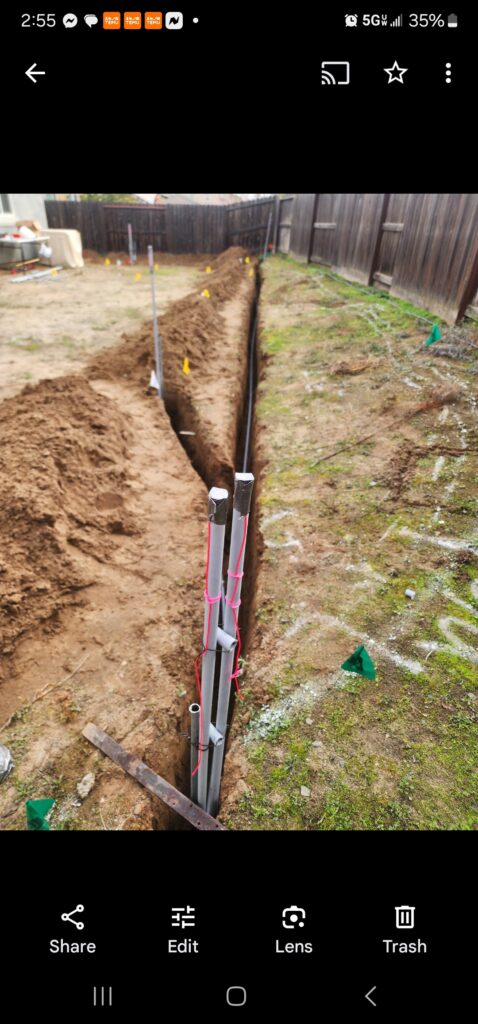
The conduit itself must be continuous from the house to the disconnect, and from the disconnect to the tub. At the final connection point to the hot tub motor, a flexible, liquid tight conduit is used. This allows for the vibration of the motor without cracking the pipe. It also allows for easier maintenance if the pump needs to be moved or serviced. Every connection in this conduit system must be glued and sealed to keep out as much water and dirt as possible.
Permitting and Inspection
Installing a hot tub is a significant home improvement project that requires a permit from the local building department in Patterson or Stanislaus County. Some homeowners try to skip this step to save time or money, but the permit is there for your protection. It ensures that a neutral third party verifies the work was done correctly.
The inspector will check everything we have discussed. They will verify the wire size, the trench depth, the GFCI protection, the disconnect placement, and the bonding grid. They will ensure the work meets the current National Electrical Code standards. If you skip the permit, you are relying solely on the word of the installer. Furthermore, unpermitted work can cause major issues if you ever try to sell your home. A savvy home inspector will spot a hot tub without a permit record, and it can delay or derail your sale. More importantly, if an electrical fire or injury occurs related to unpermitted work, your homeowner’s insurance policy may not cover the damages.
A hot tub is a wonderful addition to your home that promises years of relaxation and enjoyment. However, that enjoyment depends entirely on the safety and reliability of the electrical installation. The combination of high voltage electricity and water leaves absolutely no room for error. From the load calculation on your main panel to the intricate details of the bonding grid, every step must be executed with precision and expertise. Do not gamble with the safety of your family and friends by attempting a DIY install or hiring an unlicensed handyman. When you are ready to get your home ready for hot tub season, call Frayer Electric in Patterson. We will ensure your backyard oasis is powered safely, legally, and reliably so the only thing you have to worry about is the water temperature.