
How Security Camera Wiring Actually Works
Security cameras have become one of the most requested upgrades for homes across the Central Valley, and the warmer months bring even more interest as families travel and leave their property empty for days at a time. Many homeowners assume the camera itself does all the work, yet the wiring behind that camera is what truly determines how reliable, sharp, and consistent your footage will be. A camera with a weak or improper connection can drop signal, lose power during a storm, or record grainy video that fails right when you need it most. Understanding how security camera wiring actually works helps you make smarter choices about equipment, placement, and the type of system that fits your property. The wiring carries two essential things to every camera, which are power and data, and the way those two elements travel changes depending on the system you choose. Some setups send both through a single cable, while others split them across separate lines. This guide breaks down each wiring method in plain terms so you know exactly what is running behind your walls and along your eaves. By the end, you will understand why professional installation matters and how the right wiring keeps your cameras working year after year.
How Security Camera Wiring Actually Works in a Modern Home
Every security camera, no matter the brand or price, depends on two basic things reaching it through wiring, and those two things are electrical power and a path for video data. Power keeps the camera running around the clock, while the data path carries the live image to a recorder or to your phone. In most modern systems, these signals travel through structured cabling that runs from a central hub out to each camera location. The hub is usually a recorder paired with a network switch, and it acts as the brain of the entire setup. When the wiring is planned correctly, the camera receives steady voltage and a clean signal, which produces smooth and dependable footage. When the wiring is rushed or undersized, you see dropped frames, flickering, or cameras that go dark without warning. Knowing how these pieces connect gives you a clear picture of what a quality installation should include.
The Power Side of Security Camera Wiring
Every camera needs a constant source of electricity, and most residential cameras run on low voltage power rather than the standard household current found in your outlets. A typical camera operates on twelve volts of direct current, though some models use twenty four volts of alternating current depending on the design. This low voltage approach is safer to run throughout a home and reduces the risk of dangerous shorts in outdoor locations. The power often starts at a standard outlet, then passes through a transformer or a power supply that steps the voltage down to the level the camera needs. From there, the reduced voltage travels along dedicated conductors to each camera position. Because the voltage is low, the wiring can run through attics, walls, and soffits with far fewer restrictions than line voltage wiring. Still, the gauge of that wire matters, since thin conductors over long distances cause voltage drop that starves the camera of the power it needs.
Voltage drop is one of the most common problems in poorly planned camera systems, and it happens when power weakens as it travels a long distance through undersized wire. A camera at the far end of a run may receive noticeably less voltage than one mounted close to the power supply. When that happens, the camera can reboot at random, lose night vision, or fail to power its infrared lights after dark. Choosing the correct wire gauge for the distance solves this issue before it ever starts. Professional installers calculate the length of each run and select conductors that deliver full voltage all the way to the camera. They also account for the total load when several cameras draw from the same supply. This kind of planning is exactly why proper electrical wiring forms the backbone of any reliable security system.
Outdoor cameras add another layer to the power side of the equation, because every connection exposed to the elements must stay dry and protected. Moisture is the enemy of any electrical connection, and a damp splice can corrode quickly and kill power to the camera. Installers use weatherproof junction boxes, sealed connectors, and drip loops that direct water away from the wiring rather than into it. Outdoor power supplies and the outlets that feed them should also have ground fault protection to guard against shock and short circuits. In our Central Valley summers, heat and constant sun add stress to exposed cabling, so quality outdoor rated wire is essential for a system that lasts. Cutting corners on outdoor power connections leads to cameras that fail during the very storms when you need them most. A careful installer treats every outdoor connection as a point that must survive years of weather without trouble.

The Data Side of Security Camera Wiring
While power keeps a camera alive, the data side is what actually delivers the picture you watch on a screen or phone. Video data travels from each camera back to a recorder, and the type of cable carrying that signal depends on the system. Modern internet protocol cameras send their video as digital data across network cable, the same family of cable used for computers and internet connections. Older analog cameras send their video as an electrical signal along coaxial cable instead. Either way, the goal is the same, which is moving a clean and uninterrupted signal from the lens to the storage device. The quality of that cable and the care taken during installation directly affect how sharp and stable your footage looks. A damaged or poorly terminated data cable produces static, freezing, or a complete loss of image.
Digital camera systems rely on network cable rated as category five enhanced or category six, and these cables carry far more information than older wiring ever could. Each cable contains four twisted pairs of copper conductors, and the twisting itself helps cancel out electrical interference. This design lets a single network cable carry crisp high resolution video over long distances without degrading. Network cable also has a practical limit of roughly three hundred and twenty eight feet for a single run before the signal needs a boost. Longer distances require a switch or a repeater placed somewhere along the path to refresh the data. Installers route these cables away from large electrical lines and motors, since strong magnetic fields can introduce noise into the signal. Proper separation keeps the video clean and prevents the strange flickering that interference can cause.
The way a data cable is terminated at each end matters just as much as the cable itself, and this is where many homeowner attempts fall apart. Each network cable ends in a connector that must be wired in the correct order, with every tiny copper strand seated perfectly. A single misaligned strand can cut your speed in half or stop the signal completely. Coaxial connections demand the same precision, since a loose fitting introduces static and signal loss. Professional installers test every connection after termination to confirm the signal reaches the recorder at full strength. They also label each cable so future service is fast and simple rather than a guessing game. This attention to detail is what separates a system that works for years from one that fails within months.
Where Security Camera Wiring Connects and Records
All of the wiring from your cameras eventually leads back to a central location where the footage is processed and stored. In a digital system, that hub is a network video recorder, often paired with a network switch that distributes both power and data to every camera. In an analog system, the hub is a digital video recorder that takes in the coaxial signals and converts them for storage. This central device is the heart of your security system, and it needs a stable power source and good ventilation to run reliably. Many homeowners place the recorder in a closet, garage, or utility room where it stays cool and out of sight. The recorder connects to your home network, which is what allows you to view live and recorded footage from a phone or computer. Without this hub, the cameras would have nowhere to send their signals and no way to save what they capture.
Power over ethernet has changed how modern systems handle this central connection, because it lets a single cable carry both power and data at the same time. A power over ethernet switch or recorder sends low voltage power up the network cable to the camera while receiving video data on the same line. This means one tidy cable to each camera instead of two separate runs, which simplifies installation and reduces clutter. The recorder manages how much power each camera draws and protects against overload. This approach has become the standard for new home installations because it is clean, efficient, and easy to expand. Adding a camera later often means running just one new cable back to an open port on the switch. The simplicity of this design is a major reason professional installers recommend it for most homes.
The location of the recorder and the routing of every cable should be planned before the first hole is drilled, since good planning prevents headaches down the road. Installers map out camera positions, cable paths, and the central hub location to create the shortest and cleanest runs possible. They consider where wires can hide inside walls, run through the attic, or travel along the eaves with minimal exposure. They also leave extra cable length at each end, which gives room for adjustments and future repairs. A well organized hub with labeled cables makes troubleshooting quick and keeps the system easy to service for years. If you are planning a camera system, our team can handle the full design and installation from start to finish; click here for our security camera installation service. Thoughtful planning at this stage is what turns a pile of cameras and cable into a dependable security network.
The Main Types of Security Camera Wiring Setups
Not every security system is wired the same way, and the method you choose shapes the cost, performance, and flexibility of the whole setup. Three main wiring approaches dominate residential installations today, and each one handles power and data in its own way. Power over ethernet systems send everything through one network cable, while older analog systems split the job across a special combined cable. So called wireless cameras still need wiring of some kind, even though they skip the data cable. Understanding these three approaches helps you pick the system that fits your home, your budget, and your long term plans. The right choice depends on the size of your property, the number of cameras, and how much future expansion you expect. Below we break down each wiring type so the differences are easy to see.
Power Over Ethernet Security Camera Wiring
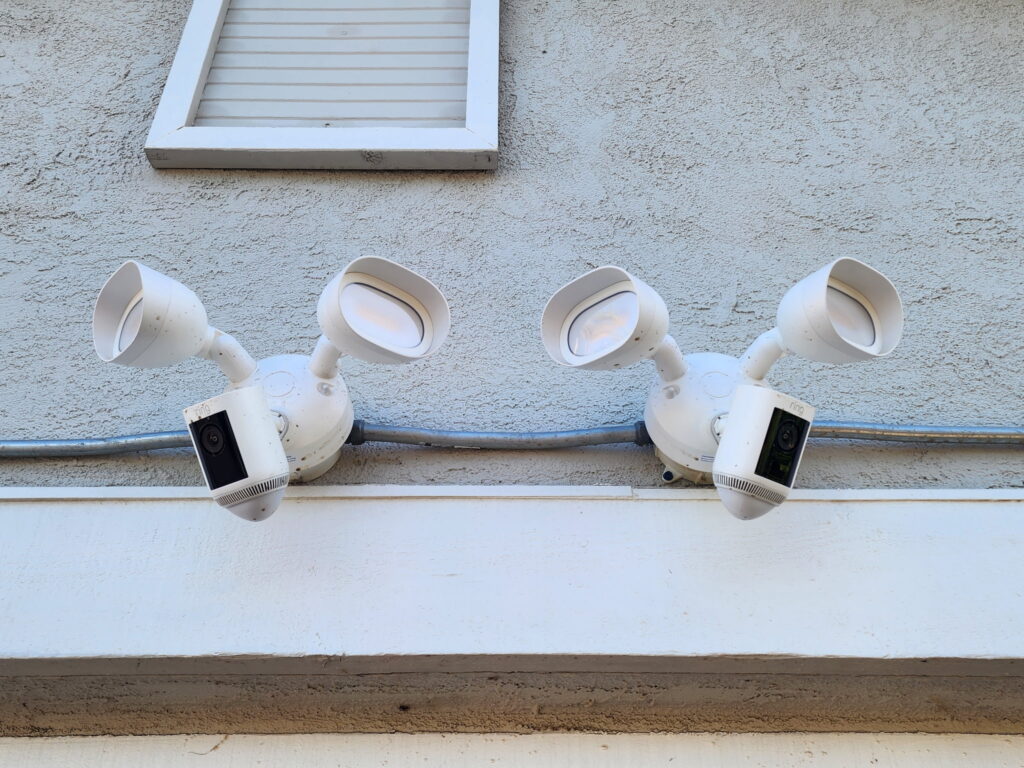
Power over ethernet, often shortened to PoE, has become the most popular wiring method for modern home security cameras, and for good reason. This approach uses a single network cable to deliver both electrical power and video data to each camera at the same time. The cable runs from a PoE switch or a PoE capable recorder directly to the camera, with no separate power line required. Because one cable does everything, installation is cleaner, faster, and far easier to plan around your home. The standard that governs this technology carefully controls how much power travels up the cable, which protects both the camera and the wiring. PoE systems deliver sharp digital video and support high resolution cameras that capture fine detail. For most homeowners building a new system today, this method offers the best balance of quality and simplicity.
One of the biggest advantages of PoE wiring is how easy it makes adding or moving cameras over time. Since each camera needs only one cable back to the switch, expanding the system is as simple as running a new line to an open port. This flexibility is ideal for homeowners who want to start with a few cameras and grow the system as their needs change. The single cable design also means fewer points of failure, since there are no separate power adapters scattered around the property. A central switch powers every camera, so a single backup battery on that switch can keep the entire system running during an outage. This is a meaningful benefit, because power failures often happen during the storms when security matters most. The clean and consolidated nature of PoE is exactly why it dominates new installations.
PoE wiring does have practical limits that a good installer plans around carefully. The single cable can only run about three hundred and twenty eight feet before the signal and power begin to fade. Large properties with distant outbuildings may need a switch placed midway to extend the reach. The quality of the network cable also matters greatly, since cheap cable can lose power and data over distance. Professional installers select proper rated cable and test every run to confirm full power and a clean signal at the camera. They also size the switch to handle the total power demand of every camera connected to it. With careful planning, these limits are easy to manage, and the result is a tidy system that performs reliably for many years.
Siamese Coax Security Camera Wiring
Before network based systems took over, most security cameras relied on a combined cable known as siamese cable, and many homes still use this setup today. Siamese cable bundles two different wires inside one outer jacket, which is where the name comes from. One part is coaxial cable that carries the video signal, and the other part is a pair of power conductors that feed the camera. This design let installers run a single cable to each camera while still keeping power and video on separate paths. The coaxial portion connects to an analog camera on one end and to a digital video recorder on the other. The power conductors connect to a central power supply that feeds all the cameras at once. For years this was the standard, and it still works well in many existing installations.
Analog systems wired with siamese cable have a few characteristics worth understanding before you choose or upgrade one. The coaxial signal is reliable over long distances and resists certain types of interference very well. Traditional analog cameras capture lower resolution images than modern digital cameras, though newer analog formats have closed much of that gap. Siamese cable runs can extend much farther than network cable before the signal weakens, which suits very large properties. The connections at each end use threaded fittings that must be tight and weatherproof to prevent static and corrosion. Because power and video stay separate, a problem with one does not always affect the other, which can make troubleshooting simpler. Many homeowners keep these systems running for years with only minor maintenance.
Replacing or upgrading a siamese cable system requires care, since the existing wiring may or may not suit newer equipment. Some homeowners choose to reuse their coaxial runs with updated cameras that send a higher quality signal over the same cable. Others decide to switch fully to a network based PoE system for the sharper image and easier expansion it offers. The right path depends on the condition of the existing wiring and the goals for the new system. An experienced electrician can inspect the current cabling and recommend the most cost effective route forward. A thoughtful upgrade preserves what still works while modernizing the parts that hold your system back. That balance often saves money while delivering the clearer footage and easier control that homeowners want today.
Wireless Security Camera Wiring and Power Needs
Wireless cameras are often marketed as a way to avoid wiring entirely, yet the truth is more complicated than the name suggests. The wireless part refers only to the video signal, which travels over your home network instead of through a data cable. Every wireless camera still needs a source of electrical power to operate, and that power has to come from somewhere. Some models plug into a nearby outlet with an adapter, while others run on rechargeable batteries that need regular charging. Battery powered cameras free you from wiring at the cost of ongoing maintenance, since a dead battery means a dead camera. For a truly reliable wireless camera, a hardwired power connection is still the best choice. So the wireless label saves you the data cable, but rarely the power cable.
The power options for wireless cameras each come with trade offs that affect reliability and convenience. A plug in adapter is simple, but it limits camera placement to spots near an existing outlet. Running a dedicated low voltage power line to a hidden camera location gives you freedom of placement with the reliability of a constant power source. Battery cameras offer the most flexible placement, though they require you to climb a ladder periodically to recharge or swap batteries. Solar panels can extend battery life, but they depend on consistent sunlight and add another component that can fail. For cameras in critical locations, many homeowners choose a hardwired power connection installed by an electrician for true peace of mind. The goal is steady power that keeps the camera recording without interruption.
Wireless systems also depend heavily on the strength and stability of your home network, which adds a consideration beyond simple wiring. A camera too far from the router may drop its signal, freeze, or fail to record at the moment you need it. Thick walls, metal, and long distances all weaken a wireless signal and reduce reliability. For this reason, many homeowners use wireless cameras only where running cable is truly impractical. A mixed system that hardwires the most important cameras and uses wireless units for hard to reach spots often delivers the best results. An electrician can install proper power connections and recommend the right balance for your property. The smart approach treats wireless as one tool among several rather than a complete replacement for solid wiring.
Why You Need a Licensed Electrician for Security Camera Wiring
Security camera wiring blends low voltage electrical work with careful network planning, and getting both right takes real skill and experience. A camera system is only as good as the wiring behind it, and shortcuts in that wiring lead to failures right when you depend on the footage most. A licensed electrician understands power, data, weatherproofing, and code in a way that produces a system built to last. Professional installation protects your home, your equipment, and your peace of mind for years to come. The team at Frayer Electric handles every part of the job with the care your property deserves. Below we explain why expert installation makes such a difference.
Professional Security Camera Wiring Protects Your Home
A camera system exists to protect your home, so the wiring that powers it must be every bit as dependable as the cameras themselves. Professional security camera wiring is planned, routed, and tested to deliver steady power and a clean signal to every camera around the clock. When the wiring is done right, your cameras record without dropouts, gaps, or sudden failures during important moments. This reliability is exactly what you are paying for when you invest in a security system. A poorly wired system can give a false sense of safety while quietly failing behind the scenes.
Professional installers also hide and protect the wiring in ways that improve both security and appearance. Exposed cables are easy for an intruder to cut, and they look untidy along the outside of a home. A skilled electrician routes wiring through walls, attics, and conduit so it stays out of sight and out of reach. This protects the system from tampering, weather, and accidental damage from yard work or storms. The result is a clean look and a system that keeps working when it counts.
Beyond the cameras, a professional looks at the bigger picture of how the system ties into your home. The recorder needs reliable power, the outdoor outlets need proper protection, and the network needs to handle the added load. An electrician can add ground fault protected outlets, surge protection, and a backup power plan that keeps cameras running during outages. If you want your outdoor connections protected, our team can install the right safeguards; click here for our GFCI outlet installation service. This whole home view is something only a trained professional can provide.
Safe Security Camera Wiring Meets Code Requirements
Safe security camera wiring follows electrical codes that exist to protect your family and your property from fire and shock. Even low voltage wiring has rules about how it is run, supported, and protected, especially where it passes through walls and ceilings. Outdoor connections face strict requirements for weatherproofing and ground fault protection. A licensed electrician knows these codes and installs your system to meet every one of them. This keeps you safe and prevents problems with insurance or future inspections.
Code compliance also matters when camera wiring shares space with the standard electrical system inside your walls. Low voltage cables must keep proper distance from line voltage wiring to prevent interference and hazards. Penetrations through fire rated walls and ceilings must be sealed correctly to maintain the safety of your home. An untrained installer may overlook these details, creating risks that stay hidden for years. A professional handles each one as a matter of routine, which protects your home long after the job is finished.
Proper wiring also sets your system up to pass any inspection that may come with a home sale or insurance review. Sloppy or unsafe wiring can become a costly problem at the worst possible time, often during a sale or claim. A clean and code compliant installation gives you documentation and confidence that everything was done correctly. When you work with a licensed electrician, you gain a system that stands up to scrutiny. That assurance is part of the value of hiring a professional from the start.
Why Choose Frayer Electric for Security Camera Wiring
Frayer Electric is locally owned and operated, and we serve Patterson and the surrounding Central Valley communities with honest, dependable work. We are licensed and insured, and we treat every security camera wiring project with the same care we would give our own homes. Our team provides straightforward quotes with no hidden fees, so you know exactly what your project will cost before we begin. We believe in getting the job done right the first time, every time. That commitment to integrity is the foundation of everything we do.
We understand that security is personal, and we treat your home and your time with respect from the first call to the final walkthrough. Our electricians plan each system carefully, route the wiring cleanly, and test every connection before we consider the work complete. We are available around the clock for emergencies, so help is there when you need it most. We also offer discounts for veterans, seniors, and first responders as a way of giving back to those who serve our community. When you choose Frayer Electric, you choose a team that stands behind its work.
Choosing the right electrician for your security camera wiring protects your investment and your peace of mind for years to come. We bring the knowledge of power, data, and code together into one clean and reliable installation. Reach us at (510) 861-6247 or email info@frayerelectricinc.com to talk about your project and schedule a visit. You can also click here for our security camera installation service to learn more about what we offer. Let us help you protect what matters most with a system wired the right way.