
The Truth About Smart Switches and Dimmers
For decades, the interaction between a homeowner and their lighting was defined by a simple, tactile mechanical action. You walked into a room, flipped a toggle switch up, and the lights came on. You flipped it down, and the room went dark. This binary system was reliable, durable, and easy to understand. However, as our homes have evolved into interconnected ecosystems of technology, that humble switch has undergone a radical transformation. The rise of smart home technology has introduced a new era of lighting control where the physical switch is just one of many ways to command the environment. For residents in Patterson, upgrading to smart switches and dimmers offers a level of convenience, security, and efficiency that was previously the domain of high-end luxury hotels. Yet, with this new technology comes a wave of confusion regarding compatibility, installation requirements, and the dizzying array of wireless protocols available on the market.
Many homeowners mistakenly view smart lighting as a novelty—a fun party trick to change the colors of the living room from a phone. While this is certainly a capability, the true value of smart switches lies in their ability to solve practical problems. They can ensure you never come home to a dark house, they can make it look like someone is home when you are on vacation, and they can help you manage energy costs by automatically turning off forgotten lights. But unlike plugging in a smart speaker, installing a smart switch involves integrating a sophisticated piece of electronics into the high-voltage wiring of your home. This intersection of 120-volt electricity and delicate silicon chips creates specific challenges that require a deeper understanding of your home’s electrical infrastructure. Separating the marketing hype from the electrical reality is the first step toward a successful upgrade.
How Smart Switches Fundamentally Differ from Standard Toggles
To understand the complexity of installing a smart switch, one must first understand how a standard light switch operates. A traditional single-pole switch is a mechanical interrupt. When you flip the lever down, you are physically breaking the copper connection, creating a gap that electricity cannot jump across. The circuit is open, and no power flows to the light fixture. It is a passive device that requires no electricity to function; it merely passes the current along when the contacts are touching. This simplicity is why switches installed in Patterson homes fifty years ago are often still working perfectly today. There are no electronics inside to fail, just metal and plastic.
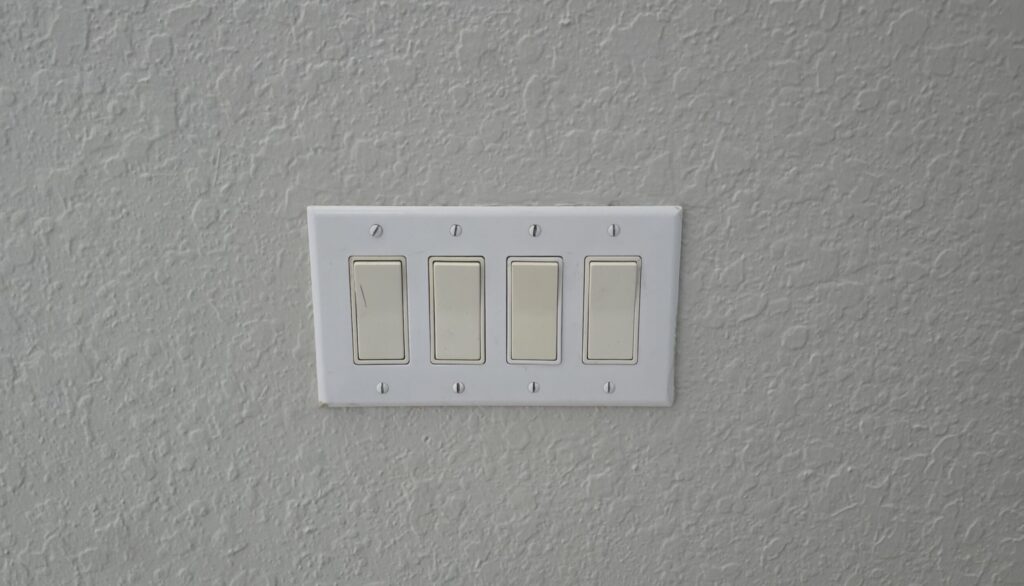
A smart switch, by contrast, is an active electronic device. Even when the lights are technically “off,” the switch itself must remain “on.” It needs a constant trickle of power to maintain its connection to your Wi-Fi network or smart home hub, listening for a digital command to turn the lights back on. It is essentially a small computer mounted in your wall. This fundamental difference—the need for standby power—changes how the device must be wired. It cannot simply break the circuit like a standard switch, or it would cut power to itself and go offline. Instead, it uses an internal relay or a transistor to control the flow of power to the light bulb while keeping its own internal radio powered up independently.
This “always-on” nature solves one of the biggest frustrations with smart lighting: the smart bulb dilemma. Many people start their smart home journey by buying smart bulbs that screw into existing sockets. The problem arises when someone flips the wall switch off out of habit. The smart bulb loses power and becomes “dumb,” unresponsive to voice commands or app controls until the switch is flipped back on. A smart switch replaces the wall control itself, bridging the gap between physical and digital control. You can press the button on the wall to turn the lights off, but the switch remains intelligent and responsive to your phone or voice assistant. It provides the best of both worlds, maintaining the intuitive manual control that guests and family members expect while enabling the advanced automation features that modern life demands.
The Neutral Wire Barrier in Older Homes
The single most common hurdle homeowners face when attempting to install smart switches is the absence of a neutral wire in the switch box. In the world of electrical wiring, a complete circuit requires a “hot” wire to bring power from the panel and a “neutral” wire to return the current back to the source. In standard switch wiring, especially in homes built before the 1980s and even into the 90s, electricians often used a method called a “switch loop.” In this configuration, the power goes to the light fixture first, and a single cable runs down to the switch and back. The switch box contains only the hot wire coming in and the switched hot wire going out. It does not need a neutral because the switch doesn’t consume power; it just interrupts the flow.
Need a dimmer switch install? Click here for our electrical wiring service.
However, because a smart switch is a computer, it needs a complete circuit to power itself. It needs to tap into the hot wire for energy and use the neutral wire to complete its own internal power loop. If you open up a switch box in an older Patterson home and see only two wires connected to the switch (usually black and white, but the white is taped black to indicate it is hot), you likely do not have a neutral available. Without that neutral, most standard smart switches simply will not work. They cannot power up their Wi-Fi radios. This discovery often brings DIY projects to a screeching halt, leaving the homeowner with an expensive piece of hardware they cannot install.
Fortunately, the industry has developed solutions for this scenario, though they come with caveats. Some manufacturers make smart switches specifically designed for “no-neutral” environments. These devices work by leaking a tiny amount of current through the light bulb itself to complete their circuit, rather than using a neutral wire. This works reasonably well with old incandescent bulbs, but with modern low-wattage LEDs, this leakage current can cause the bulb to glow faintly, flicker, or flash periodically even when the switch is off. This phenomenon, known as “ghosting,” is annoying and can shorten the life of the bulb. Resolving the neutral wire issue correctly often involves a professional electrician fishing a new cable with a neutral conductor from the light fixture or a nearby outlet to the switch box, physically updating the infrastructure to support modern technology.
The Complex Relationship Between Dimmers and LEDs
The transition from incandescent bulbs to Light Emitting Diodes (LEDs) has been fantastic for energy efficiency, but it has created a significant headache for dimming. Old-school incandescent bulbs were simple resistors; if you reduced the voltage going to them, they got dimmer and warmer in color. LEDs, however, are electronic devices that run on a specific driver. They are not naturally dimmable in the same way. When you pair a modern LED bulb with an older rotary dimmer or a cheap smart dimmer, you often experience flickering, buzzing, or a limited range where the light shuts off completely at 20% brightness. This is caused by a mismatch in the dimming technology.
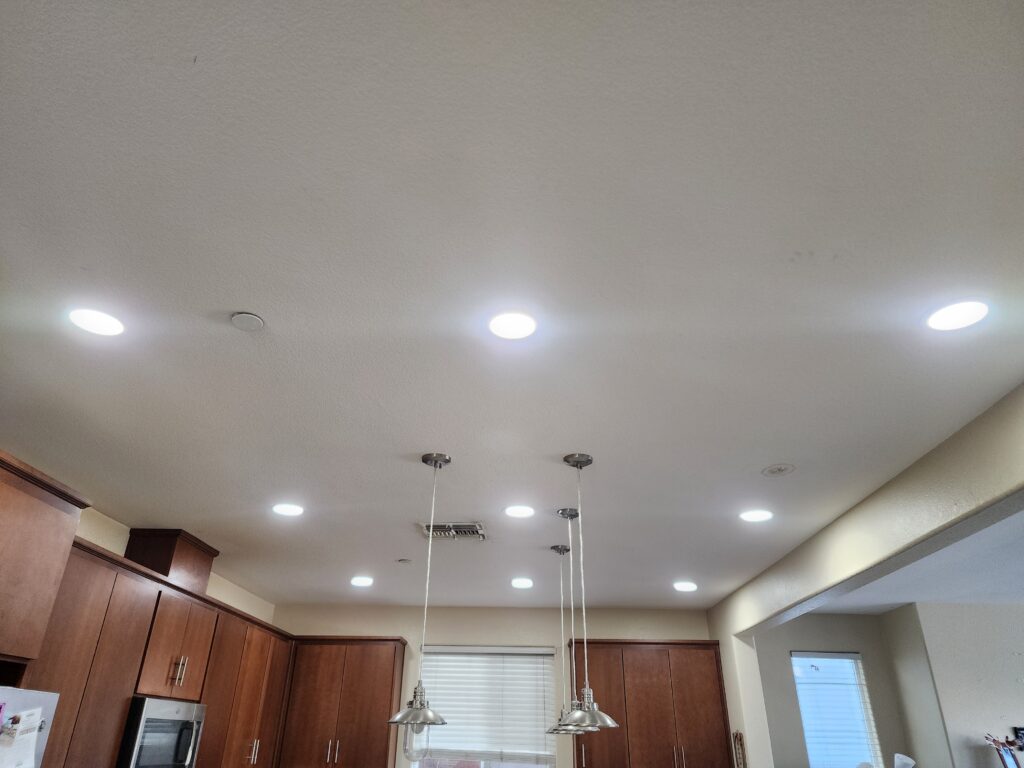
There are two main types of dimming methods: Forward Phase (Leading Edge) and Reverse Phase (Trailing Edge). Older dimmers and cheaper smart switches typically use Forward Phase dimming, which chops off the front of the electrical sine wave. This was designed for resistive loads like tungsten filaments. LEDs, being capacitive loads, generally perform better with Reverse Phase dimming, which chops the back end of the wave. If a smart dimmer uses the wrong method for the specific bulb you have installed, the electronics in the bulb’s base will struggle to interpret the power signal, leading to that strobing effect that turns your relaxing living room into a disco.
High-quality smart dimmers address this by offering “trim” adjustments and phase selectability. A trim setting allows you to calibrate the switch to the bulb. You can set the minimum brightness level so that the dimmer never drops below the point where the bulb starts to flicker or turn off. If your bulbs cut out at 15%, you set the low-end trim to 16%, and the physical slider on the wall will treat that 16% as the bottom of the range. This creates a smooth, perceived 0-100% dimming curve without the glitches. Furthermore, advanced smart dimmers can be programmed to act as ELV (Electronic Low Voltage) or MLV (Magnetic Low Voltage) dimmers, ensuring compatibility with the expensive recessed lighting or under-cabinet fixtures you may have installed.
Enhancing Security and Energy Efficiency
Beyond the “cool factor,” smart switches are powerful tools for home security. A dark home is an inviting target for potential intruders, signaling that the property is unoccupied. Traditional mechanical timers used to be the solution, but they are predictable and often drift out of sync with the actual sunset. Smart switches offer an “Away Mode” or “Vacation Mode” that randomizes lighting. Instead of turning the living room lamp on at exactly 7:00 PM every night, the system might turn it on at 6:52 PM one night and 7:14 PM the next, mimicking the natural, irregular patterns of human behavior. This creates a convincing illusion of occupancy that is far more effective at deterring crime than a static timer.
Want to know the benefits of LED lighting upgrades? Click here for more information.
For exterior lighting, smart switches offer the benefit of astronomical timing. The switch knows your GPS location in Patterson and knows exactly when the sun sets and rises every day of the year. You never have to adjust the timer for Daylight Saving Time or the changing seasons. Your porch lights and garage coach lights will always turn on exactly at dusk and turn off at dawn (or at a set time like midnight to save energy). This automation ensures that the perimeter of your home is always illuminated when it needs to be, preventing the safety hazard of fumbling for keys in the dark and removing the shadow spots where prowlers might hide.
On the efficiency front, smart switches and dimmers can drastically reduce wasted electricity. Motion sensors integrated into smart switches are perfect for high-traffic, transient spaces like laundry rooms, pantries, and garages. The lights turn on instantly when you enter with an armful of groceries and turn off automatically five minutes after you leave. Additionally, simply dimming a light reduces its energy consumption. Running your kitchen island lights at 80% brightness uses roughly 80% of the energy and extends the life of the bulbs significantly, while the visual difference is often barely noticeable. Over the course of a year, these small automated savings across the entire home add up to a noticeable reduction in your utility bill.
Navigating the Wireless Protocol Wars: Wi-Fi vs. Hubs
When selecting smart switches, homeowners are often overwhelmed by the choices: Wi-Fi, Zigbee, Z-Wave, Lutron Clear Connect, and now Matter. The most common entry-level switches use Wi-Fi because they connect directly to your existing router without needing extra hardware. This is convenient for installing one or two switches, but it scales poorly. Wi-Fi devices are power-hungry and chatter constantly on the network. If you replace thirty switches in your home with Wi-Fi models, you can congest your router, causing slow internet speeds for your laptops and streaming devices. Furthermore, if you change your Wi-Fi password or get a new router, you have to manually reset and reconnect every single switch in the house, which is a tedious nightmare.

For a robust, whole-home system, professional electricians typically recommend hub-based systems using protocols like Lutron’s Clear Connect or Z-Wave. In these systems, the switches do not talk to your Wi-Fi router directly. Instead, they talk to a central hub (a small bridge plugged into your router) using a low-frequency radio signal. This signal often travels through walls better than Wi-Fi and uses significantly less power. The hub acts as the traffic controller, presenting a single device to your Wi-Fi network regardless of how many switches you have. This architecture is far more stable; if your internet goes down, the local automations and remotes often still work.
Hub-based systems also frequently utilize “mesh networking.” In a mesh network, every switch acts as a repeater for the signal. If you have a switch in the far corner of the garage that is out of range of the hub, the signal will hop through the kitchen switch and the hallway switch to reach it. This creates a blanket of reliable coverage across the property that eliminates dead zones. While these systems might have a slightly higher upfront cost due to the hub, the reliability and lack of interference with your personal Wi-Fi make them the superior choice for a permanent infrastructure upgrade.
The transition to smart switches and dimmers is one of the most impactful upgrades you can make to your home’s electrical system. It shifts the paradigm of your home from a passive shell to an active, helpful participant in your daily life. The ability to control your environment with a voice command, to have lights welcome you home automatically, and to rest easy knowing your house looks occupied while you are away provides a blend of luxury and peace of mind that is hard to overstate. However, achieving this seamless experience requires more than just buying a box from a big-box store. It requires navigating the technical realities of neutral wires, LED compatibility, and network stability.
Electrical work always carries inherent risks, and integrating sensitive electronics into high-voltage circuits adds a layer of complexity. A poor installation can lead to flickering lights, damaged fixtures, or even fire hazards if connections are loose or boxes are overcrowded. At Frayer Electric, we specialize in bridging the gap between traditional craftsmanship and modern technology. We ensure that your smart system is built on a solid electrical foundation, compliant with all codes, and configured to work flawlessly from day one. Don’t let technical hurdles keep you in the dark.